





OpEds
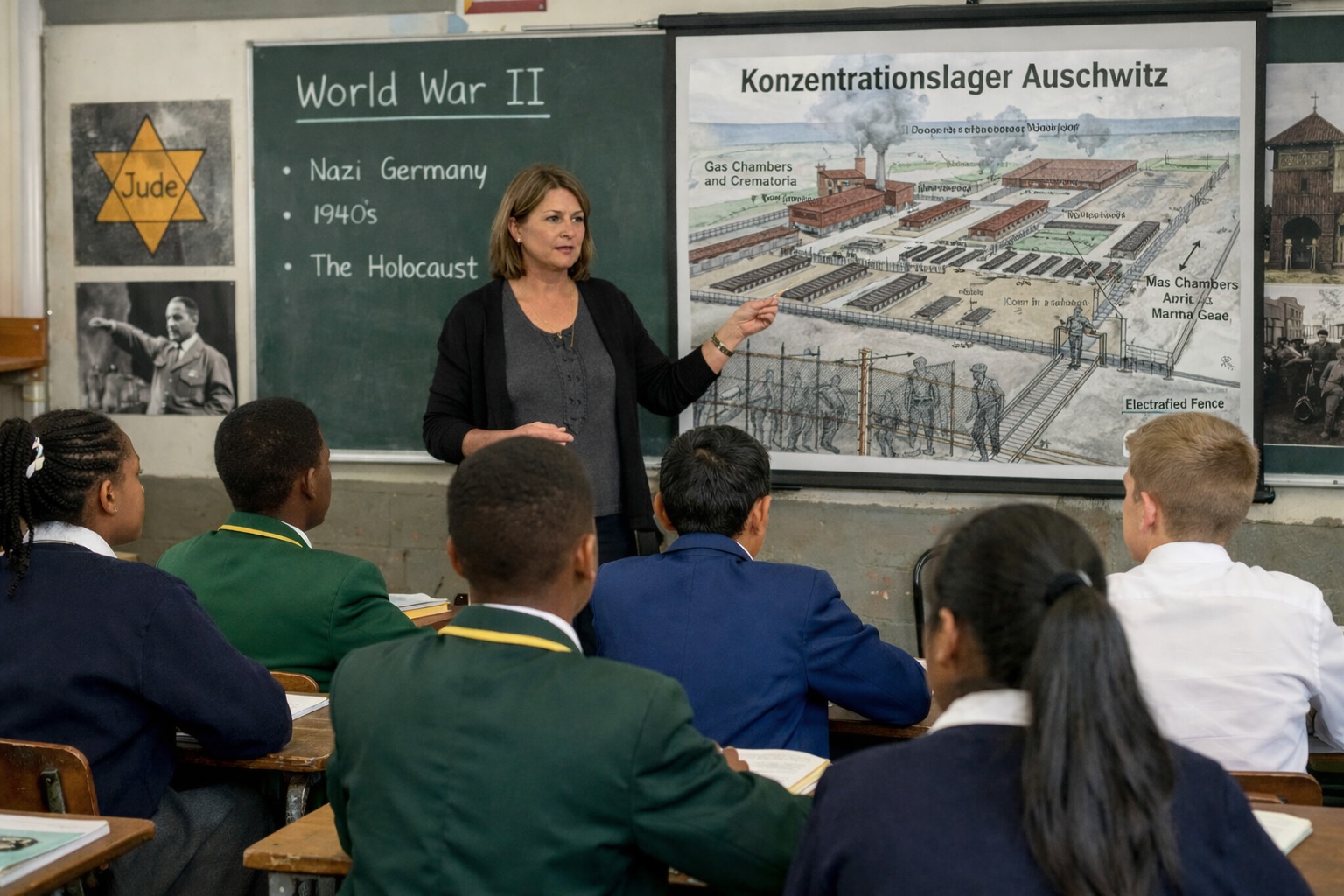
A deeper look at the proposed new history curriculum

At a meeting of Independent Examinations Board (IEB) history teachers a few weeks back, we had the opportunity to consider the proposed new history curriculum.
Published in the 20 March Government Gazette, the draft curriculum is described as “a new African-centred curriculum for the 21st century South Africa” and aims to “develop in the African child a strong foundational knowledge, understanding, and appreciation of the continent, and its relationship to the world”.
The meeting was abuzz with questions and answers, some of which I will attempt to deal with below.
Does the IEB have to follow the Department of Education’s policy and curriculum?
The answer to this is a definite yes. While the IEB is independent, all educational policy and curricula are dictated to us by the Gauteng Department of Education.
What is the timeline for implementation of the new curriculum?
None has yet been given. But it will be a lengthy process.
Does the ‘’African-centred approach’’ mean all discussion of Europe and the West ends?
I do not believe that all engagement with Europe and the West will now be “phased out”. The Grade 8 syllabus shows a commitment to understanding the history of Southern Africa. But it also looks at the arrival of the Dutch Boer settlers at the Cape, the impact of the 18th century Industrial Revolution in Europe, the Transatlantic Slave Trade, as well as the 1880’s Scramble for Africa. Colonisation, the British Empire, and the import of Chinese and Indian labourers to the African continent will make for interesting discussion and debate in that year.
Has the rise of Hitler and the Nazis been scrapped?
We need to look past the media hype to the Government Gazette. I believe the Grade 9 syllabus will still be interesting and vibrant, and I don’t agree with former University of the Free State rector Professor Jonathan Jansen’s sentiment on News24 that the content is “anti-intellectual and soul deadening”. The Grade 9s will continue to have a whole section on “Pseudo-Science, Racism, and the Entrenchment of Social Inequalities during the 19th century”.
Social Darwinism is always interesting to pupils, as is macabre Eugenics, and Europeans’ fascination with Africans such as Sara Baartman, the Khoi woman exhibited around Europe in the 19th century.
As a precursor to World War II, pupils will study World War I, the Peace Treaty of Versailles signed afterwards by Germany, and the ensuing German economic depression, compounded by the US Great Depression of 1929.
The study of the rise of Hitler and the Nazis remains in-depth. There is still a section on Hitler’s steps to war, beginning with his inauguration as Chancellor in 1933, right until the seizure of Austria in 1938 and the invasion of Poland in 1939. The Nazi SA and SS are studied, as are the concentration camps, the genocide, and the Final Solution. There is still a heavy focus in Grade 9 on apartheid and the coming to power of the National Party in 1948.
Visits to the Apartheid Museum as well as to the Johannesburg Holocaust & Genocide Centre are hinted at in the Gazette, where teachers are urged to expose their pupils to a wide variety of sources, from written and archaeological to discussions with family members and friends.
Apartheid in South Africa and the rise of the Nazis in Germany remain core pillars of Grade 9 history.
The impact of women in history
This is a category emphasised in the draft curriculum. The Grade 9 discussion on apartheid has been widened to include emphasis on the role that African, coloured, and Indian women played in the mobilisation against apartheid. The 9 August 1956 Women’s March to the Union Buildings, in which more than 20 000 women participated, is highlighted. Lillian Ngoyi, Helen Joseph, Rahima Moosa, and Sophie Williams are named and celebrated.
To classify the new syllabus as being simply “African-centric” at the cost of everything else would be to ignore the fascinating emphasis that the draft places on ancient civilisations in Egypt, China (Ming Dynasty), South America (Incas, Aztecs, and Mayas), as well as the Mughal (Indian) people.
African empires such as the Songhai and those in Ghana and Mali also find their place, as do precolonial Africans kingdoms such as those found in Zimbabwe.
The French Revolution is out
While the French Revolution may be “out”, European dynamics are still very much included. Grade 11s continue to delve into the Spanish and Portuguese explorations of the 15th to 18th centuries, focusing in detail on the colonisation introduced in the younger grades. The social, political, environmental, and health impact of the Dutch and English “voyages of discovery” to Africa and the Americas is still firmly in place.
Slavery is expanded on, as well as slave resistance and the Haitian Revolution of 1791. A discerning teacher would make pupils aware that this revolution was a result of the 1789 French Revolution.
The syllabus does indeed still include a mention of both the French and American Revolutions of the period, and the fact that they resulted in the basic tenements of modern democracy. “Liberty, Equality, and Fraternity” is still mentioned in the draft syllabus ‒ which will lead to much relief among educators.
America is out for matric
I have had matric pupils in the past question the almost “obsessive” focus on America in senior history. We used to examine the Cold War in detail, spend weeks dealing with the 1962 Cuban Missile Crisis, and concentrate on the Vietnam War.
The US-Soviet Cold War is still a theme in the draft. Pupils will still be taught how the Superpowers arose after World War II, had competing ideologies, and a Cold War spanning more than four decades resulted. However, the syllabus greatly summarises this, explores how these politics impacted South Africa, and how both African and Afrikaner nationalism arose in this 1950s to 1980s era.
The impact of Cold War dynamics on independent Africa is also emphasised. There does seem to be more of a focus on individual leaders such as former Prime Minister PW Botha and former African National Congress President Oliver Tambo. The impact of anti-apartheid activists has been expanded. The coming of democracy in South Africa (1990-1994) remains a coherent theme, allowing for movies and discussions on Black Consciousness leader Steve Biko and the Truth and Reconciliation Commission. US civil rights leaders such as Martin Luther King Jnr and Malcolm X don’t appear anymore, and there is increased focus on local activists such as Robert Sobukwe, Govan Mbeki, Walter Sisulu, and Joe Slovo.
After spending some time poring over the Government Gazette, my overall impression of the draft syllabus is a positive one. I believe it does indeed “investigate historical questions about Africa through its interactions with the rest of the world”. A balance has been achieved between focusing on the African continent but not ignoring massive historical events.
I think it’s a pity to lose out on learning about popular civil rights heroes in the American context, but perhaps there has been too much focus on US dynamics in the past few years. Possibly delving into the ancient civilisations of Egypt, China, and India will prove as interesting and enlightening as the document promises.
- Jocelyn Angel is a history teacher and deputy principal of King David High School.




Mike Wiggill
May 1, 2026 at 12:03 pm
We need to remember that recorded history goes back many thousands of years, even if it was not recorded in sub-saharan Africa prior to civilizations from the Global North beginning to make landfall.
That happened once their technological advancements making it possible, and the geographical quirk known as the Sahara Desert no longer presenting an impenetrable barrier.
For thousands of years the rise andcfall of many Empires occurred across the Global North. With that there was also what is now termed “colonization”, but also the spread of ideas,knowledge, technology, trade, languages, writing, political ideas such as democracy, and much more.
These all played a part in the development, over a very long period, of the global North, which sub-saharan Africa was left out of due to the “geographical quirk”.
It is important to understand how the global north became to be “developed” and sub-saharan Africa became to be considered “still devepoping”.
It is important to examine how those- ever changing and developing – Nations came into being, and how they assimilated the knowledge, methods, developments etc. brought by various Empires, or “colonizers” and developed them further.
Their further development would have been slowed, perhaps even halted, had they rejected everything that was introduced and destroyed infrastructure.
Instead of bemoaning what had occurred before, claiming victimhood and “special rights and dispensation, they set about building on what they had.
People,languages,nations all moved and altered slowly into what they are today.
Even today they are not what they were even a hundred years ago. A lot more has changed over 200 or 400 or 600 years.
In this age of immediate gratification and (un)Social Media, while the pace of change may have speeded up, it still takes a long time and many generations.
It is important to not only learn that, but also to never forget it.
Concentrating only on very recent (in the big picture) history can easily result in not only a misunderstanding of our place in history, but also open us up to propaganda.
For example, democracy originated thousands of years ago, and has progressed through many “versions” or applications.
It did not magically appear in 1994.
A solid understanding of history and the development of nations is as important in making sense of more recent history as a solid understanding of basic arithmetic and mathematics is to making sense if things like geometry and trigonometry.
We must not make the mistake of ignoring how we developed to where we are – and why we are “only” at this point – if we wish to understand the path to moving from “developing” to “developed”, along with the realization that it takes a long time.
History, like wealth or infrastructure, cannot be legislated into being.
It can only be planned and lived over many generations and many lifetimes.
UC
May 2, 2026 at 1:24 am
I think removing West and European History is a terrible choice. You cannot wipe out colonization of South Africa at the very least because colonization gave us accests to the world. That is part of our history. This is not about “Africanization” of the curriculum; it is erasing Europeans from our history because the government cannot let go of apartheid yet they speak proudly about democracy in this country. Further I spent time in the US and they shockingly know very little of the world because their curriculums only focus on the US themselves. Now our government is proposing we go the same route and do a great disservice to our learners.
I am an educator and I teach history. The curriculum needs improvement but not making it all wbout African history and keeping learning insular.
Jon Geidt
May 2, 2026 at 9:17 am
As far as one can tell from this interesting report the subject is not completely taken over by focusing solely on race and racism. All history is transmitted through written texts so the key to effectiveness will be through how well the syllabus is written. As well as Egypt the enormous breakthrough of Classical Greece
With ideas of tyrrany and democracy should be introduced. A long time scale is needed.
Bridget Miller
May 6, 2026 at 7:54 pm
Very interesting and encouraging summary by Jocelyn Angel. I am not a history teacher and feel i have little right to express an opinion, but it seems to me that the proposed curriculum will emphasise the history of Subsaharan Africa to the exclusion of North Africa which was greatly influenced by developments around the Mediterranean in ancient history, but since the rise of Islam, has been and still is greatly influenced by the militant spread of this ideology. I see no mention of a study of the history of the impact of Islam which continues throughout Africa today.
Another factor that concerns me is that the study of slavery seems to omit the story of slavery from ancient times and continuing in modern times. There is a concentration on the European slave trade, of which the introduction of Asian and Chinese slaves in South Africa was a part. This gives a biased approach to a very painful matter.