Question and Answer
Here’s what politicians are promising
With the local government elections on Wednesday 4 November, the SA Jewish Report asked candidates and political parties where they stand on issues affecting the Jewish community and the country more broadly.
Representatives of the ANC, Freedom Front Plus (FF Plus), and the Patriotic Alliance were contacted, but did not respond.
All parties were given the same questions to answer.
Ferlon Christians – African Christian Democratic Party Cape Town mayoral candidate
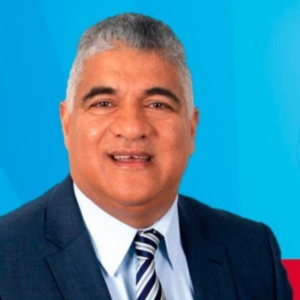

Why should members of the Jewish community vote for you?
The African Christian Democratic Party (ACDP) unashamedly supports Israel and believes in Judeo-Christian values.
What would you do to improve the lives of South Africans, and the Jewish community specifically?
We believe that we are all equal in the sight of G-d and appreciate the contribution that the Jewish community has made to improve the lives of the most vulnerable. Also, the skills and brilliance of the Jewish community regarding technology are exceptional.
Many members of the Jewish community feel let down by local government. What would you do to improve service delivery and restore confidence in the city?
It’s important to make sure that our communities are safe by making sure that we address the root causes of crime. The ACDP, in its manifesto, spells out the solutions to the many problems we encounter. It’s important in this election to be solution-driven and not to play the blame game. There are many issues we will address, namely, a reliable and affordable energy supply, boosting local business, and economic growth.
Which parties would you be willing to form a coalition with in order to govern the city effectively, and are there any parties you would rule out working with?
The parties we are willing to work with are the DA and FF Plus. We will exclude the ANC, Economic Freedom Fighters (EFF), uMkhonto weSizwe Party (MKP), and Al Jama-ah.
What is your view on international issues being brought into local municipal politics, for example, the controversy surrounding the proposed renaming of Sandton Drive?
The renaming of Sandton Drive is uncalled for and ridiculous.
Herman Mashaba – ActionSA Johannesburg mayoral candidate
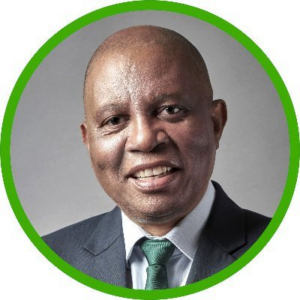
Why should members of the Jewish community vote for you?
ActionSA is the only party in this country committed to public service, providing services to all communities. We are a party with the commitment to building a non-racial society, but with our core value of social justice.
What would you do to improve the lives of South Africans, and the Jewish community specifically?
ActionSA believes in treating all law-abiding South Africans on an equal basis, including the protection of the rights of all religious groups.
Many members of the Jewish community feel let down by local government. What would you do to improve service delivery and restore confidence in the city?
My personal commitment to public service in South Africa is unmatched, including the rights of our Jewish communities.
Which parties would you be willing to form a coalition with in order to govern the city effectively, and are there any parties you would rule out working with?
ActionSA will work with any party given to it by the voters of the city of Johannesburg. Our non-negotiable conditions to enter a coalition: 1. Corruption to be declared public enemy number one. 2. We must agree to provide public services to all communities as demanded by the Constitution.
What is your view on international issues being brought into local municipal politics, for example, the controversy surrounding the proposed renaming of Sandton Drive?
ActionSA’s position regarding the renaming of streets and buildings is based on names that have negative historical ramifications exclusively for our country. To us, changing Sandton Drive is unapologetically unacceptable, and will never serve the interests of South Africa around building the rainbow nation that Archbishop Emeritus Desmond Tutu envisaged for our country. ActionSA would not support anything that causes division of our united nation.
Helen Zille – DA Johannesburg mayoral candidate
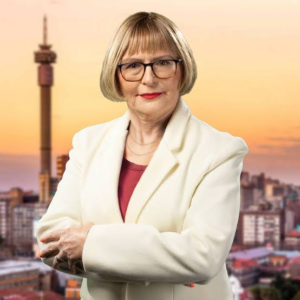
Helen Zille was asked the same questions. This was her response:
Local government is about service delivery – water, electricity, roads, stormwater, streetlights, refuse removal, sewage, parks, etc. Everyone needs these basics. And we will strive to deliver them to all communities, irrespective of their religious affiliation.
Geordin Hill-Lewis – DA mayor of Cape Town, seeking re-election
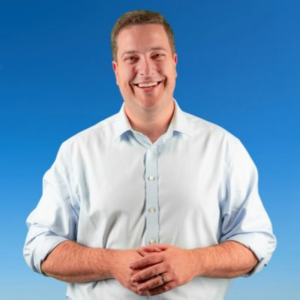
Why should members of the Jewish community vote for you?
Because I believe every South African deserves to live in safety, dignity, and freedom, regardless of their faith, race, or background.
South Africa’s Jewish community has made an extraordinary contribution to our country. It deserves leaders who respect that contribution, defend religious freedom, and stand unequivocally against antisemitism. I have been clear that antisemitism has no place in Cape Town. No Jewish family should ever have to feel unsafe practising their faith or expressing their identity.
But I also want Jewish voters to judge me, and the DA, by what we deliver. We believe in clean government, safer communities, economic opportunity, and a city that works for everyone. Cape Town is showing that this is possible, and I want us to build on that progress.
What would you do to improve the lives of South Africans, and the Jewish community specifically?
My ambition is to build a safer, cleaner, and more affordable Cape Town, with more jobs, more homes, and better services for everyone.
Over the past five years, Cape Town has added 418 000 jobs. We are now pledging to enable another 500 000 jobs over the next term. We will invest in essential infrastructure, expand our policing capacity, improve public spaces, and make it easier for businesses to grow.
For the Jewish community specifically, this means protecting the freedom to worship, ensuring that Jewish institutions and places of worship can operate safely, and working with community leaders and law enforcement to respond firmly to intimidation, threats, and antisemitic incidents.
Many members of the Jewish community feel let down by local government. What would you do to improve service delivery and restore confidence in the city?
I understand that frustration. People pay their rates and taxes, and they rightly expect a government that delivers. They should not have to fight for functioning streetlights, clean streets, reliable water, or safe public spaces.
Cape Town is not perfect, and I will never pretend that it is. But we have demonstrated what determined, competent local government can achieve. We invested R12.2 billion in infrastructure in the last financial year alone, and we are accelerating the replacement of water and sewer pipes, improving public spaces, and expanding municipal law enforcement.
Our commitment for the next term is to do more, faster, while keeping services affordable and holding ourselves accountable for results.
Which parties would you be willing to form a coalition with in order to govern the city effectively, and are there any parties you would rule out working with?
My first choice is a strong, stable DA majority in Cape Town. That is how we have been able to plan for the long term, invest in infrastructure, and deliver consistently without the political instability that has paralysed other major cities.
I don’t want Cape Town to become another Johannesburg, where political horse-trading has too often taken precedence over the needs of residents.
If voters deliver a council without an outright majority, we will consider the result responsibly. Any coalition must be based on shared commitments to constitutionalism, clean government, financial discipline, and reliable service delivery. We won’t compromise those principles for political office. But the best way to protect Cape Town’s progress, and keep the city moving forward, is to give the DA an outright majority on 4 November.
What is your view on international issues being brought into local municipal politics, for example, the controversy surrounding the renaming of Sandton Drive?
Municipalities should be fixing roads, not fighting foreign policy battles. South Africans are entitled to strong views on international affairs. That is part of living in a free democracy. But municipal government has a different responsibility, namely to deliver services, maintain infrastructure, and bring communities together.
Mmusi Maimane – leader of Build One South Africa
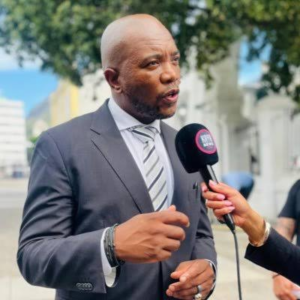
Why should members of the Jewish community vote for you?
The Jewish community deserves a government that sees them first and foremost as equal South African citizens, while respecting their religious and cultural identity. Build One South Africa believes strongly in religious freedom, constitutionalism, and the right of Jewish South Africans to practise their faith openly and safely. We will also stand firmly against antisemitism and discrimination in all its forms.
Most importantly, we want to build a Johannesburg that works, where families are safe, services function, and businesses can grow.
What would you do to improve the lives of South Africans, and the Jewish community specifically?
Our priority is making Johannesburg functional again. It means reliable water and electricity, better roads, effective refuse collection, safer neighbourhoods, and a municipality that responds to residents.
For the Jewish community, that means working with community organisations on safety, protecting Jewish schools, synagogues, and communal institutions, and ensuring that Jewish South Africans can live their lives openly without intimidation or discrimination. We don’t believe the Jewish community should have to choose between being proudly Jewish and being proudly South African.
Many members of the Jewish community feel let down by local government. What would you do to improve service delivery and restore confidence in the city?
Confidence will return when government delivers. We would set clear service-delivery targets, hold officials accountable, and focus relentlessly on the basics: water, electricity, roads, refuse, and public safety.
The Jewish community has a particularly strong interest in safety around schools, synagogues, and community facilities. Those concerns must be taken seriously by the city.
Which parties would you be willing to form a coalition with?
BOSA will work with parties that are committed to constitutional democracy, clean government, and competent service delivery. We won’t enter coalitions simply to obtain positions. Any coalition must have a clear programme for governing Johannesburg. We are focused on change in the cities we work in. Those who have been corrupt and inept at service delivery are already excluded.
What is your view on international issues being brought into local municipal politics, such as the proposed renaming of Sandton Drive?
There is a place for international affairs in national politics, but Johannesburg’s municipality should focus on the issues it is elected to address: water, electricity, roads, refuse collection, public safety, and housing. The Jewish community, like all residents, needs a city that works. Renaming neutral streets does not improve service delivery, create jobs, or make Johannesburg safer.
We should be particularly careful about using municipal institutions to import international political disputes into local communities. Johannesburg should bring people together, not deepen divisions. Our priority is to fix the city, rather than use the city to make political statements about the world. South Africa belongs to all who live in it, this is important for Jewish citizens who have contributed significantly to our nation and played an important role in our democracy.
Velenkosini Hlabisa – president of the Inkatha Freedom Party
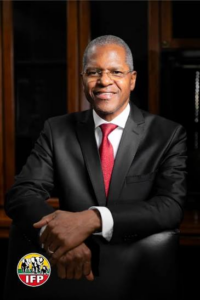

Why should members of the Jewish community vote for you?
The Inkatha Freedom Party (IFP) is South Africa’s fifth-largest political party, with a strong track record of servant, ethical, and principled leadership. Moreover, the party’s founder, the late Prince Mangosuthu Buthelezi, had a longstanding relationship with the Jewish community.
The IFP is also strongly grounded in family and religious values.
The IFP currently leads the Government of Provincial Unity in KwaZulu-Natal, where we have helped secure billions of rands in investment for infrastructure and job growth. Ours is a track record of putting people first.
What would you do to improve the lives of South Africans, and the Jewish community specifically?
The IFP has set out five commitments in its local government manifesto, with a focus on practical solutions and getting the basics right:
- Get people working: Create conditions for local businesses to grow, support entrepreneurs, and promote sustainable job creation.
- Deliver basic services and working infrastructure: Prioritise water, sanitation, electricity, roads, streetlights, refuse collection, housing, and accessible clinics.
- Protect traditional and Khoi-San institutions and leadership: Work with traditional and Khoi-San leaders and strengthen the voice of rural communities.
- End corruption and make every rand count: Promote transparent procurement, financial discipline, and accountability.
- Empower women, young people, and people with disabilities: Expand access to skills, bursaries, mentorship, and practical opportunities.
These commitments are intended to benefit all residents, including members of the Jewish community, by building safer, better-run municipalities that respond to people’s everyday needs.
Many members of the Jewish community feel let down by local government. What would you do to improve service delivery and restore confidence in the city?
The IFP would take a “fix the basics” approach, dealing with visible service failures early and maintaining infrastructure before it breaks down. That means prioritising repairs and preventative maintenance for water, sanitation, electricity, roads, and refuse services.
We would also strengthen municipal capacity by appointing qualified professionals, reduce unnecessary reliance on external service providers, and hold municipal managers accountable for clear performance targets.
Regular community meetings, accessible information about municipal spending and progress, and better ways for residents to report problems and follow up on repairs would help rebuild trust.
Which parties would you be willing to form a coalition with in order to govern the city effectively, and are there any parties you would rule out working with?
It’s too early to discuss specific coalitions. The IFP is a member of the Government of National Unity and continues to work with parties that respect and uphold the Constitution and put South Africans first.
What is your view on international issues being brought into local municipal politics, for example, the controversy surrounding the proposed renaming of Sandton Drive?
Local issues should find expression in local government. There is no place for international political battles at municipal level. People’s needs and service delivery must come first.