


World
Blinken, Pompeo: Strong US-Israel ties, assistance to continue despite Trump call to end aid

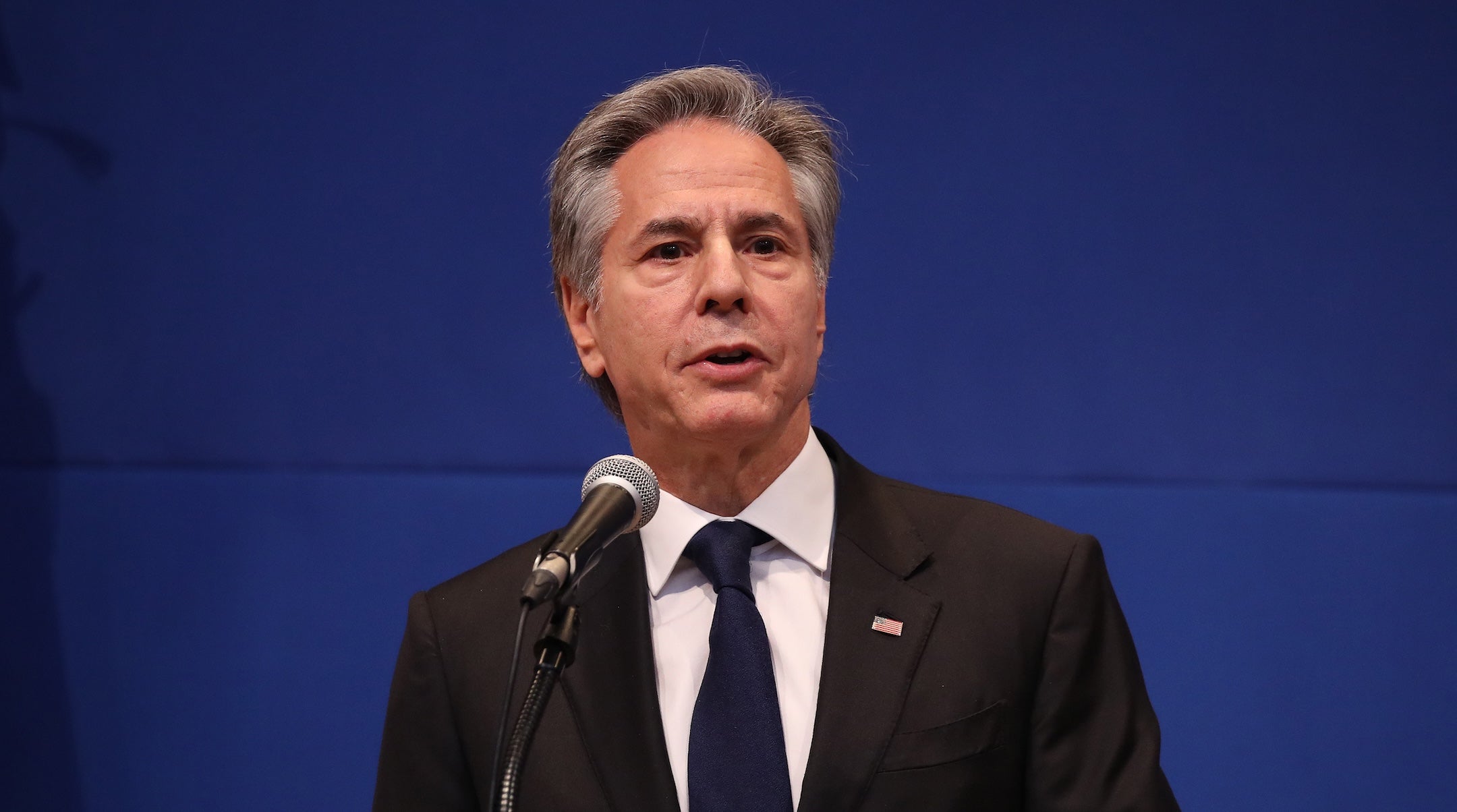
JTA – Former United States secretaries of state Antony Blinken and Mike Pompeo both downplayed the potential end of American military aid to Israel on Sunday, insisting during a joint appearance in Washington that such a development would not harm US-Israel ties.
Speaking at the Jewish Federations of North America’s annual General Assembly, both men defended Israel’s security and its need to defend itself in the wake of the Hamas attack on 7 October, condemning voices that try to equate Israel’s actions with those of Hamas and accuse it of committing “genocide”.
But Blinken, who was secretary of state in the Biden administration at the time, also didn’t spare Jerusalem criticism over its conduct of the war.
Following 7 October, “the Israelis did, for the most part, the bare minimum of what they felt they needed to do for people who were stuck in the middle of this crossfire in Gaza”, he said. “There was a certain amount of disregard, a certain amount of disdain for the well-being of the Palestinian civilians.”
He added that “that is vastly different, vastly different from an intent to do them harm, from an intent to eliminate them. The target was Hamas, and horrifically, too many people were caught in the middle of that and suffered terribly as a consequence.”
Still, he said, it is important to “recognise that we’re at an inflection point” when it comes to American attitudes towards Israel. Blinken recalled discussions with Israeli Prime Minister Benjamin Netanyahu as the Gaza war was raging in which he warned that Israel was “not only losing the Democratic Party – and that may be fine from your perspective – you’re going to be losing young Republicans, young evangelicals”.
On election day last week, following campaigns in which many candidates called for reducing support for Israel, President Donald Trump declared that the money “gets cut off at the end of the year”.
Pompeo, who served as Central Intelligence Agency director and secretary of state during the first Trump administration, said that while he did not “know exactly how this administration will follow through on that”, there had been conversations between Jerusalem and Washington “about what’s the appropriate level of assistance and what [is] the right model” for cooperation.
Calls to change the nature of US military aid have become “bipartisan”, he noted.
Stating that he is “very optimistic”, the former Republican congressman asserted that “whether we provide the $4 billion (R65.8 billion) a year – which … mostly goes to buy US weapons systems from Lockheed, Raytheon, and big defence contractors – is much less material than the nature of the relationship between the United States and Israel”.
“And so whether we provide that particular money, there will still be deep connectivity. There will still be lots of assistance, and there will be a partnership that is historically important, not just for Israel, but for the United States of America as well. We couldn’t do the intelligence work we need to do without them.”
“They save American lives all the time,” he continued. “I still have a death threat on me from the Iranians. The Israeli intelligence has been very helpful in making sure that I’m where I need to be and I’m not where I ought not be.”
Israel’s 10-year memorandum of understanding with the United States, which currently pledges Israel $3.8 billion (R62.5 billion) annually for the fiscal years 2019-2028 subject to congressional appropriations, has proven a political liability for Trump. Last week he questioned why his administration should have to deal with criticism from Democrats over the issue. Following his party’s loss in the midterms, Vice-President JD Vance explicitly called to put America first and “change our relationship to Israel”.
Blinken responded similarly to his Republican counterpart on the question of US aid to Israel.
“I think you’re seeing a recognition on the part of the Israeli government that this thing is not going to last forever, and an attempt to make it clear in the body politic in Israel that, no, we can pay for our own stuff. We don’t need the kind of assistance that we’re getting from the United States in terms of paying for what we’re acquiring,” Blinken stated, adding that “it doesn’t change anything … about the inherent value of the relationship and the partnership”.
But while Pompeo and Blinken appeared largely on the same page regarding military aid to Israel, the two differed significantly regarding the conflict with Iran and a future resolution to the long-running conflict with the Palestinians.
Asked how to negotiate a settlement with Iran, Pompeo replied that “I just, I simply don’t think that it’s possible with the regime” even as he admitted the United States cannot currently curtail Iran’s ambitions through military means.
Pompeo called to “continue to apply pressure there” through the current economic blockade and by “going after further assets inside of Iran” because “they still have the capability to muck up the Gulf region and to threaten Israel [while] we have the capacity to, if not eliminate it, mitigate that materially”.
As for offering concessions to keep the Strait of Hormuz open and maintain the flow of oil, Pompeo insisted that “we should never give the Iranians a damn thing”.
Blinken, on the other hand, stated that Trump needs to acknowledge that the war against Tehran “might not be a loss” but it “wasn’t a real win”.
But while concessions, possibly including sanctions relief, may be needed to bring the Iranians back to the table, “I think what you have to do is exert sustained, systematic pressure on them economically … for purposes of getting to negotiate,” he added.
The lesson learned from the 2015 Iran deal, otherwise known as the Joint Comprehensive Plan of Action, Blinken said, is that it can take time to get Iran to the point where it is ready to negotiate.
Blinken added, “Same thing with the Iran-Iraq war. There wasn’t a capitulation. There was a negotiation. I think at this point that’s in our interest.”
Turning to the Palestinian issue, Blinken argued that part of why Hamas attacked on 7 October was to preempt the further expansion of the Abraham Accords and that “for that vision to be fully realised, it requires a resolution of the Palestinian question”.
“I believe to the bottom of my heart, as I have throughout, that the only way forward, and again, this is very unpopular these days, is through a secure Israel and a sovereign Palestine,” Blinken said.
He drew pushback from Pompeo, who argued that “one of the keys to success of the Abraham Accords was not letting the conflict between the Palestinians and the Israelis get in the way of what the Gulf Arab states actually know needs to happen”.