Achievers
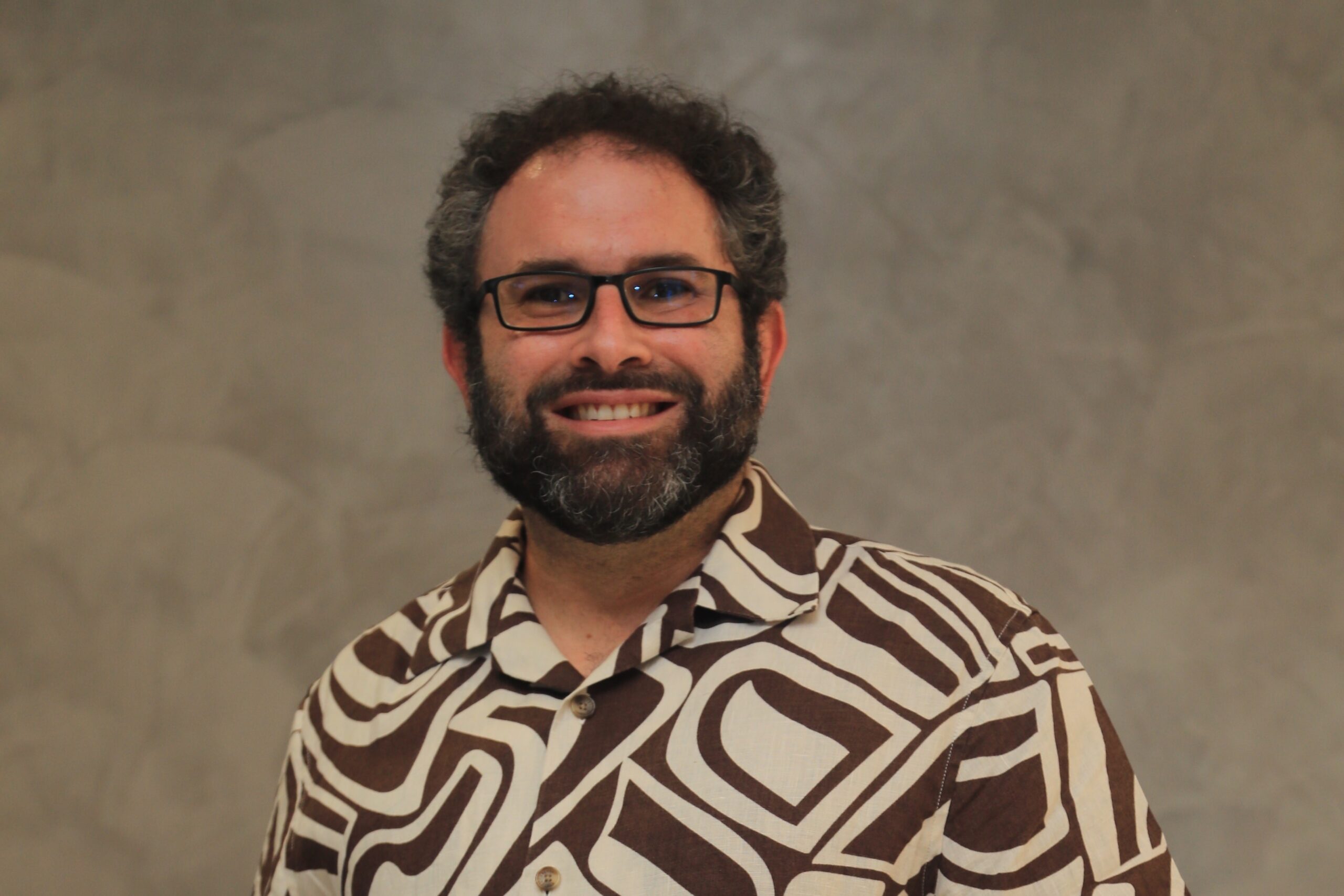
Benji Rosman brings AI to Africa

Investec Jewish Achiever Award Professional Excellence Award winner Professor Benjamin Rosman has quickly established himself as the leading figure in South African Artificial Intelligence (AI), demonstrating to South Africa and the rest of the world that Africa is at the forefront of AI and machine learning.
At the University of the Witwatersrand (Wits), he directs the Machine Intelligence and Neural Discovery (MIND) Institute. He also leads initiatives like the Deep Learning Indaba and Lelapa AI, shaping the next generation of AI talent across Africa. In 2025, Time named him one of the 100 most influential people in AI, reflecting his impact on both science and society.
Rosman was born with cerebral palsy, leading to a right-sided hemiplegia. “This has given me constant challenges throughout my life, physically and psychologically, but it has taught me the value of perseverance, having a strong support group around me, and looking for unique strengths rather than following what everyone else is doing,” he says.
In addition to founding the MIND Institute at Wits in 2024, which focuses on the fundamental science of intelligence in machines, humans, and animals, Rosman, as professor of computer science in machine learning and robotics, runs the most research-active AI lab, the Robotics, Autonomous Intelligence and Learning (RAIL) Lab dedicated to conducting cutting-edge research in the field of AI systems.
“The MIND Institute is the only AI institute in Africa dedicated to the development of AI itself and ensuring that Africa doesn’t just remain a consumer of AI developed in the rest of the world. This already involves 36 Wits researchers from diverse fields ranging from computer science to neuroanatomy and philosophy, and recently received funding of $1 million [R17 million] from Google.org,” he says.
The work of MIND doesn’t only apply to areas of technology. Rosman has applied AI to other areas like healthcare and business. The Institute recently launched a project supporting African musicians in exploring novel uses of AI.
“We are also active in the policy space, with some of our fellows, including myself, being on government advisory panels,” he says.
Rosman hasn’t just made waves in the South African AI space, he has influenced the entire continent through the Deep Learning Indaba, of which he is a co-founder. The indaba is a pan-African movement to strengthen African AI, and has become the largest AI summer school in the world, with about 1 300 attendees at this year’s event in Rwanda, with satellite events in 47 African countries. Rosman is also co-founder of the start-up Lelapa AI, dedicated to building AI for Africans by Africans.
This year, Rosman was the only African to be named a fellow of the prestigious Canadian Institute for Advanced Research (CIFAR), in the area of Learning in Machines and Brains, which includes many of the godfathers of modern AI. He was made a fellow in 2025 after being named one of 18 early-career researchers in the world to be selected for the prestigious CIFAR Azrieli Global Scholars programme for 2022-2024.
Moreover, in August 2025, Rosman was announced by Time as one of the 100 most influential minds in AI globally in the “thinkers category”, where he was the only South African to be featured.
Despite all these achievements and recognition, Rosman’s biggest achievement is the launch of the MIND Institute. “MIND is focused on fundamental research rather than delivering quick wins. This is something incredibly difficult to get funding for, but I managed to rally considerable support for it, and now it has achieved global recognition,” he says.
Though Rosman completed his PhD in the United Kingdom, he always knew that he wanted to return to South Africa because he saw so much potential in the AI space.
“I never had any idea how to do this, but I was always looking for opportunities to give back,” he says. “When the chance came in 2017 to start what became the Deep Learning Indaba, I jumped on it wholeheartedly, and through that experience, started learning more about Africa more generally, and where the gaps are that I could contribute to filling. My view of the rest of the continent has changed in this way from complete ignorance to a driving passion to promote activities and support people wherever I can.”
Rosman has been extremely lucky in the fact that throughout his career, the popularity of AI has continued to soar.
“Despite this, I have always based what I do on core principles, and making sure that I am doing what I am doing because it is the right thing to do,” he says, “This means that we are future-proofed, rather than just chasing hype cycles. I have also made sure to surround myself with people who inspire me greatly, students and colleagues who can help us adapt our mission as we need to.”
Rosman says that everything he does leads back to training people and giving them new skills.
“Every year, I have been teaching hundreds of students skills in machine learning and robotics,” he says, “and now the people that I have trained are doing this as well. The Deep Learning Indaba now has a community of more than 10 000 Africans working in AI, so all of this is about building a more positive future for Africa.”
He says truly embracing AI, not just in a superficial way, is the only way he can see us scaling economically the way we should – through start-ups and innovation. “If we are an active participant in the development of this technology, the benefits to our society will be immense, but if not, we run the real risk of being completely dominated and exploited by foreign powers. I dream of large numbers of South Africans working in different areas of AI and using this to support and empower their communities,” he says.