





OpEds
SA is off the starting block but still not in the race

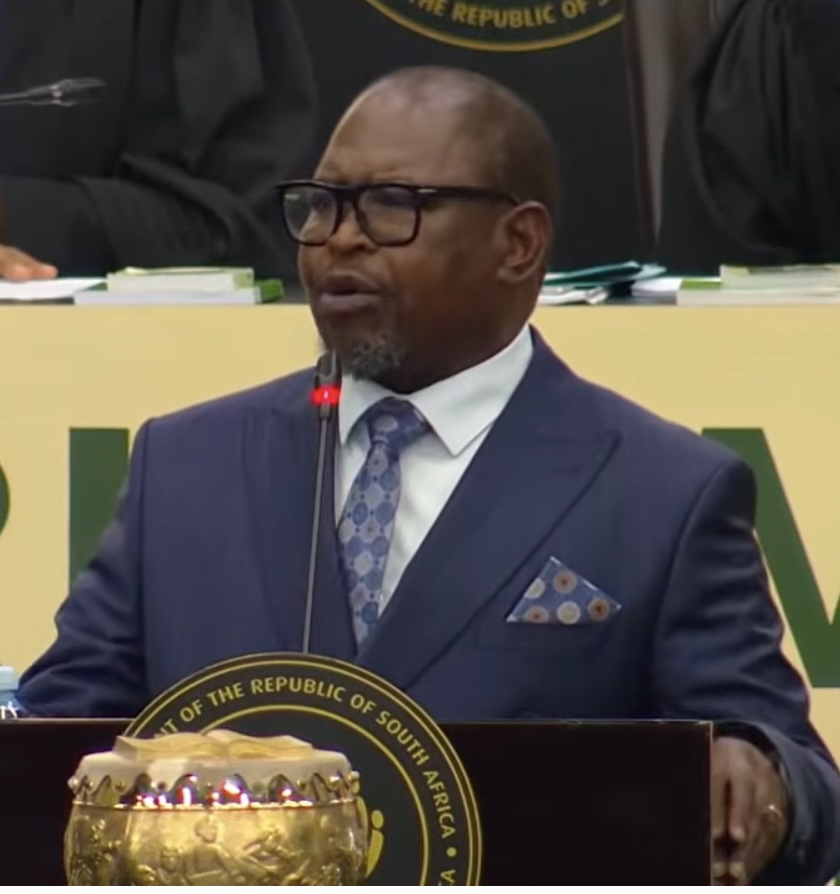
Five years ago, South Africa’s fiscal outlook was bleak. Warning lights were flashing red: widening deficits, rising debt, and eroding confidence. In this year’s Budget, the minister reminded us of that moment, and pointed to the progress since. Stabilisation is now visible. Deficits are narrowing, debt ratios are contained, and reforms are beginning to deliver tangible results. In short, South Africa is moving from a debt-heavy, consumption-orientated fiscal stance towards a more investment-led framework, with infrastructure spend at the heart of this growth strategy.
The Johannesburg Stock Exchange has also shown strong performance, easily beating that of the S&P500, a gauge of the US market. With international inflation still above target and global budget deficits widening, investors are turning to metals that “central banks cannot print” as a hedge. Gold and platinum shares led the rally, but a weaker dollar also supported gains in large cap international stocks. Lower interest rates, bond inflows, softer inflation, a stronger rand, and a rating upgrade stirred banks and the property sector. Yet these gains have not filtered through to the majority of local stocks. Consumer and manufacturing companies still complain of householders under pressure, high unemployment, rising costs, and structural impediments.
We are entering a period of stabilisation, and that is a positive. But stabilisation is not growth. Projected growth of around 1%-1.5% a year is far too low to absorb the unemployed, reduce inequality, or keep South Africa globally competitive.
Repairing 36 years of administrative neglect has resulted in Eskom’s unmanageable debt, Transnet bottlenecks, and municipal water failures, issues that will weigh on the economy for years. Crime and corruption continue to sap confidence. And while the world races ahead with artificial intelligence (AI), South Africa has no coherent strategy. This is perhaps the greatest danger. In the 21st century, competitiveness will be defined not by mineral wealth but by digital infrastructure, innovation, and the ability to harness AI. Without a plan, South Africa – and Africa – more broadly, risks falling further behind.
What is needed is clear: a national AI and digital strategy that aligns education and skills with the demands of the future; infrastructure partnerships that invite private capital rather than rely solely on the state; decisive action against crime and corruption to restore confidence; and policies that open markets, reward innovation, and attract global investment. Without these reforms, stabilisation will remain a pause, not a pivot.
Since the end of apartheid in 1990, South Africa’s gross domestic product (GDP) has grown from about $115 billion (R1.8 trillion) to more than $400 billion (R6.4 trillion) in 2024 – a fourfold increase. Yet compare this with China, which grew nearly fiftyfold in the same period, or the United States, which expanded from $6 trillion (R96.5 trillion) to $27 trillion (R434.4 trillion). Eastern Europe, once poorer than South Africa, surged ahead after European Union (EU) accession, with Poland a star performer.
GDP per capita tells a sterner story. South Africans earned on average $6 300 (R101 363) in 2024 compared with Americans’ $83 000 (R1.3 million), Chinese citizens’ $12 000 (R193 073), and Brazilians’ $9 000 (R144 805). The promise of democracy has not yet translated into broad prosperity.
Peers have raced ahead by embracing technology and innovation. Singapore invested in education, broadband, and digital infrastructure, positioning itself as a hub for fintech, biotech, and AI research. South Korea backed industrial policy with research and development (R&D) subsidies, nurturing Samsung, LG, and SK Hynix into global leaders in semiconductors – the hardware backbone of AI. Israel linked military R&D with venture capital, creating one of the densest start-up ecosystems, with global exports in AI and cybersecurity. Ireland leveraged EU integration and tax incentives to attract tech giants like Google, Apple, and Meta, embedding itself in the digital economy.
South Africa had gold and diamonds, while Singapore had a port, and Korea determination. Ireland had emigration and debt, yet today it is richer than Britain. The difference lies not in resources, but in policy choices.
South Africa’s Human Development Index has improved, but inequality in pay scales remains extreme. Unemployment hovers around 30%, compared with 5%-7% in most developed countries. Three in 10 South Africans remain unemployed. Inflation has been contained and reforms initiated, but decaying infrastructure has hobbled industry and eroded confidence.
South Africa’s economic story cannot be told without acknowledging the drag of crime, corruption, and misguided policy. Violent crime remains among the highest in the world, corruption scandals have hollowed out institutions, while policies like black economic empowerment, intended to redress apartheid’s injustices, have too often entrenched inefficiency and patronage rather than broad-based empowerment. The African National Congress’s instinct to own and control everything reflects 1960s dogma in a 21st-century economy. Without opening space for private enterprise, innovation, and global capital, stabilisation will remain a holding pattern rather than a springboard.
South Africa’s democratic miracle remains intact, and fiscal stabilisation is a welcome step. But the economic miracle will arrive only when growth is unlocked – through jobs, openness, and a strategy that embraces the future. That means building for an AI economy, investing in digital infrastructure, and creating policies that reward innovation rather than control. Without this, stabilisation will buy time, but the future will belong to others.
- David Shapiro is a veteran stockbroker and market commentator.







Ian Levinson
March 6, 2026 at 1:17 pm
Stabilisation isn’t the race, it’s just catching your breath before the race even begins. Cutting deficits and firming the rand meant nothing if food, fuel, and electricity prices never came down. Unemployment stays sky‑high, Eskom and Transnet keep collapsing, and there’s no credible digital or AI strategy. Other countries sprinted ahead decades ago by embracing innovation. South Africa is still wandering around the stadium looking for the starting block. Meanwhile the rand is tanking and on its way back to R18+ — right where it belongs