Lifestyle
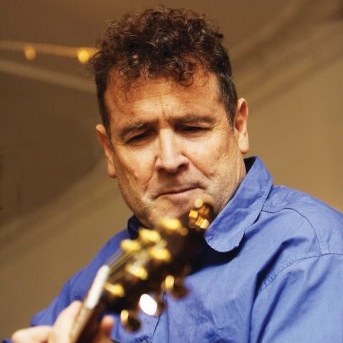
Unheard aspects of Johnny Clegg voiced in new book

New research into the life and work of Johnny Clegg reveals aspects of his musical and cultural journey that have seldom been documented, drawing on previously unheard recordings, archival material, and fresh anthropological perspectives.
Scholars contributing to Johnny Clegg: Critical Reflections on His Music and Influence say that exploring his early sound world, his encounters with Zulu culture, and the way he confronted loss and mortality has opened up new ways of understanding an artist whose presence shaped South Africa’s social landscape.
Michael Drewett, a Rhodes University sociology professor and co-editor of the collection, said that many of the contributors had long been immersed in different dimensions of Clegg’s work. “There is a very strong sense of people’s love for that topic.”
Some of the most striking new material comes from the Hidden Years Music Archive, housed at Stellenbosch University. Sound archivist Pakama Ncume has spent years digitising and cataloguing thousands of reels, LPs, and cassettes preserved by David Marks, whose philosophy was to capture not only the music but the atmosphere of performance.
Ncume’s immersion in this archive offered an intimate window into Clegg’s beginnings. As she listened through recordings from the 1970s, she encountered “a white man wearing Zulu regalia and standing so close with a black man while the system had taught us that the two do not mix”. She first saw this as a child on an LP sleeve in her mother’s collection, but the archive gave her access to Clegg’s voice as it developed. “You could feel a man who is still finding himself,” she said.
The unedited nature of the Hidden Years recordings was central to this insight. “He wanted to keep the conversations between artists and audiences, the jokes that were shared, everything,” Ncume said of Marks. This approach preserved hesitation, humour, and vulnerability alongside music. It also preserved the energy of spaces where young musicians tested apartheid’s boundaries.
Ncume said the early tapes revealed a shy teenager navigating unfamiliar cultural terrain while forming relationships that would shape his identity. Listening to the recordings made the cultural exchange audible. “He really meant it,” she said. “It wasn’t accidental that he became a white Zulu.”
Her chapter in the book, co-written with her former supervisor, focuses on Clegg’s live performances between 1970 and 1978. These include appearances at the National Folk Festival, the Free People’s Concerts, and the Market Theatre Café. The research required extensive transcription. By tracing specific performances, they were able to follow how Clegg grew musically, linguistically, and politically during that period.
Ncume said engaging with the archive was exciting and emotionally demanding. “It can be draining because sometimes you wonder if you are really ready to open those wounds.” Yet, “If we don’t open them, when will they ever heal?” For her, the work helps fill gaps in South Africa’s cultural history and honours “the people who played a crucial role in shaping the South Africa we have today”.
Where Ncume’s work focuses on early performance, anthropologist Marguerite de Villiers Coetzee offers a different lens: an exploration of how Clegg engaged with mortality, loss, and endings. Born in 1990, Coetzee grew up hearing about the “Rainbow Nation dream”. She first learned about Clegg when a teacher described “this white Zulu who when he spoke on the phone, you would not know that he wasn’t a first language speaker”. She found it “fascinating that someone could re-appreciate their identity”.
She studied anthropology at the University of the Witwatersrand, where she and Ncume were the only two students in their Zulu class. They visited places significant to Clegg’s artistic development, including Jeppe Hostel. “Music was the window that made sense,” Coetzee said. It helped her understand social worlds she hadn’t grown up in.
Her chapter, “King of Time: A Lament for Johnny Clegg”, examines how Clegg made sense of death, both of those close to him and his own approaching mortality. She looked at how he processed the deaths of band member Dudu Ndlovu and anti-apartheid activist David Webster, and how he confronted his own cancer diagnosis. She analysed his final albums and memoir to understand how he “dealt with death to kind of learn lessons and read this loss myself”.
Coetzee’s archive is partly visual. She has photographed many of Clegg’s performances over the years. “I might have been to something like 40 of his concerts,” she said. Her photographs appear in the book to complement her reflections.
Drewett noted that one of the most compelling elements across the chapters is how each author’s personal history intersects with Clegg’s. Contributors discovered Clegg in different decades and under different social conditions, which shaped their approaches to the material.
His own chapter examines the cultural boycott during apartheid. Although he had previously written about censorship, he found new layers in the boycott’s history. He uncovered publications he “didn’t even know existed”, describing the experience as “incredible”.
New insights into Clegg’s legacy arise not only from archival and academic work but from the memories of people who encountered him in formative ways. One audience member at the Cape Town book launch recalled watching Clegg on television during apartheid after her mother called her into the room saying, “Come and see what I am seeing.” She remembered the impact of witnessing a white musician visibly crossing boundaries. She said she drew strength from seeing someone act without regard for what “could or would have or might have been”.
Another person reflected on how limited the written record about Clegg has been until recently. “There’s only one book to date that deals with Johnny, and that’s his autobiography. Now, there are two,” he said. The new scholarship fills gaps, he said, pointing out, “There’s so much to be written about this man.”