





Featured Item
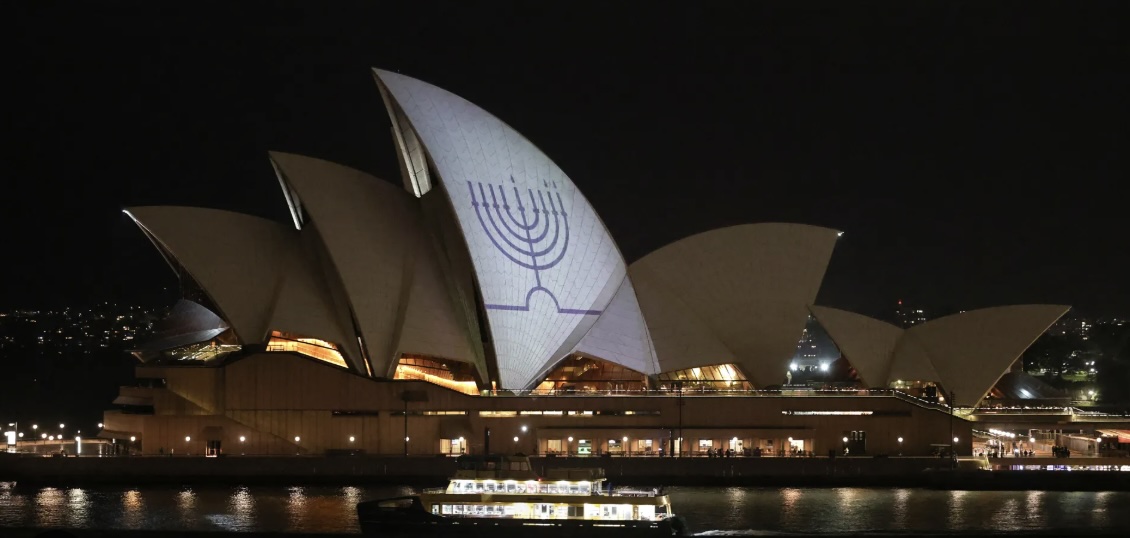
After Bondi, the community questions their protection

Little more than two weeks after the terrorist attack on Sydney’s Bondi Beach, the Australian Jewish community moves into the new year with heightened security, unresolved grief, and a growing insistence on government accountability.
There is no relief from the horror and sadness that follows the father-and-son gunmen who opened fire on more than 1 000 Jewish people gathered to celebrate the first night of Chanukah on 14 December, killing 15 people.
While Chanukah candles lit throughout the festival have burned down, the community questions remain. Who speaks when hate escalates, and who acts before it turns deadly?
“The community is shattered,” said Rabbi Mendel Kastel, the brother-in-law of Rabbi Eli Schlanger, who was murdered in the attack. “It has been very difficult since the Bondi attack.” Schlanger was known in Sydney for his work as a prison and hospital chaplain, as the rabbi for Chabad of Bondi who organised the fateful event, and for community initiatives aimed at bringing people together.
His death, Kastel said, represents not only a personal loss, but a rupture in the fabric of communal life. “His death is a huge loss to the community,” Kastel said. “He always inspired others. He brought people closer to Yiddishkeit.”
In the weeks following the attack, a mitzvah campaign launched in Schlanger’s memory has encouraged acts of kindness and communal responsibility. Kastel noted that the word mitzvah has entered everyday language in Sydney in ways he has never seen before. For him, that shift is meaningful, but incomplete. “We need people to stand up and show zero tolerance to hate in any form,” he said.
For South African expat Dr Vic Alhadeff, the former chief executive of the New South Wales Jewish Board of Deputies, the attack marked the most violent point in a steady deterioration in the lived experience of Jewish Australians. “I am absolutely shaken, rocked, distressed, and shattered by what happened at Bondi Beach,” he said.
Alhadeff believes the warning signs have been visible for more than two years. He points to hostile public demonstrations, attacks on synagogues, Jewish politicians being targeted, and a growing sense of vulnerability in schools and universities. Jewish students, he said, increasingly describe campuses as hostile spaces, while parents have been advised to discourage children from wearing Jewish symbols in public.
“The Australian Jewish community has been fearing and warning leaders of such an event,” he said. “What happened at Bondi Beach was a cold-blooded massacre out in the open that shook and rocked the community.”
Despite this, Alhadeff is emphatic that the attack does not define Australia as a country. Jews have been part of Australian society since the arrival of the First Fleet in 1788, he said, and have contributed across civic, military, sporting, and cultural life. “Jews are proud Australians,” he said.
That distinction, however, has not eased the community’s frustration with political leadership. In recent weeks, families of the victims have written publicly to Prime Minister Anthony Albanese, calling for urgent and tangible action against antisemitism. Their letters reflect a belief that expressions of sympathy, while appreciated, are no longer sufficient.
Alhadeff shares that view. “We needed far more expressions of leadership from across civil society. Leadership is not a popularity contest, it’s leadership,” he said.
“Silence is not enough. There has been too much bystanding and not enough speaking out and condemning,” he said.
Those sentiments were visible at the commemoration on 22 December, the last night of Chanukah at Bondi Beach. About 18 000 people attended in person, with many more watching the livestream, gathering at the same site where the attack occurred. The event was organised by Chabad and included the lighting of a full chanukiah. One candle was lit by the father of Matilda, the 10-year-old who was murdered in the attack. Another was lit by the son of Ahmed al Ahmed, the man who tried to stop the attackers from shooting, who also sent a video message from his hospital bed that was viewed by the crowd.
Albanese attended the event and offered to speak. When he was introduced, the crowd responded with sustained booing and jeering.
President of the New South Wales Jewish Board of Deputies David Ossip, who was introducing him, asked the crowd several times to quieten down before order was restored. Ultimately, the prime minister did not address the gathering. For many in attendance, the moment symbolised a widening disconnect between government and a community that feels increasingly exposed.
The Bondi attack has also accelerated national debates around security and public order. New South Wales has moved to strengthen restrictions on protests near places of worship, while cultural institutions and major public events are reassessing security arrangements. Jewish creatives and community leaders have written open letters calling for greater consideration of Jewish safety in public spaces, with some of those concerns already reflected in changes to major city events.
At the centre of the political debate is a renewed push for a Royal Commission into antisemitism in Australia. Supporters argue that such a commission needs to be independent of government, have the power to compel evidence, and examine systemic failures across federal and state jurisdictions. Senior members of the legal profession, Jewish leaders, and the Premier of New South Wales have all echoed calls for its establishment.
The federal government has so far declined to commit to a Royal Commission, pointing instead to the appointment of a special envoy for antisemitism and the implementation of recommendations from her report. While acknowledging these measures, Alhadeff believes they do not go far enough. “What happened was about attacking Jews because they are Jews,” he said. “It is not about a conflict thousands of miles away.”
For Kastel, the political arguments feel distant from the day-to-day reality of loss. Schlanger’s absence is felt in hospitals, prisons, and community spaces where he once served. Yet Kastel insists that memory must be accompanied by moral clarity. The campaign in Schlanger’s name, he said, is not intended as a tribute alone, but as a call to action. Acts of kindness, responsibility, and courage, he believes, are the most meaningful response to hatred.
