


Israel
October 8 probes antisemitism beyond echo chamber

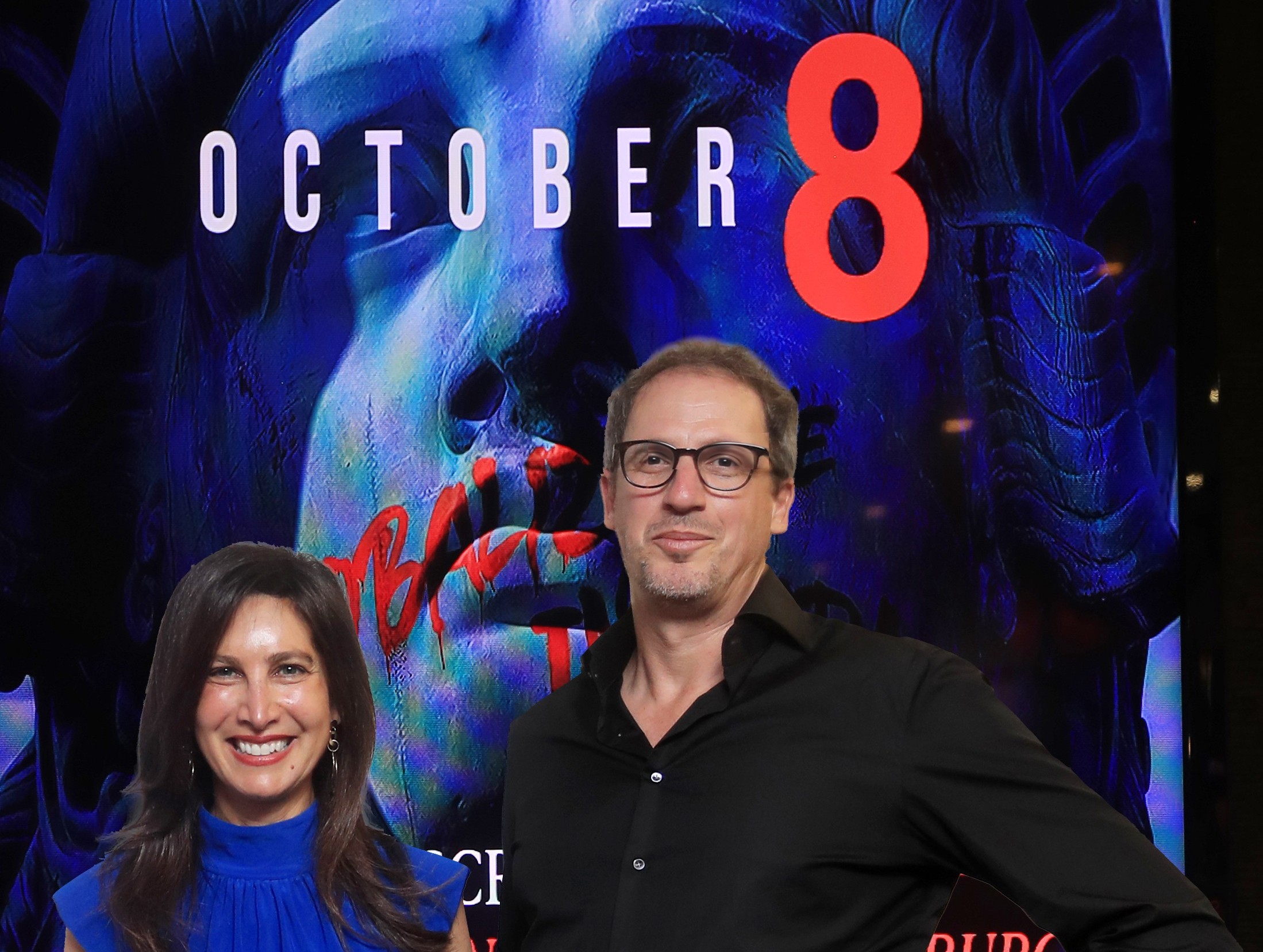
American journalist and documentary filmmaker Wendy Sachs refused to take no for an answer when major production companies turned away her October 8 project, exploring the world’s reaction to Hamas’s attacks on Israel and the rise in global antisemitism that followed.
Companies like NBC and CNN told Sachs the project was “too political” or “too pro-Israel”, so she decided to make it independently.
“You tell me I can’t do something, and I’ll double down to prove that I can,” she told the SA Jewish Report in South Africa this week to screen October 8. Sachs went on to raise about $3.7 million (R63.6 million) from private donors to make the documentary. “This film is my life’s work,” she said. “I was determined to move mountains to make it happen.”
More than 300 people came to watch the first screening in South Africa hosted by the South African Jewish Board of Deputies, at the Nu Metro cinema in Hyde Park on Sunday, 26 October.
The story behind the film began just one day after the 7 October 2023 massacre. Sachs said she woke up to the horrific images from Israel and the very next day, saw footage of rallies and statements celebrating Hamas and blaming Israel. “That’s when I knew something had shifted in the minds of those not Jewish,” she said.
She partnered with Israeli editor and producer Nimrod Erez, who was in South Africa with her this week, and they turned more than 170 hours of footage, a mix of interviews, social media videos, and on-the-ground scenes from protests and encampments, into a fast-paced, 100-minute documentary. The film captures the shockwaves of 7 October and the ideological fallout that followed across the world.
“I filmed more than 80 interviews, only 38 made it into the movie,” Sachs said, explaining that her team selected the most compelling and credible stories to create a cohesive and emotionally resonant narrative.
Sachs’s intention was to include diverse voices in the production. “It’s also an Israeli story,” she said. “I wanted an Israeli editor to ensure that I wasn’t appropriating the story entirely, and I also had non-Jews, millennials, and Gen Z creatives involved. It was important for me to make a film that resonates outside of the Jewish echo chamber.”
At its core, October 8 explores how, within days of the Hamas attacks, Jewish students and communities outside Israel found themselves under siege in a different way – facing hostility, intimidation, and ostracism.
The film follows several college students across the United States who suddenly find their campuses transformed into battlegrounds of hate. One student describes returning to her university dorm to find her door plastered with “Free Palestine” posters and messages calling Zionists “baby killers”. Another recounts being told by classmates that she deserved what happened in Israel.
At another campus, a Jewish student organisation’s event was violently disrupted by protesters shouting, “From the river to the sea,” while faculty members stood by silently.
Others tell quieter but equally chilling stories of friends who stopped speaking to them; professors who refused to denounce the Hamas attacks; and of feeling unsafe wearing a Star of David necklace on campus. “They show how antisemitism today doesn’t always look like what we think it does,” Sachs said. “It’s ideological, it’s social, and it’s deeply personal.”
The documentary weaves these firsthand accounts with interviews from public figures, academics, and journalists to reveal a broader pattern, one in which misinformation, performative activism, and ideology have merged into a new form of antisemitism disguised as anti-Zionism. Through powerful visuals and emotional storytelling, it exposes the ripple effects of the 7 October attacks far beyond Israel’s borders into classrooms, media spaces, and online discourse.
“I don’t think being Israeli made a difference,” Erez reflected, “but what happened after 7 October brought Israelis and diaspora Jews closer together. For me, this film became a learning experience. It helped me understand what it means to be Jewish outside Israel.”
Sachs said she intentionally made the film accessible beyond the Jewish world. “It’s about getting outside the echo chamber and changing hearts and minds.” The film, while deeply emotional, is also educational, exploring how extremist ideologies threaten democratic values everywhere, not just in Israel.
Speaking about the film’s global impact, Sachs described screenings in Amsterdam, London, Glasgow, and Mexico City. “In Glasgow, the Hindu community came out in incredible solidarity,” she said. “They want to bring the film to India. The reaction from the black community has been powerful too.”
Erez said screenings around the world have shown the impact of the film far beyond the Jewish community. “This isn’t just a film, it’s a movement,” he said. The duo has presented October 8 to diverse audiences, including government officials, university leaders, and interfaith groups, sparking conversations about extremism, media bias, and freedom of expression.
Sachs shared one particularly moving moment from a recent screening in Amsterdam, where the deputy prime minister of the Netherlands attended in solidarity with the Jewish community. “That’s what this film is doing, it’s opening doors and building bridges,” she said.
As the Johannesburg audience prepared to watch the film, Sachs revealed that their next project, titled Poison Ivy, will take a deeper look at the roots of modern antisemitism and anti-Western ideology in education systems worldwide.
“We’re tracing how foreign money and activist networks are influencing what’s being taught, even in schools,” she said. “We’re also exploring how the apartheid narrative about Israel took root here in South Africa, starting from the Durban Conference in 2001.”
She said she hoped to secure wider distribution in South Africa. “We don’t have streaming access here yet, but we’d love for more South Africans to see it. The film ends on a message of hope and allyship. Black South Africans must see that Jews are diverse, we’re black and brown too, and that antisemitism and racism are interconnected.”