





Featured Item
Pandor attack on Israel academic visit – a study in intolerance

Former Minister of International Relations and Cooperation Dr Naledi Pandor has once again taken aim at Israel and the Jewish community, targeting South African academics who recently visited the country and those behind the trips.
She wrote a letter, published in Business Day on 3 December titled “Academics’ ‘shameful’ visit to Israel” the latest in the anti-Israel lobby’s long-running condemnation of and attempt to prevent South Africans from engaging with Israel.
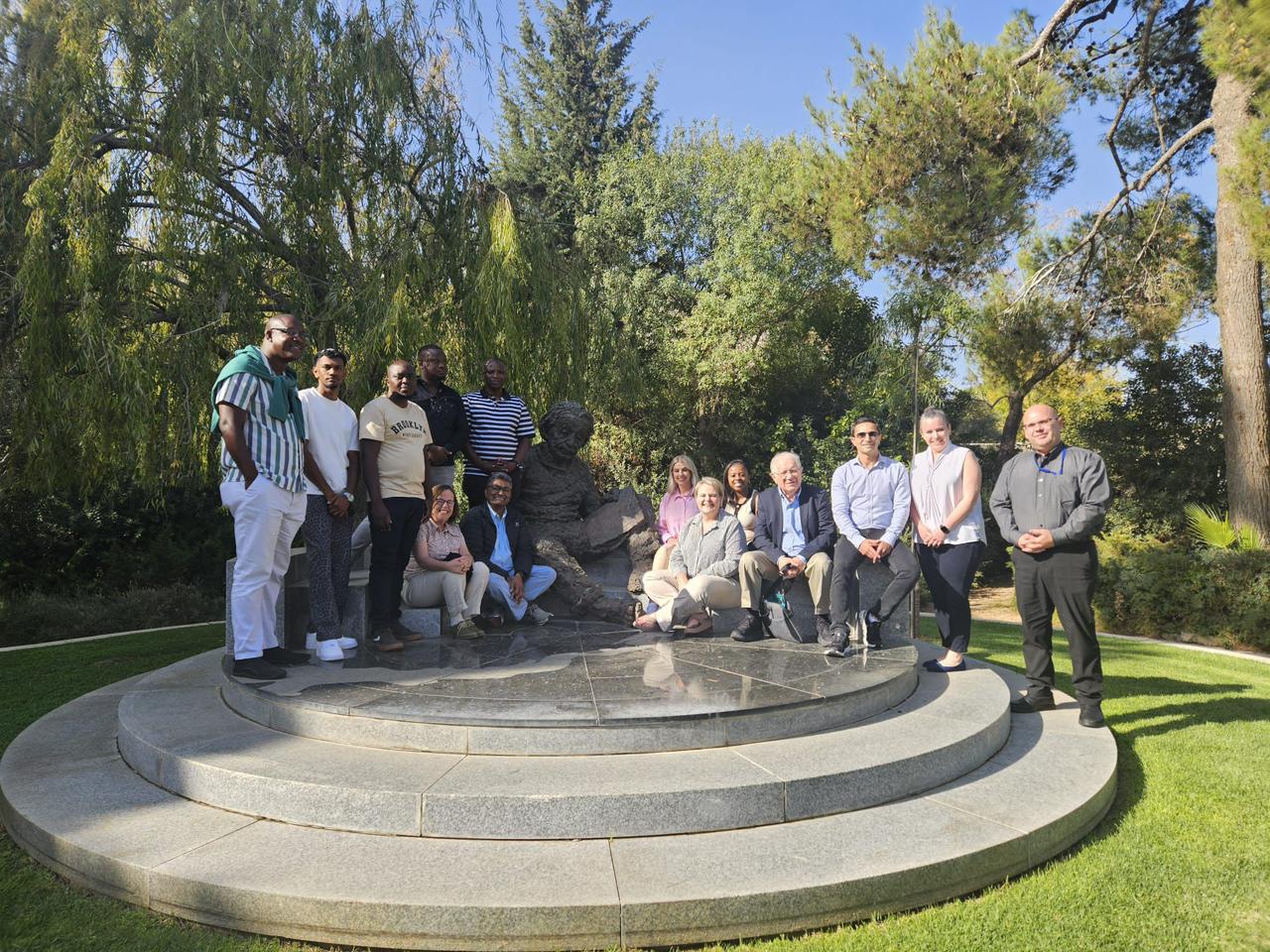
She was referring to a trip by 10 academics in November from universities across South Africa, including the University of Cape Town; University of Free State; University of the Witwatersrand; University of Johannesburg; and University of South Africa. There has been a push at a few of these universities from the anti-Israel lobby to cut ties with Israeli universities and the Jewish state as a whole.
Pandor, now chairperson of the Nelson Mandela Foundation, described the academic delegation’s journey as “a shameful mark on our proud history of standing up for the rights of all oppressed people”. She claimed it was “horrifying” that academics could be “completely comfortable being paid to visit Israel; renew academic ties with universities and researchers complicit in genocide; and entirely ignore the serious harm done to academic freedom and higher education in Gaza and the occupied territories”.
Although her letter focused on the academics, the backlash against going to Israel has been a weapon increasingly used by anti-Israel groups to stop people finding out for themselves what’s actually happening in Israel.
When a delegation from the Democratic Alliance travelled to Israel on a prior visit, those who went were vilified. Speakers were heckled from podiums and confronted in public spaces.
Most recently, King Buyelekhaya Zwelibanzi Dalindyebo of the abaThembu drew similar condemnation after returning from an Israel visit. He was widely criticised and subjected to public abuse following the journey. The criticism was directed at the visit itself rather than at any specific public statement he made afterward. That reaction reinforced the pattern in which South Africans of any persuasion face hostility for going to Israel.
Against that backdrop, Pandor’s attack on the academic delegation placed the trip within a broader political climate in which engagement with Israel is treated as a symbolic act rather than an individual decision.
Responding to the criticism, Ariel Seidman, Israel embassy chargé d’affaires in South Africa, said academic exchange depended on direct engagement rather than distance.
“In order for academia to be free to make up their own mind and get an educated opinion about a topic, they need to be able to see it with their own eyes, visit, talk to people, and experience,” he said. “If we expect academics in South Africa to base their opinions only on media, then we aren’t allowing them to do their job.”
Seidman said the delegations weren’t politically curated. “We don’t tell people who have spoken against Israel that they aren’t allowed to come to Israel. On the contrary, we want the people who are most anti-Israeli to come and see with their own eyes, ask questions, and meet people.”
He said programmes differed according to the group involved. Academic delegations met Israeli universities and counterparts, while religious leaders focused on historical and religious sites. All delegations, he said, visited Jerusalem; Yad Vashem; communities near Gaza; and the Nova memorial site. “They meet people from across the political map in Israel, including people who are very critical of the government,” Seidman said.
Daniel Yakcobi, the executive director of the South African Friends of Israel (SAFI), said the purpose of the trips was educational. “The trips aimed to promote a better understanding of the situation in Israel, the conflict, and the geopolitical dynamics in the Middle East,” he said. “We want to create a far better understanding here in South Africa, and to counter the rhetoric of the anti-Israel movement that is spreading lies and propaganda.”
Yakcobi said participants were selected through a referral-and-interview process and based on professional credentials. Funding for trips came from private donors who supported strengthening relations between South Africa and Israel. Organisers said delegations also engaged with Palestinian and critical perspectives. One recent group met the mayor of Bethlehem and a Muslim media personality who was sharply critical of the Israeli government.
Several academics who participated rejected the implication that their visit represented political alignment. Dr Limukani Mathe said Pandor’s criticism reflected a misunderstanding of academic freedom. “Naledi Pandor seems ignorant [about] what academic freedom means. Is it not within the freedoms of academia to visit Israel universities? Is academic freedom confined to visiting Gaza?” he said. “As academics, we had the freedom to accept the invitation and link with Israeli academic colleagues. If the same invitation is extended to visit Gaza, we will gladly do the same.”
Another academic on the delegation who asked to remain anonymous said independence of thought hadn’t been compromised. “I want to assure you that as part of the academic delegation, we maintained our independence and critical thinking, unlike what is being insinuated in the letter,” she said. “The visit to Israel was a genuine academic exchange, focused on exploring innovative solutions to shared challenges. I was impressed by Israel’s willingness to collaborate and share expertise with South Africa.”
Organisers rejected the suggestion that the visits were propaganda exercises. “We aren’t bringing them to convince them about a certain government or to convince them that we are right,” Seidman said. “We are bringing them to see what Israel is, understand Israel better, and then make up their mind.”
According to organisers, many participants returned from Israel hesitant to speak publicly about their experiences because of fear of personal and professional backlash. They said public attacks by activist groups had had a silencing effect even when impressions diverged significantly from expectations.
SAFI Chairperson Shaun Zagnoev said the reaction to the visit reflected a tightening political climate around Israel-related discourse. He said growing hostility toward engagement itself pointed to a struggle over narrative control and public legitimacy.
The official response to Pandor’s letter, published by the South African Zionist Federation and authored by spokesperson Rolene Marks, challenged what it described as selective moral outrage. In her reply titled, “Naledi Pandor speaks of human rights while partnering with those who crush them,” Marks said that while Pandor castigated academics for visiting Israel, she herself had aligned publicly with regimes widely accused of severe human rights abuses.
Marks asked what word should be used to describe “collaboration with a regime that arms groups committed to Jewish death”, arguing that Pandor “accuses others of complicity while standing shoulder to shoulder with the source”. She challenged the consistency of Pandor’s moral framework, and said condemnation of travel to Israel ignored the complexity of regional politics and the principle of universal human rights.
The dispute has widened into a debate about South Africa’s foreign policy posture and its effect on civil, religious, political, and academic engagement. Organisers questioned the logic of discouraging visits while relying on secondary sources for information. They said that most participants returned with views that differed from what they had previously believed.
Pandor’s letter and the responses it provoked have placed those interpretations in direct opposition. What was in fact a study visit has become part of a broader pattern in which South Africans who engage with Israel face condemnation regardless of profession, political affiliation, or intent.






Yaakov Coetzee
December 11, 2025 at 3:03 pm
Crazy hatred of our people
Bernard
December 11, 2025 at 4:30 pm
Pandor spoke telephonically to then Hamas leader Haniya and then visited Iran in the days following 7 October. Has she or the S A government ever disclosed details of these discussions the purpose of her visit ?
Denise Sciacca
December 11, 2025 at 5:57 pm
Why doesn’t evil Pandor look at what’s happening in her own backyard!!!
Alfreda Frantzen
December 12, 2025 at 10:31 pm
The woman is crazy with hatred.
Chaim
December 13, 2025 at 3:55 pm
Israel and Jews need to stop behaving like a battered wife trying to get the goyim to love them. Start taking military action against open antisemitism. Eradicate Amalekites.