


World
Citing Sydney attack, police in London say they will now arrest those who chant ‘globalise the intifada’

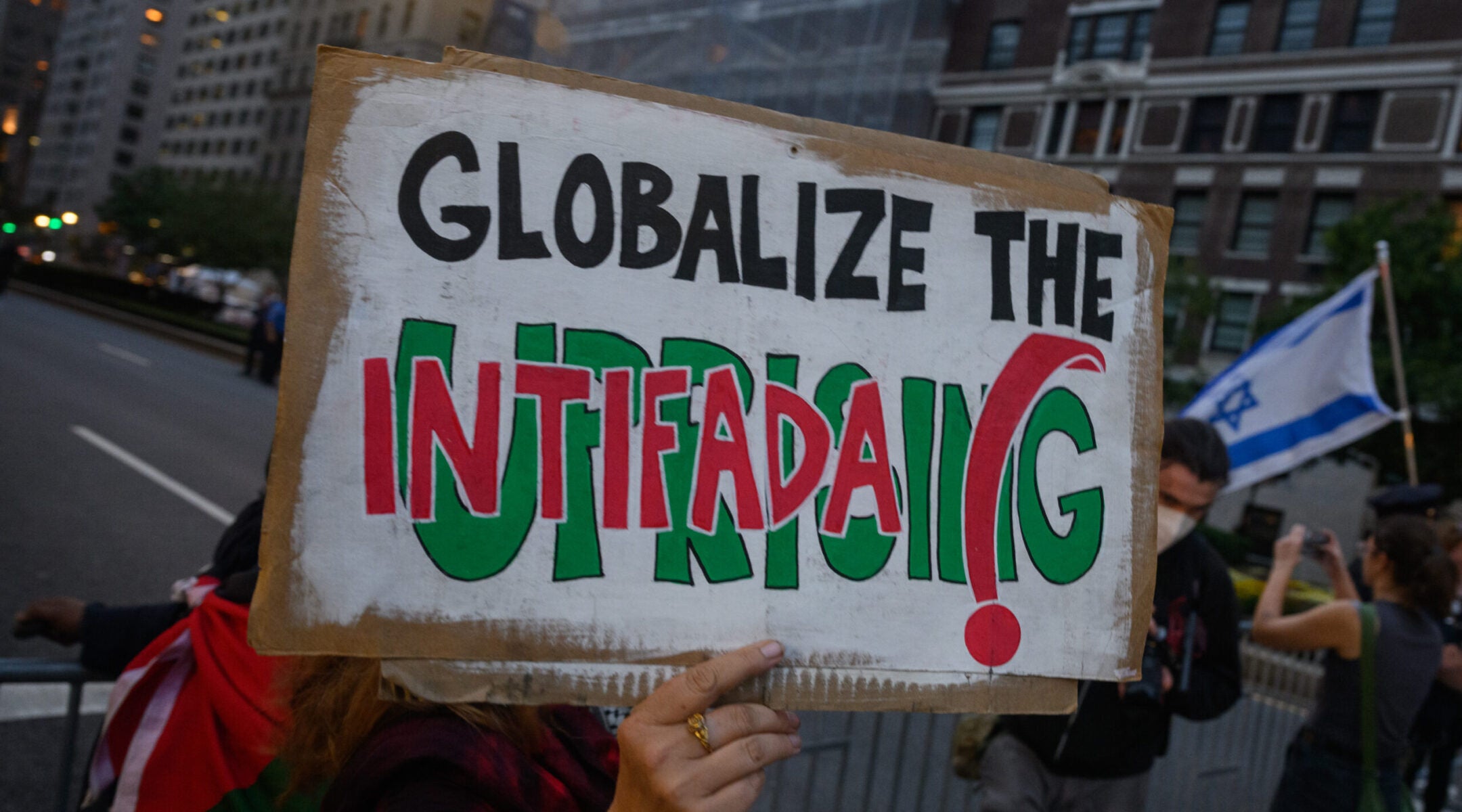
Police in London and Manchester, England, say they will now arrest pro-Palestinian protesters who chant the phrase “globalise the intifada,” in a policy change responding to the deadly terror attack on Jews celebrating Chanukah in Sydney.
Police in London also indicated that they will take more aggressive action to limit protests near synagogues where services are taking place.
The commissioner of the Metropolitan Police in London and the chief constable of Greater Manchester Police announced the new policies on Wednesday, saying in a statement that they had decided to act even though prosecutors had long advised that “the phrases causing fear in Jewish communities” were not criminal offences.
JTA – “Now, in the escalating threat context, we will recalibrate to be more assertive,” they said, noting that the changes were “practical and immediate”.
The chant “globalise the intifada” is used widely used at pro-Palestinian protests and according to many of its proponents is meant to galvanise worldwide solidarity against Israel. Its critics, including many Jews, charge that it is a call for violence against Jews. “Intifada,” which means “uprising” or “shaking off” in Arabic, was the name of two violent Palestinian uprisings including one from 2000 to 2005 that killed an estimated 1 000 Israelis in terror attacks, including on buses, at cafés, and at recreational centres.
The phrase has drawn renewed scrutiny in the wake of the Bondi Beach attack in Sydney, which killed 15 people. Authorities said the alleged attackers, who are not accused of using the phrase, had pledged allegiance to the Islamic State terrorist group. A man who pledged allegiance to the Islamic State staged an attack on a Manchester synagogue on Yom Kippur in October in which two people were killed.
Among those drawing a connection between the Sydney attack and the protest phrase was British Chief Rabbi Ephraim Mirvis.
“Why is it still allowed? What is the meaning of ‘globalise the intifada’? I’ll tell you the meaning, it’s what happened on Bondi Beach,” Mirvis told the BBC this week. He added, “We have to be far stricter with regard to what people are allowed to say.”
The British police crackdown on the phrase contrasts with the stance taken in New York City by Mayor-elect Zohran Mamdani, a longtime advocate for the Palestinian cause. During the campaign, he declined to condemn the phrase and then, after hearing from Jewish New Yorkers, said he would “discourage” it. But Mamdani, who hires the police chief and sets department priorities, has said he is not comfortable “with the idea of banning the use of certain words.”
In London, police are already acting on their new policies. The Metropolitan Police relocated a planned demonstration on Wednesday away from areas of London where public Chanukah celebrations were scheduled, igniting allegations from the Palestine Solidarity Campaign that its protest was being illegally banned.
The police department said that was not true. And the statement announcing the new policies emphasised that they are not intended to prevent legal protest.
“All members of society have a responsibility to consider their impact on others. It is possible to protest in support of Palestinian people without intimidating Jewish communities or breaking the law,” the statement said.
The rally on Wednesday night attracted about 1 000 people, the Palestine Solidarity Campaign said on social media, including former Labour Party leader Jeremy Corbyn.