OpEds
That summer humming isn’t bees, it’s the market

Johannesburg in December is blissful. Gardens teem with colour, school concerts are done, factory gates chained, and Ford Rangers – laden with us “Vaalies” – head for the coast. For a few weeks, traffic thins, inboxes quieten, and the pace slows.
Yet while the city exhales, screens in London, New York, and Hong Kong stay lit. Algorithms keep trading, bankers keep plotting – the world doesn’t pause just because we do. Still, with no meetings, no interviews, and no urgent deadlines, we can step back into a lull.
December gives us the rare luxury of taking stock of what the year has delivered, and to position ourselves for what the next one might demand. If this century has taught us anything, it’s that markets don’t operate in a comfort zone.
We entered 2025 expecting turbulence, and weren’t disappointed. Tariffs rattled, tech dazzled, and gold glittered. Trump’s Liberation Day tariff speech in April sent the S&P500 down nearly 20%, only to rebound 37% as he rolled back threats. By December, it sat 16% higher, buoyed by technology’s promise and whispers of further Fed (Federal Reserve) cuts. Outside of tariff fears, employment stayed resilient; consumption held firm; and corporate results – particularly in technology – were surprisingly strong.
Yet anxiety persists. Ongoing conflicts in Russia/Ukraine; concerns that massive AI (artificial intelligence) infrastructure spending is unsustainable; and worries that inflation will remain sticky have weakened the dollar. Troubled investors, turning to the safety of gold and platinum, drove prices 62% and 77% higher respectively. The Johannesburg Stock Exchange celebrated, with gold and platinum shares rocketing higher: Sibanye up 270%; AngloGold 240%; Gold Fields 190%; Impala Plats 144%; and Valterra (formerly Angloplats) 120%.
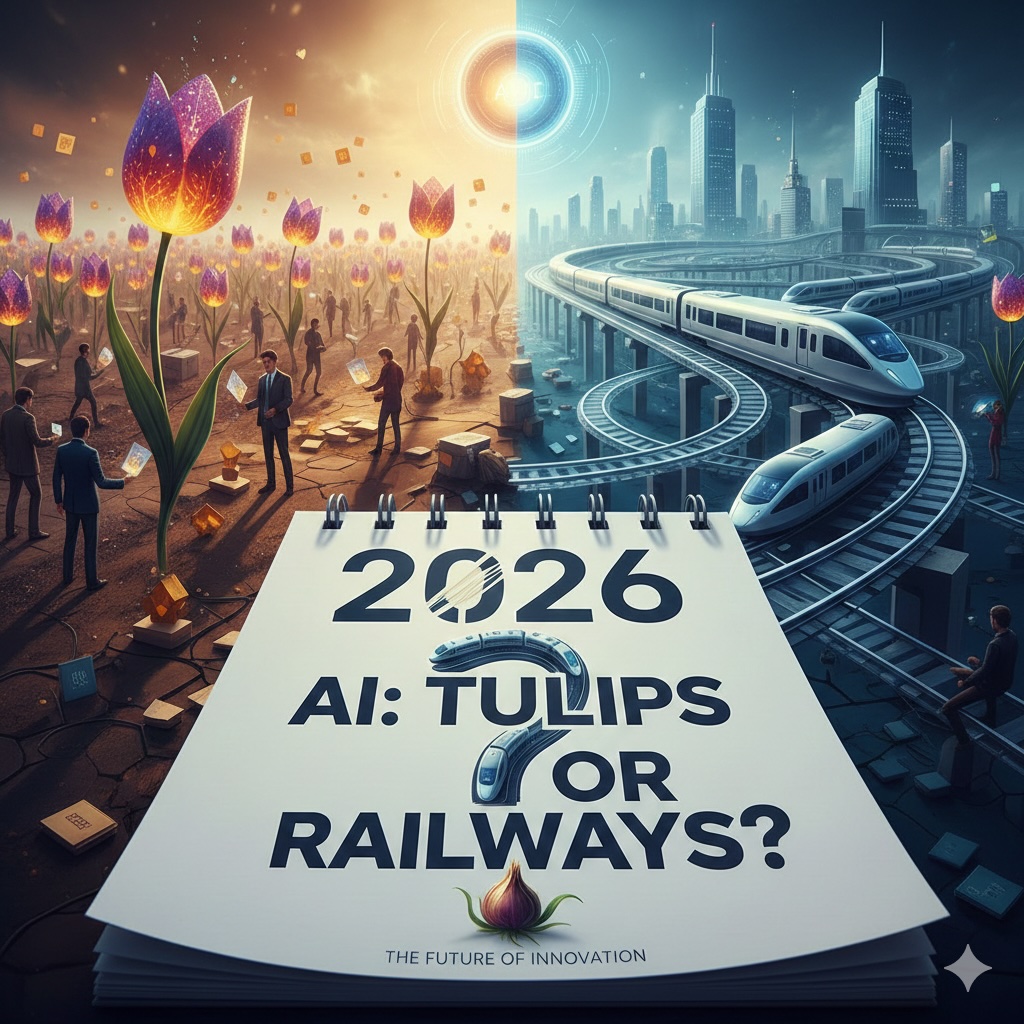
The debate over tech valuations rages on. Is AI the railways of the 19th century – costly but destined to power an age – or the tulips of the 1630s, when prized blooms proved worth less than onions? For investors exposed to AI, the test isn’t whether tech is expensive, but what to rotate into. Traditional cyclicals may benefit from rate cuts and a rebound in demand, but they face their own challenges. Post-COVID-19, consumers have rewritten the playbook: Uber Eats over restaurants; Netflix over theatres; online shopping over malls. They drink less, socialise on WhatsApp, and work from home in sweatpants. The question isn’t whether AI is overvalued, but what else offers durable returns.
No-one knows whether AI is the railways or tulips of our age, but tracks are being laid that will define how societies live. Tech valuations have run ahead of fundamentals in places, but the AI revolution is still in its infancy. It’s not about chatbots, it’s about foundational shifts – from healthcare diagnostics to supply chain optimisation, autonomous systems to drug discovery.
Outside of AI, weight-loss drugs are the new oil. Money is pouring into renewable energy. Aircraft order books stretch years ahead; factories are automating; and robotic surgery, medical devices, and new drugs are redefining healthcare.
Locally, markets steadied late in 2025, with inflation easing and rates edging lower. Gold and platinum shares glittered; global-facing counters like Richemont and Prosus gained; but retailers, banks, and local industrials mostly lagged. A firmer rand lifted bonds and property, yet unemployment, weak growth, corruption, and debt still weigh heavily. In short, the domestic engine still sputters.
Looking ahead to 2026, the key to investing is to remain imaginative, attentive, and resilient, positioning portfolios for the next decade. Stay exposed to technology, while embracing the other themes shaping tomorrow’s economy. The digital world isn’t an app. It’s the operating system of our lives. That’s where growth lives.
December here is blissful – traffic thins, inboxes quieten. But markets don’t do bliss. They hum, they lurch, they glitter. Ignore them, and you’ll find yourself deleted, not de-stressed.
- David Shapiro is a veteran stockbroker, market commentator, and chief global equity strategist for Sasfin Wealth.