World
Facing antisemitism and exclusion, Jewish authors get a lifeline

JTA – Susan Blumberg-Kason, a Jewish author whose work explores Jewish history and identity, was deep into a book about Golda Meir’s Milwaukee childhood when her literary agent abruptly dropped her early last year.
The agent offered only a vague explanation, saying, “We can no longer champion your career.”
Blumberg-Kason was surprised at the 180-degree turn by an agent who had been with her for years. But she soon discovered three other Jewish writers in her online community also had been suddenly dropped by their agents with little explanation other than the same phrase she heard: “We can no longer champion your career.”
It didn’t feel like coincidence.
“It wasn’t just that she dropped me,” Blumberg-Kason said. “It was that suddenly several of us were hearing the exact same sentence. It felt co-ordinated. It felt like something had shifted under our feet.”
It turns out many other Jewish writers have had similar experiences over the past two years, since the beginning of the 7 October war and the boom in anti-Israel and antisemitic ferment that followed. In writers’ groups and forums, Jewish authors describe a sense that their work is being railroaded because they are Jewish. They’ve lost agents, publishers, and book events. Some report that editors have cooled the moment Jewish themes appeared in their work.
In May 2024, anti-Israel boycotters propagated a shared spreadsheet called “Is your fav author a Zionist?” that went viral, “outing” Jewish writers for any kind of connection to Israel.
Author Elissa Wald felt the anti-Jewish sentiment so strongly that she created the Never Alone Book Club for Jewish authors to give one another support. The group now has 3 500 members, a Facebook community, and a Substack, and it hosts Jewish book events and shares resources for writers who no longer feel safe in mainstream literary spaces.
The challenging climate prompted UJA-Federation of New York to begin funding projects aimed at helping Jewish authors, awarding a total of $300 000 (R5 million) in grants to six organisations working in different areas of the literary ecosystem.
“Supporting Jewish writers is an important part of UJA’s overall strategy to confront rising antisemitism,” said Eric S Goldstein, the chief executive of UJA-Federation of New York. “Efforts to marginalise Jewish voices in culture and the arts must be met by even greater efforts to ensure they’re heard.”
The organisations receiving UJA grants are helping Jewish writers with everything from publishing logistics and visibility to offering emotional support.
“Jewish writers were being dropped, disinvited, and sidelined, and many were questioning whether they could continue writing Jewish stories,” said Rina Cohen, who manages strategy across UJA’s Combating Antisemitism portfolio. “By supporting them with tools and resources, UJA is sending a clear message: you deserve to create freely, and we’ll stand behind you as you do.”
The Jewish Book Council used funding from UJA for a unique programme to kick off the 100th anniversary of Jewish Book Month. The council designed and distributed 100 Jewish book kits to libraries and public spaces across New York City that offer a curated selection of Jewish literature, visual displays, QR codes, and author highlights. The aim is to give librarians and community centres an accessible way to showcase Jewish books, helping make Jewish writing visible in the very spaces where many writers feared their work was being erased.
“Jewish books need visibility,” said Jewish Book Council Chief Executive Naomi Firestone-Teeter. “We said, Let’s bring more Jewish books out into the world – into more readers’ hands – and build community around them. That’s what the kits do. They let people see Jewish books where they live their lives.”
It’s not always clear that a Jewish writer’s professional setback stems from antisemitism. Publishing is a brutal industry, and even successful writers experience abrupt and opaque rejection.
But many Jewish writers say that what they’re experiencing suggests something nefarious. They’ve felt their Jewishness was treated as suspect in classrooms, critique groups, or conferences. They’ve felt pressure from editors to strip Jewish elements from their work.
When the Jewish Book Council opened a portal inviting Jewish writers to share incidents affecting their creative or professional lives, more than 400 authors wrote in.
“Some of what we see is subtle and hard to pinpoint, and some of it is very direct: events cancelled; students pushed out of Master of Fine Arts programmes for being ‘Zionists’; bookstores refusing to stock books,” Firestone-Teeter said. “Things aren’t okay. This isn’t just the normal difficulty of publishing.”
In addition to the Jewish Book Council, UJA’s other five grants went to Artists Against Antisemitism; PJ Library; the Jewish Theological Seminary; the Jewish Life Foundation; and 70 Faces Media (the parent organisation of the Jewish Telegraphic Agency).
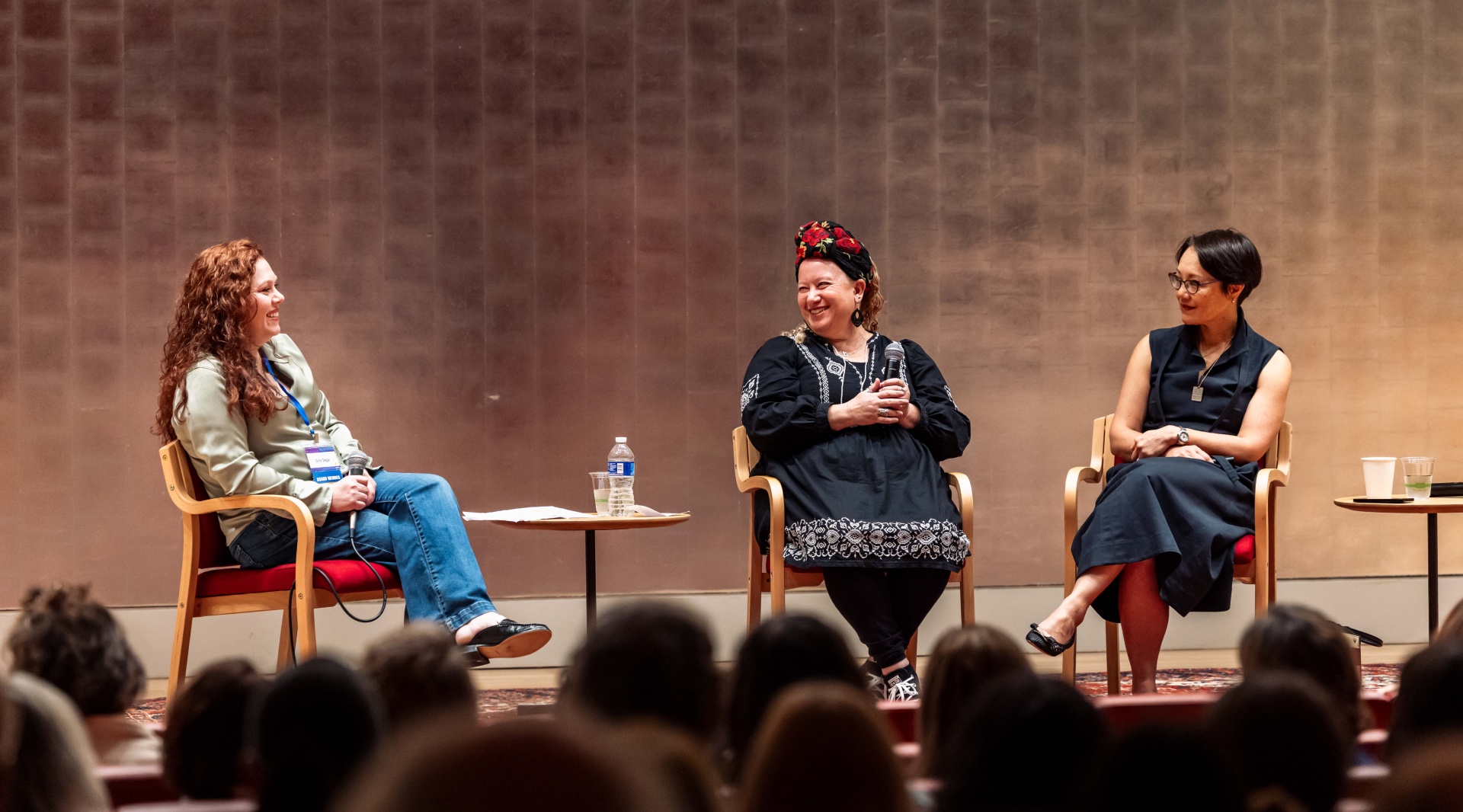
In October, 70 Faces Media held a one-day Jewish Authors’ Summit, offering writers practical tools, digital strategy training, and community-building to navigate this increasingly hostile publishing environment.
PJ Library will hold a Jewish children’s book festival for authors and families at New York’s 92nd St. Y on 11 January 2026. In just the first few days, an unprecedented 3 500 registrants signed up.
The Jewish Theological Seminary held a literary festival in September that brought together 450 writers, students, and community members for masterclasses, public panels, and craft development.
The Jewish Life Foundation is creating a TV and podcast series, The People of the Book with Josh Radnor, that will spotlight Jewish authors and conversations about Jewish identity and culture.
Artists Against Antisemitism created a full-day gathering for 140 authors, the Jewish Writers Mifgash, that included pitch sessions with literary agents, professional development workshops, mentorship matching, and mental-health support. Project Shema, a training and support organisation focused on contemporary antisemitism, led a session at the conference on how to recognise antisemitism in creative spaces.
Elizabeth Berkowitz, one of the event’s organisers, said several authors came away with promising leads.
“Agents were asking, ‘Can you send me the full? I want to see more,’” Berkowitz said. “We definitely made some shidduchs – real follow-ups between writers and agents who were actively seeking Jewish authors.”
Zeeva Bukai, a longtime editor who said she’d experienced open hostility in a professional editing group, said just being around others experiencing the same challenges was a welcome relief.
“I realised that it’s not just me experiencing this; other are too,” she said. “That validation was just as important as the tools we learned to deal with it.”
That’s the point, said the Jewish Book Council’s chief executive.
“We want authors to know we’ve got you on the other side,” Firestone-Teeter said. “Your job is to keep writing. Our job is to deal with the industry issues and build a community that celebrates you and your work. Jewish writers need to feel confident writing the books only they can write.”
- This story was sponsored by and produced in partnership with UJA-Federation of New York, which cares for Jews everywhere and New Yorkers of all backgrounds, responds to crises close to home and far away, and shapes the Jewish future. This article was produced by JTA’s native content team.