





News
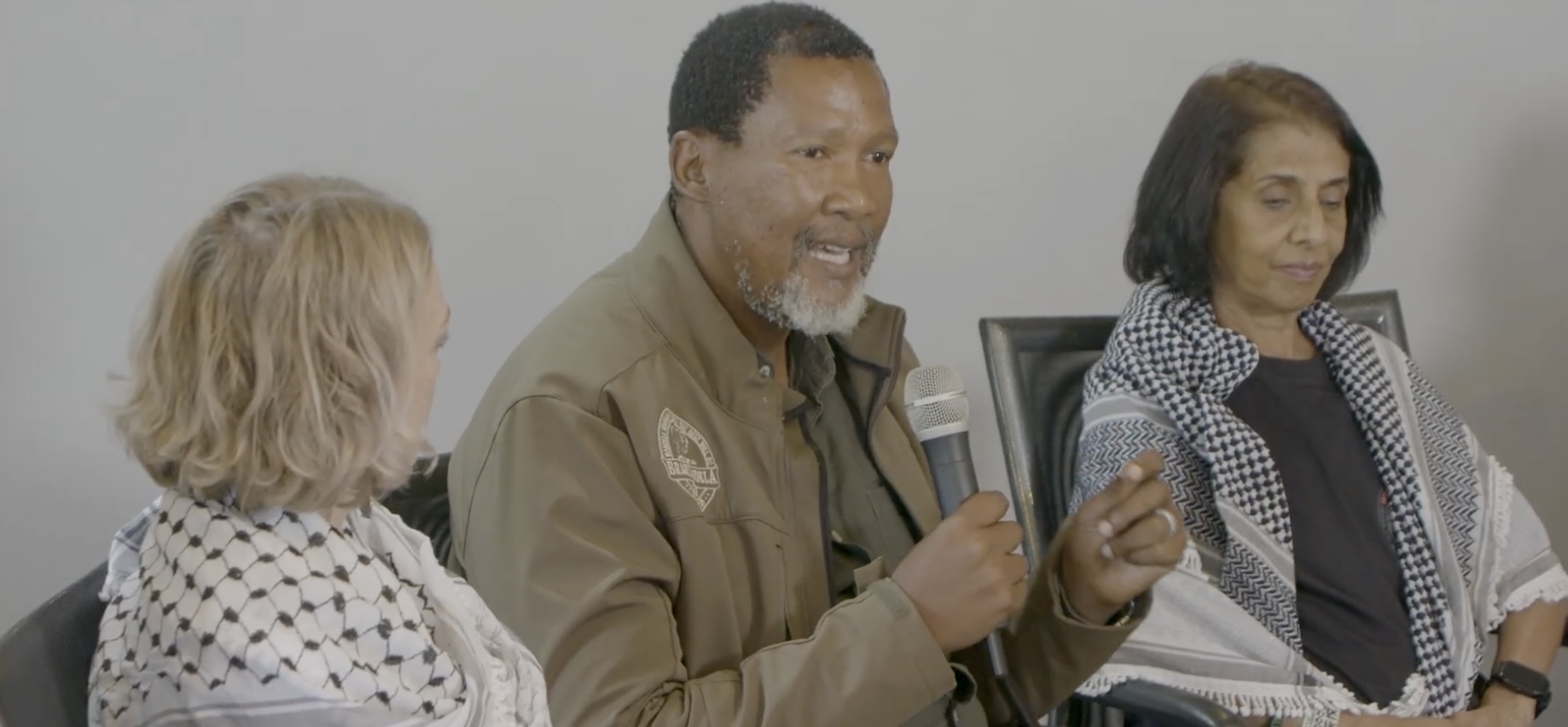
Mandela’s next flotilla aims to ‘bring Israel to its knees’

Mandla Mandela, the grandson of late President Nelson Mandela, promised to “bring Israel to its knees” at the launch of the Global Sumud Flotilla Mission 2026 at the Nelson Mandela Foundation in Johannesburg last week.
Mandela said the operation was intended to dwarf previous flotilla attempts, with plans for several thousand participants to take part in a coordinated maritime effort involving an estimated 100 vessels. The group is said to include about 1 000 medical workers, alongside engineers and participants presented as “war-crimes investigators”. The ships are expected to depart from ports in Spain, Tunisia, and Italy, before moving toward Gaza as a single mobilisation.
Critics say that this so-called “moral statement” confirms that the initiative is primarily a political intervention rather than a humanitarian mission. Jewish communal organisations and political analysts have questioned both the humanitarian necessity of the initiative and the motivation of its most prominent participants.
At the launch, Mandela said that through collective action, “we can isolate apartheid Israel, collapse it, and bring it to its knees”, framing the flotilla as part of a broader global mobilisation similar to the anti-apartheid boycott movement.
Trying to garner as much support as possible, Mandela also called on President Cyril Ramaphosa to “implement what was adopted by our national Parliament to expel the Israeli ambassador and close down the embassy”.
Adam Charnas, an analyst for the South African Jewish Board of Deputies, described the flotilla as “political theatre masquerading as humanitarian relief”. He said it “purports to deliver aid that already enters Gaza freely through established channels”, and challenges “a blockade rendered moot by the Rafah Crossing’s opening”.
Charnas referred directly to Mandela and other participants as “attention seeking” activists with “track records of extreme anti-Israel rhetoric”. He argued that the mission “prioritises spectacle over substance”, and accused its organisers of moral inconsistency for focusing on Gaza while remaining silent about other humanitarian crises.
The flotilla was unlikely to improve conditions for Palestinians or contribute to peace, he said. “Genuine peace requires the unglamorous work of dialogue, compromise, and sustained negotiation, not performative publicity stunts that generate social media engagement while changing nothing on the ground.”
In his speech, Mandela invoked his grandfather’s legacy, and rejected claims that Nelson Mandela had been supportive of Israel. “I want to put it on record that my grandfather was a friend to comrade President Yasser Arafat, to Muammar Gaddafi, and to Fidel Castro,” he said, describing them as leaders who “stood side by side with him during our darkest days in history”. He repeated his grandfather’s oft-quoted line that “our freedom is incomplete without the freedom of the Palestinian people”.
The Global Sumud Flotilla follows earlier attempts to sail toward Gaza. In April 2024, Mandela said he was part of a Freedom Flotilla initiative in Istanbul, Turkey, which “attempted to sail and never got to sail because our flag was withdrawn”. He also referenced a “global march to Gaza” in which 4 000 activists travelled to Cairo, but were unable to reach the Rafah border crossing.
Previous flotilla attempts had been intercepted before reaching Gaza. In earlier missions, vessels were stopped by Israeli authorities and redirected, with participants returned to their countries of origin. Claims that some missions carried limited humanitarian cargo have been disputed, with critics arguing that they functioned primarily as political demonstrations. During one previous high-profile mission, Swedish climate activist Greta Thunberg was widely photographed after being given food by Israeli forces following interception, an image that circulated globally.
At the launch, Mandela also referred to participants being “intercepted and incarcerated with us” during earlier missions. Israeli authorities have previously stated that activists detained during interception operations were processed and deported in accordance with maritime law.
Israel has consistently maintained that its naval blockade of Gaza is a security measure designed to prevent weapons from reaching Hamas. Following previous flotilla attempts, the Israel Defense Forces stated that the blockade was lawful under international law and necessary to prevent the transfer of arms to a group committed to Israel’s destruction.
Organisers of the flotilla, however, describe the blockade as collective punishment, claiming large-scale civilian action is necessary to draw attention to what they describe as Gaza’s humanitarian crisis.
Mandela is a staunch supporter of the Boycott, Divestment, Sanctions movement and a former African National Congress member of Parliament. In recent years, he has attended the funeral of Hezbollah leader Hassan Nasrallah in Beirut, and visited Tehran in August 2022 to receive an Islamic Human Rights Award, where he met then-Iranian Foreign Minister Hossein Amir-Abdollahian. During that visit, he expressed support for Palestine and spoke of strengthening ties between South Africa and Iran.
South African Zionist Federation National Spokesperson Rolene Marks described the flotilla as a predictable return to what she called “flotilla theatrics around Gaza”.
She said the gestures were “designed far more for cameras than for civilians”, noting that “thousands of aid trucks carrying food, fuel, and medical supplies continue to enter Gaza through established humanitarian channels”.
Marks argued that if helping Palestinians was a genuine priority, activists would be demanding that Hamas disarm and stop embedding its military infrastructure among civilians. She also questioned the focus on Gaza to the exclusion of other conflicts.
“Where are these flotillas for Sudan, where mass atrocities and ethnic slaughter continue?” she asked. Referring to violence in Nigeria and repression in Iran, she described the silence as “deafening”. Marks said the flotilla was “virtue signalling dressed up as activism”, pointing out that Gaza had become “a fashionable cause” while other conflicts were ignored because they lacked the same political resonance.
Political analyst Terence Corrigan described the flotilla as “simultaneously of no real importance, and dangerous to Israel”.
“It’s performative,” he said, “that’s what it’s intended to be.” “Something like this does nothing of significance to assist the people of Gaza, but it provides the public across the world with a telegenic spectacle and pulls at their heartstrings.”
Corrigan said the flotilla was designed to place Israel in a no-win position. “If they get through, it’s a propaganda victory. If Israel intervenes, it can be spun as Israel gratuitously punishing Gaza’s people.” He framed the initiative as part of a broader struggle over perception and legitimacy. “This is meant to drive an emotive narrative. Remember that today, information is a weapon, potentially more powerful than those wielded by any military. It seems to me that this is Israel’s greatest vulnerability: loss of support internationally.”
Mandela claimed that even if only a portion of the planned number of vessels sailed, supporters would also attempt coordinated entry through neighbouring countries.
