





OpEds
Survival guide to Joburg’s wettest drought

The rule of thumb was simple – if the Vaal Dam was full, we were safe. Today, the Vaal and Sterkfontein dams are sitting with enough water theoretically to get us through to the end of 2027. Yet, here we are, watching summer storms turn our gardens into wetlands while our kitchen taps deliver nothing but a dry, rattling cough.
The problem isn’t nature, it’s the hardware and politics governing it. Johannesburg is trying to push modern water volumes through a geriatric network of pipes, some of which date back eight decades. We are living through a “drought of political will” rather than a drought of rainfall. While the city “sweeps” revenue from water bills into a central pot to plug other financial holes, the actual pipes are bursting at a rate of more than 20 000 incidents in just six months. The water is there, waiting in the dams, but the connection between the source and your shower is being severed by a perfect storm of infrastructure decay and questionable financial governance.
First, our problem isn’t a lack of raw water. The Vaal and Sterkfontein dams, our primary reservoirs, are chock-a-block full. The issue isn’t the source, it’s the delivery service and municipal infrastructure.
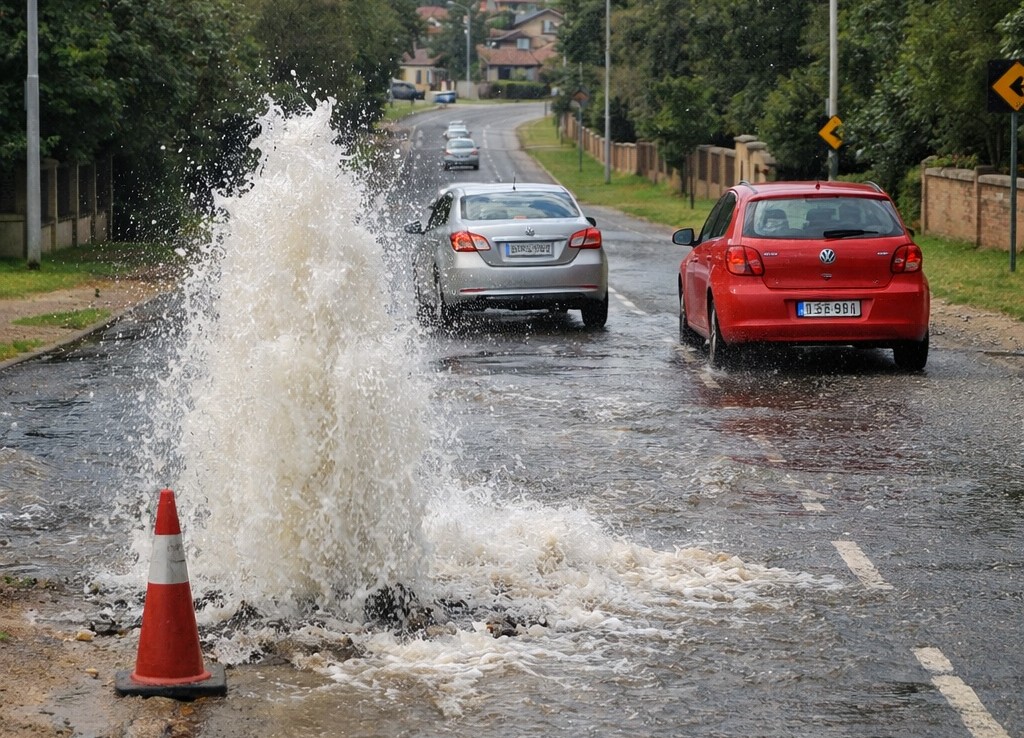
Imagine trying to fill a swimming pool with a colander. That’s essentially what Johannesburg Water is doing. The city’s water distribution network is a 12 364km labyrinth of pipes, many of which are pushing 80 years old. These geriatric pipes are tired, fragile, and bursting at a rate that would make a firework display look tame. Between July and December 2025 alone, the city reported a staggering 20 915 leaks and burst pipes.
The result is that we are losing nearly half of the treated water we buy from Rand Water before it even reaches a tap. In technical speak, it’s called “non-revenue water”, and in Johannesburg, it sits at an astronomically high 46.2%. By comparison, Cape Town loses only about 29.4%.
To make matters worse, our demand is insatiable. The average Johannesburger uses 279 litres of water a day. That’s nearly double the 164 litres used by our cousins in the Western Cape. So, we have a leaky bucket and we’re drinking from it like we have just run a marathon. It’s a recipe for disaster that no amount of rain can fix.
Now, for the question that most Johannesburgers are too nervous to ask out loud. Is it safe?
Historically, Johannesburg has boasted some of the cleanest tap water in the world, treating it to the impeccable SANS 241:2015 standard. Generally speaking, yes, the water is safe. Johannesburg Water scored 98.1% in the latest Blue Drop report, which is technically excellent.
However – and it’s a big, uncomfortable “however” – the system is fragile. When pipes run dry, the pressure drops. And when pressure drops in a network riddled with leaks, it can create a vacuum that sucks in groundwater or, in worst-case scenarios, sewage from nearby leaks.
We saw this nightmare scenario play out in late 2025. A burst water pipe in Bezuidenhout Valley played tag with a blocked sewer line, and residents were treated to “smelly water” that tested positive for E. coli. It took weeks of flushing and testing before the all-clear was given.
So, while you don’t need to panic every time you open the tap, a little healthy paranoia doesn’t hurt. If the water has been off for days, let the tap run for a few minutes to flush the pipes once it returns. If it looks like Nesquik or smells a bit funky, trust your nose, and don’t drink it.
The situation may seem dire, but there’s hope. To turn the tide, we must first demand an end to the creative accounting known as “sweeping”, a municipal habit where revenue generated by water is siphoned off into a central pot to pay for everything but the pipes. This financial sleight of hand has left Johannesburg Water clutching a pitiable R1.7 billion capital budget to tackle a staggering R27 billion infrastructure backlog. We simply must demand that cash paid for water is ring-fenced for water.
Simultaneously, the pace of repairs must shift from a leisurely stroll to a sprint because replacing a meagre 17km of pipes annually in a network spanning over 12 000km isn’t maintenance, it’s a statistical rounding error that ensures that the decay will outpace the cure for centuries to come. While we pressure officials to accelerate this renewal, residents must also adapt by installing rainwater harvesting systems and low-flow fixtures to stretch every drop – viewing backup tanks not as luxury items, but as essential suburban survival gear. We simply cannot afford to use potable water like it’s an infinite resource anymore.
Finally, we must embrace active citizenry. Movements like No Water, No Vote and organisations like WaterCAN have proven that organised, relentless pressure is the only way to stop the powers that be from fiddling while our reservoirs run dry. Residents need to report leaks the moment they spot them, and hold their councillors accountable if the repair teams don’t show up. It’s time to treat water security with the same urgency as loadshedding.
It’s a strange time to be a Johannesburger. In a city built on gold, water has ironically become our scarcest currency. The dams are full, but our patience is running on empty. It’s the ultimate logistical failure for Africa’s economic hub. It’s time to fix the bucket before the bottom falls out completely.
- Erin Berman-Levy is a renewable energy entrepreneur who has founded and leads multiple clean energy ventures. With deep expertise in large-scale infrastructure, he also acts as a strategic consultant to major developers, specialising in energy wheeling and innovative business strategies.






Alfreda Frantzen
February 10, 2026 at 6:43 am
Take it to court – Force it to act. Ethekwini has just lost a court ruling concerning non-compliance for sewerage.