Lifestyle
Education Africa beats impossible odds in SA schooling

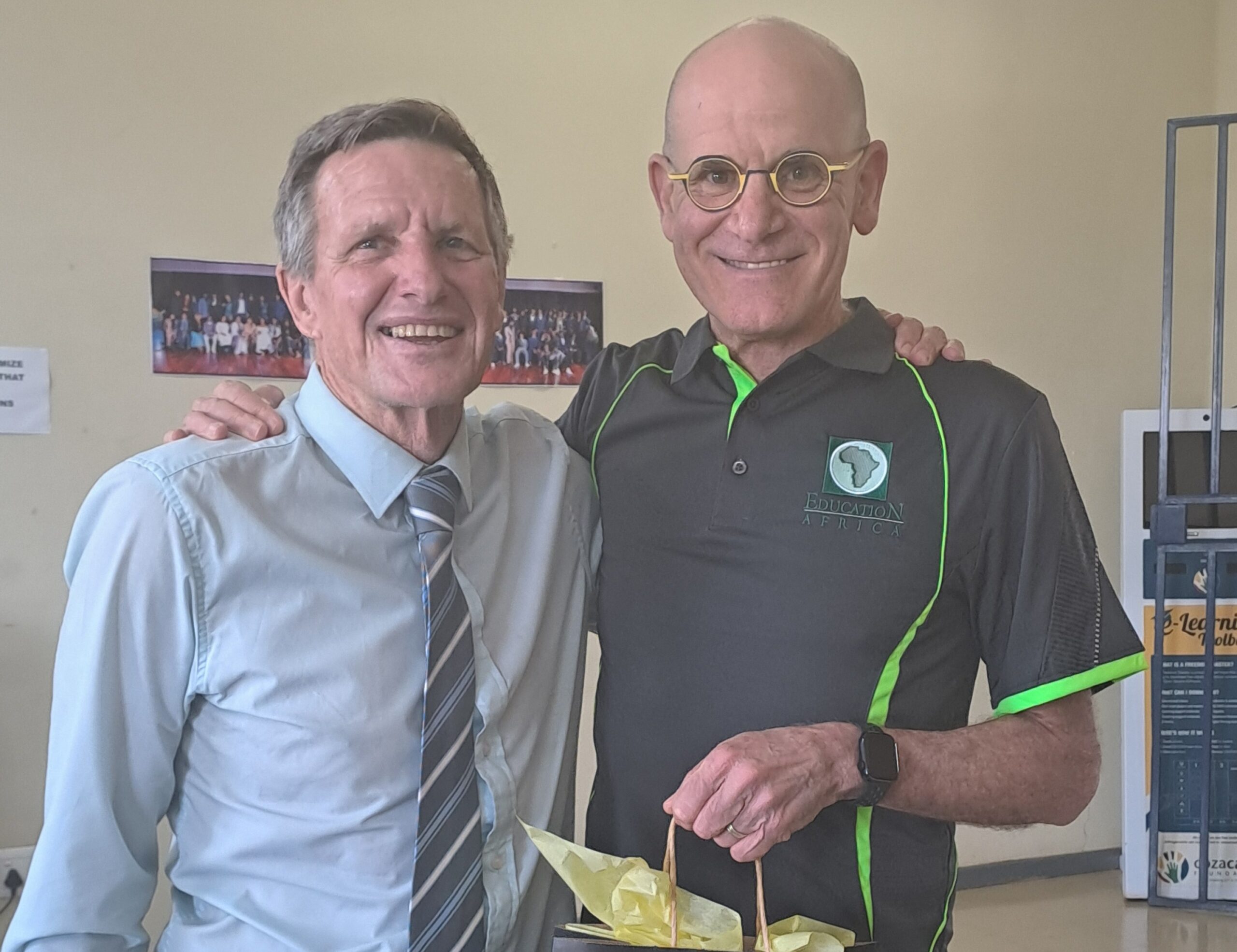
South African social entrepreneur James Urdang has just launched a book of his memoirs, It Always Seems Impossible – My fight to build and save Education Africa. The SA Jewish Report chatted to him just before the launch.
Describe Education Africa. What inspired you to start it?
Education Africa is a non-profit organisation whose goal is to create opportunities for disadvantaged South Africans by providing poverty alleviation through education. I started it because education didn’t come easy to me – I’m dyslexic and I have Attention Deficit Hyperactivity Disorder (ADHD) – so I struggled through school and wanted to help others.
What have you achieved?
We have been able to give educational opportunities to those who ran the risk of simply becoming another statistic in yet another lost generation. We have had several projects that span over more than three decades. Our current flagship projects are:
Early Childhood Development (ECD) – Our teach the teacher programme addresses the need for qualified ECD teachers and provides training, resources, and ultimately SAQA (South African Qualifications Authority) accredited NQF (national qualifications framework) Level 4 ECD qualifications for students from disadvantaged areas. In addition, we run a trainer internship programme, and our latest programme, the ECD teacher mentorship programme, offers professional development for ECD educators.
Marimba project – This is a four-dimensional project comprising marimba hubs; the Education Africa International Marimba & Steelpan Festival; the Sounds of Celebration Concert; and the Education Africa All Star Marimba Band. Essential skills necessary for successful learning are acquired through learning to play the marimbas – an African xylophone. Additionally, we host a growing number of musicians who compete in our festival and concert.
Masibambane College – Founded by Education Africa and partnered with St John’s College, this school is an example of how quality educational institutions can be built and run effectively in poor communities.
Additionally, we run the Social Architecture Project, which addresses the need for safe and well-structured facilities to ensure the care and education of pre-school children. Our Walter Sisulu Scholarship Fund, established in 1995 by Education Africa together with Walter and Albertina Sisulu, gives access to education to impoverished pupils who excel in mathematics and science at secondary and tertiary level, allowing them to complete their schooling at a quality institution.
What were your biggest challenges?
Education Africa, like most non-profit organisations, has an ongoing struggle to raise much needed funding for its projects. Charities are vulnerable, and we faced a hostile takeover from an international financial institution! For more on this, you will need to purchase my memoir from any major bookstore across South Africa.
What inspired the title, It Always Seems Impossible?
Life so often seems impossible. I succeeded in making real change happen by providing poverty alleviation through education when I had struggled through my own educational challenges.
You were mentored by Walter Sisulu; entrusted by Nelson Mandela; and supported by Helen Suzman and Dr Aggrey Klaaste. How did that happen?
When I was embarking on my Education Africa journey, I knew that I would need the support of the African National Congress and got on the phone and asked to be put through to Sisulu’s office. We met, and the rest is history. Tata Sisulu opened the door for me to do some unique, historic work with Nelson Mandela. My late brother knew Helen Suzman, and introduced me to her – she was one of Education Africa’s first patrons. And I was introduced to Dr Aggrey Klaaste by one of our first trustees.
Sir Bob Geldof call you a “genuine African hero”. Why do you believe he said that?
This one I can’t answer. In most cases, I introduce myself as “Just James”.
What impact did dyslexia and ADHD have on you as a child?
Educationally my childhood wasn’t easy. My first year at school in 1971 at King David Linksfield didn’t work out – I couldn’t read and write – so I went to Crossroads School, which was in its infancy in a house in Parktown. In those days, support for children with dyslexia mixed with ADHD wasn’t readily available. We didn’t have the educational interventions that you have today, so I landed up becoming an outpatient at Tara Hospital Childrens Clinic. I mainstreamed at St Stithians College in Standard 3 (Grade 5), and enjoyed school so much that I repeated Standard 4! Sport – specifically rowing – helped me navigate my way through school. I finished school with not much behind my name save for a school leaving certificate.
Being dyslexic, it must have been a challenge to write a book. Take us through the process.
Writing a book, specifically a memoir, would be a challenge for most. But learning that most memoirs are written with the support of ghost writers made the impossible possible. I soon learned that I was in a better position than most as I have my diaries from 1992 and a horde of documents and memorabilia, enabling me to record my journey accurately.
When did you start Masibambane College and why?
To build a school was always my dream, and in 1994, I got a call from the general manager of Austrian Airlines who had seen me on SABC [the South African Broadcasting Corporation]. He said he was the son of the mayor of Vienna, and the city wanted to support a school project in Soweto. Being young and just starting out, I reached out to Sisulu, who said he would like to see a school built in Orange Farm. I knew we couldn’t do it alone and reached out to St John’s College as we needed a top educational institution to partner with, something I had learned from the twinning of St Stithians College with Penryn College in the Lowveld – the first education project I got involved in. Our school was officially opened in September 1996. Today, we have a high-performance school from Grade R to matric with more than 1 250 pupils.
What have you achieved through the college?
We have proven that you can build quality educational institutions in disadvantaged communities. We have matriculants who have gone on to become accountants, actuaries, lawyers and so on, and most importantly, many have gone on to become teachers so they, too, can give back.
You are said to believe that education isn’t a right but a responsibility we share. Please expound on this.
For a black South African child to get a quality education is still about beating the system. For South Africa to create a more equal society, it can only come through education, making it a responsibility for all of us to create educational opportunities for fellow South Africans.
Why did you feel the need to write this book?
I’ve been encouraged for years to share my story. I see my memoir as an opportunity to open doors to bring in sustainable funding for Education Africa as we work at making the organisation sustainable, scalable, and next-generation ready.
What impact did being Jewish have on your path, if any?
Being a Jew, we all have the responsibility for tikkun olam (healing the world).