





OpEds
Jews no longer feel safe in ‘multicultural’ Australia

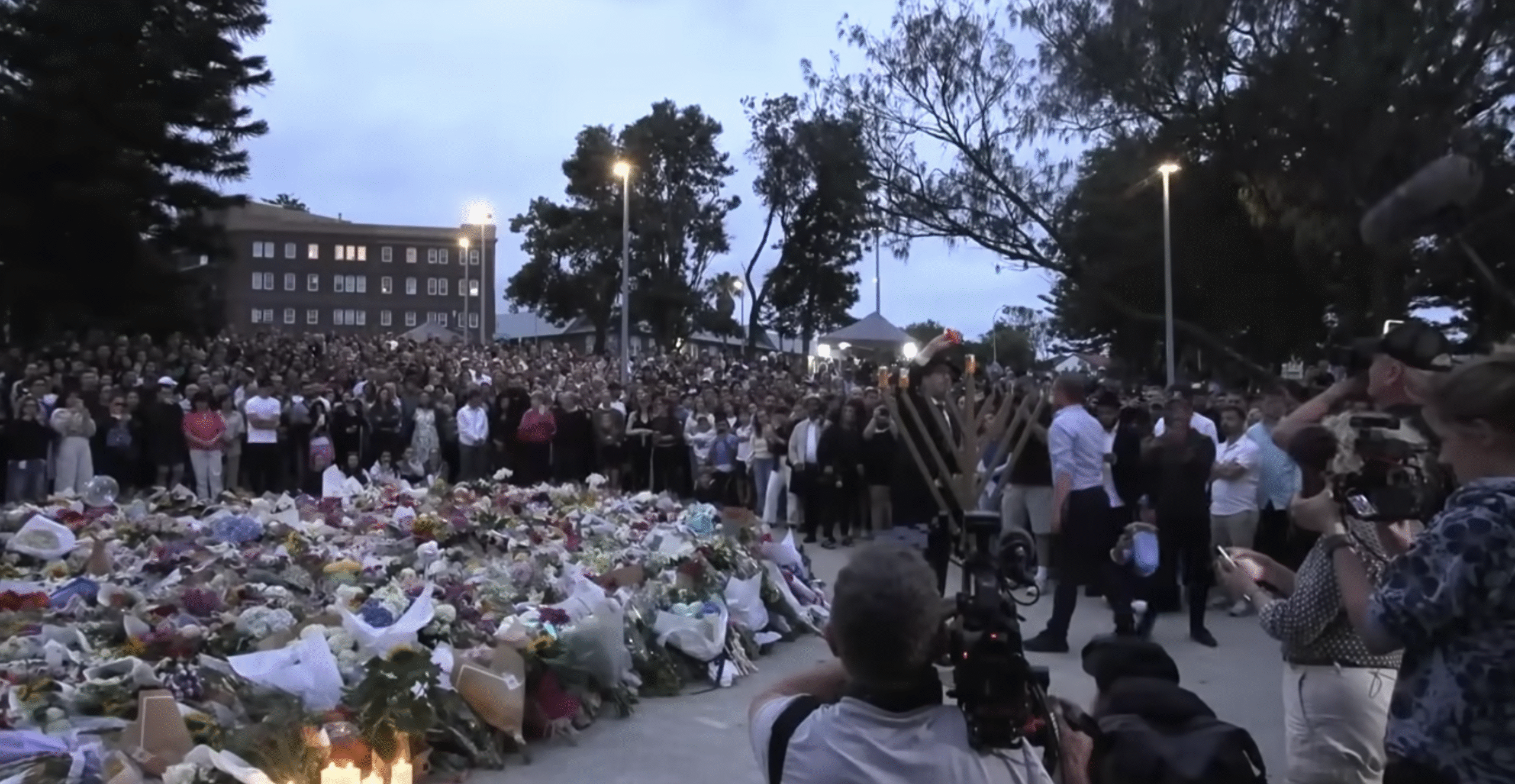
Though the nightmare of Australia’s Bondi Beach was over by nightfall on 14 December 2025, the cloud which preceded it and the massive trauma that it generated continue to darken that country.
I was the editor of the The Australian Jewish News when 9/11 happened. I editorialised that for a nanosecond – but only a nanosecond – the world would have a sense of the existential threat which marks the Jewish condition. So it was. So it has been since Bondi.
For a moment after Bondi, all Australia was seemingly embarked on an outpouring of compassion. Until it wasn’t.
Until 653 items of hate appeared online, glorifying or denying the massacre, one even claiming that the identity of the younger shooter was a Jew named David Cohen. With an AI-generated image of him wearing a kippa. Until allegations surfaced that race-hate legislation was purely to appease the Jews. Until a cartoon depicted the Royal Commission as the work of a cabal of influencers. All this within a month of the shooting.
The events of 14 December 2025 didn’t come out of nowhere. During a United States presidential campaign, White House Press Secretary Sean Spicer claimed erroneously that Donald Trump had attracted the largest audience to witness an inauguration. When Trump advisor Kellyanne Conway was questioned about the claim, she said Spicer presented “alternative facts”.
When Pennsylvania University President Elizabeth Magill was asked if calling for genocide would constitute bullying or harassment, she replied that it would be a “context-dependent decision”.
These bewildering exchanges illustrate the perverse reality which has characterised global realpolitik – and the Australian Jewish experience – since 7 October 2023. A reality manifested in vilification and incitement; university encampments; synagogue fire bombings; schools, cars, homes, and MPs’ offices vandalised; artists cancelled; and graffiti shouting “Exterminate the Jews.”
Anti-Jewish hatred became ingrained in the ecosystem. It found a home in mainstream Australia. Five times the average number of incidents in the decade prior to 7 October. The number of online incidents multiplying eight-fold. It metastasised. Shape-shifted from the margins, where white Australian antisemitism once kept Jews out of social and sports clubs, to NSW Parliament House, where neo-Nazis shouted “Blood and honour” – the motto of the Hitler Youth.
According to a report, the perpetrators of Bondi were lone wolves, notwithstanding their ideological connection to ISIS (Islamic State). The flaw in that finding was that it disavowed the fertile soil which enabled antisemitism to mushroom in this country. A study by Victoria University Social Science Professor Ramon Spaaij of 88 incidents found that so-called lone actors rarely function in ideological isolation. While they may not belong to a cell, they invariably subscribe to a worldview that reinforces race hatred and its logical successor – racist violence.
Compounding that reality is that whereas immigrants of a generation ago communicated with their home country via handwritten letters and occasional calls, today’s migrants are in constant communication with their native language, culture, and values. Which means though some are here physically, psychologically and politically they may not absorb, or even might reject, values most of us take for granted.
According to the Scanlon Foundation’s 2025 Social Cohesion report, only 34% of Australians take “great pride in the Australian way of life and culture”, while 46% have “a sense of belonging in Australia to a great extent”.
Is multiculturalism failing? Or is there a critical mass of voices across Australian civil society with the courage to call out casual anti-Jewish racism – at the dinner table; in the office; on the sports field, and not only after 15 innocents have been slaughtered?
Australians inhabit a different country to that of 13 December 2025. There is an imperative to repair. To rebuild interfaith dialogue so that it’s meaningful, as opposed to proffering lazy “we are with you” platitudes which do nothing to move the dial of social cohesion.
The test of leadership isn’t if it’s demonstrated in the aftermath of a crisis, but whether it’s manifest when social harmony shows signs of fracturing. When it’s not popular to speak out. Or to separate from the crowd.
The date 20 January 2026 was a poignant day in the Australian Parliament, featuring motions about Bondi. Julian Leeser MP, a sixth-generation Jewish Australian, said this, “There is much I grieve for. The innocents lost at Bondi. The survivors of Bondi, and the things they cannot unsee. The synagogues torched. The Jewish artists frozen out. The university students harassed. All this pains me. But it’s the loss of the truth that Australia is good to Jewish people that crushes me.”
In Harper Lee’s To Kill A Mockingbird, Atticus Finch says, “You never really understand a person until you climb inside his skin and walk around in it.” In other words, understanding that when Jewish Australians call out the surge of antisemitism, it stems from generations of historical trauma and learned experience.
Jewish Australians no longer feel safe. That is our truth. Our new normal. If we don’t change for the better as a nation, 14 December will have changed nothing.
- Dr Vic Alhadeff is a former South African newspaper editor, former chairperson of Multicultural NSW, and former chief executive of the NSW Jewish Board of Deputies.




Nicol
February 27, 2026 at 9:44 am
Non-Jewish people don’t understand the historical trauma. They may academically understand it but they don’t emotionally understand that Jewish people live in perpetual threat.