Community
Glenhazel records safest year since CAP’s inception

For many in Johannesburg’s Jewish community, safety isn’t abstract, it’s personal. It shapes where families live, how children walk to shul, and how businesses operate.
Since launching in Greater Glenhazel in 2006, Community Active Protection (CAP) has achieved an average 84% reduction in serious violent crime across the areas it serves, many of them home to large Jewish populations.
“What started in Greater Glenhazel just more than two decades ago has grown into a city-wide network of organised, information-led community safety initiatives,” said Sean Jammy, CAP deputy chief executive.
Today, CAP operates across numerous areas including Houghton, Oaklands, Orchards, Norwood, Savoy, Waverley, Saxonwold, Victory Park, Sandown, Strathavon, Emmarentia, Greenside, Morningside, and others.
“Across these diverse suburbs, the long-term data tells a consistent story: when communities organise and invest in prevention, crime drops, and stays down,” said Jammy.
At the end of 2025, CAP reported that Glenhazel had recorded the safest year in terms of violent crime since the organisation’s inception 20 years ago, with an average of two violent crimes per month, compared to 18 per month in 2006.
Jammy said that in Greater Glenhazel, serious incidents had declined from 216 per year before the company launched to 24 incidents in 2025, an 88.9% reduction. In Houghton, incidents reduced from 126 per year to 11, a 91% decrease. In Melrose and Birdhaven, contact crime, meaning crimes committed directly against people, including murder, sexual offences, assault, and robbery, fell from 114 annually to just four, representing a 96% reduction. Sandown and Strathavon declined from 154 serious violent crimes per year to nine, while Saxonwold reduced from 62 incidents to only two per year, a 96.8% decrease. Similar sustained reductions are evident across Highlands North, Oaklands, Orchards, Norwood, Savoy, Waverley, and Victory Park.
“Crime remains fluid and adaptive. Criminal syndicates evolve their tactics, and we evolve our response accordingly,” Jammy said “Sustained crime reduction requires consistency, partnership, and long-term investment, not short bursts of activity. Our results across Johannesburg demonstrate that organised, well-funded, community-driven prevention works. The continued safety of our areas depends on residents remaining engaged, contributing financially where possible, taking sensible precautions, and reporting crime to the SAPS [South African Police Service].”
These statistics cannot be directly compared to the SAPS 2025 crime statistics as it uses a financial year reporting cycle, meaning April to March, not the calendar year, and it focuses on the country and individual provinces.
Contact crime dominated the statistics, with 161 672 incidents reported nationally in the fourth quarter of 2024/2025. This remains the biggest challenge for law enforcement and communities nationwide. South Africa recorded a 2.91% drop in all crimes when comparing the fourth quarter of 2023/2024 to that of 2024/2025.
In the second quarter of the 2025/2026 cycle, SAPS reported that though contact crimes were lower nationally, Johannesburg was still the country’s crime hotspot, with Gauteng accounting for 26% of the country’s contact crimes.
However, the overall incidence of contact crimes in Gauteng has reduced. Murder has steadily declined from a five-year high of 6 424 cases in April-June 2022 to 5 770 in April-June 2025. A significant decline has also been observed in robbery with aggravating circumstances, which declined by 8.7%; rape (5%); and common robbery (3.8%).
Contact crime decreased 3.1% overall compared with the same period in the previous year. Gauteng recorded a 3.8% decrease in contact crimes across the province for the July to September 2025 period when compared to the same period the previous year. The only crime in this category that increased was attempted murder, with an increase of 11.5%, with 1 682 incidents reported from July to September 2024, and 1 876 in the same period in 2025.
Similarly, property-related crime recorded a drop of 11.8% in Gauteng for the second quarter of the 2025/2026 year compared to the same period the year prior.
The “trio crimes”, a category of violent, aggravated robbery that includes house robbery, business robbery, and carjacking, declined 11.7%, with 5 942 incidents reported between July and September 2024, compared to 5 245 during the same period in 2025.
For Jammy and CAP as a whole, armed response is important, and prevention is key.
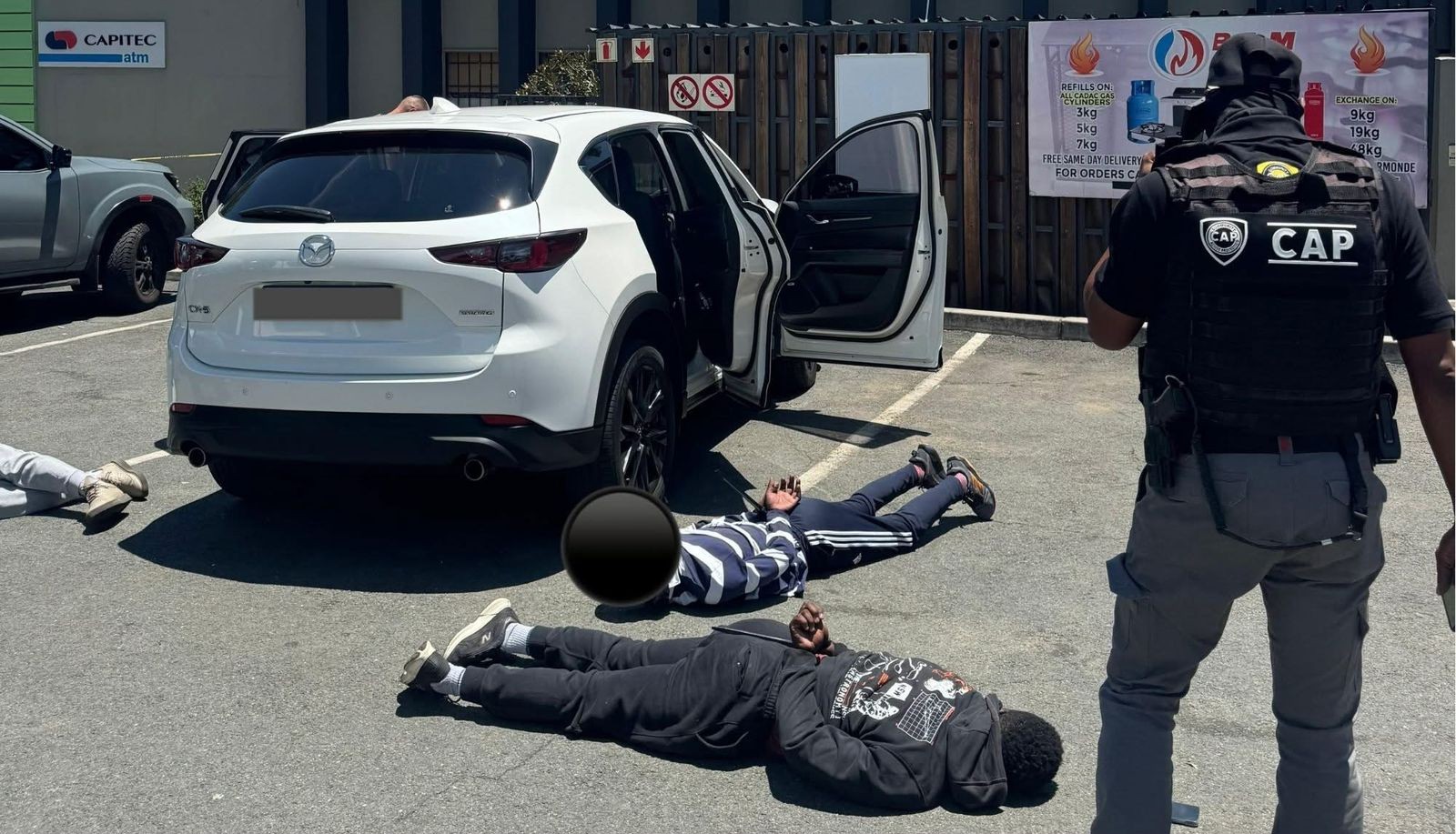
“We focus on disrupting criminal activity in public spaces before it escalates into violent crime,” he said. “We analyse every serious crime that occurs in our areas; identify linkages between incidents; track patterns across Gauteng; and work closely with the SAPS to support arrests that have a strong likelihood of successful prosecution.”
Jammy notes that several repeat offenders are responsible for a disproportionate share of violent crime, and that “by supporting hundreds of arrests annually and assisting in building prosecutable cases, we help remove repeat perpetrators from circulation. Each successful arrest has a multiplying effect, preventing further crime and protecting families across Johannesburg.”