Tributes
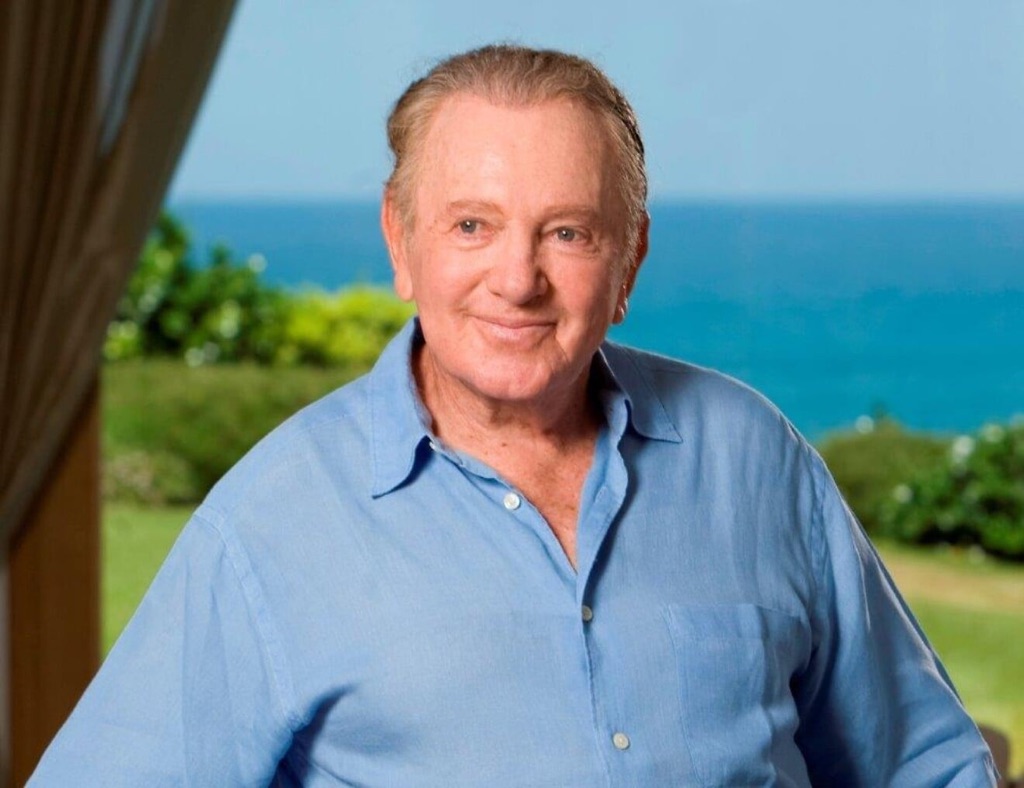
Morris Kahn, billionaire Israeli entrepreneur and philanthropist, dies at 95

Morris Kahn, the South African-born Israeli entrepreneur whose business success helped shape the country’s modern economy and whose philanthropy transformed fields ranging from medicine to the environment, died in New York on 1 January. He was 95 years old.
Born in 1930 in Benoni, South Africa, to a Jewish family of Lithuanian descent, Kahn was active in Jewish youth movement, Habonim, and dreamed of building his life in Israel from an early age.
He realised that dream in 1956, making aliya with his wife, Jacqueline, and their two young sons, Benjamin and David. Kahn said he was driven by a sense of belonging to the Jewish people and responsibility for the young state’s future. The family built a home in Beit Yanai, a beachside community in central Israel, where Kahn lived for most of his life.
His early years in Israel were marked by struggle and experimentation. He tried agriculture, launched small industrial ventures, and partnered with kibbutzim and development towns, consistently combining business with social purpose.
That ethos would define his career. In 1968, he launched Israel’s Golden Pages telephone directory. This venture became a cornerstone of the country’s business infrastructure and later gave rise to Amdocs, which he co-founded with his business partner, Shlomo Meitar, in 1982. Under his vision, Amdocs grew into a global leader in telecom billing and customer-management software, helping lay the groundwork for Israel’s high-tech economy.
When Kahn and Meitar sold Amdocs, it became one of the first Israeli unicorns, yielding a billion dollars after it went public in 1998.
During the 1973 Yom Kippur War, Kahn mobilised Golden Pages’ communications systems to relay some 50 000 messages between soldiers and anxious families, later founding Lev Zahav to support troops at the front, an early example of his instinct to act when the country needed him most.
He built Israel’s underwater observatory in Eilat, supported groundbreaking medical research, and championed environmental protection through Zalul, an organisation aimed at protecting Israel’s seas and rivers, together with his marine biologist son, Benjamin.
In later decades, Kahn increasingly devoted his energy and resources to philanthropy and what he called “venture philanthropy”. He was a primary benefactor and honorary chairman of Save a Child’s Heart, an Israeli nongovernmental organisation that provides life-saving cardiac care to children from developing countries, and the Jinka Eye Project in Ethiopia, dispatching Israeli teams of doctors and volunteers to help local medical personnel cure eye disease in children.
“In my mind, there is nothing more satisfying than saving the life of a child,” he said.
As chairman and a key funder of SpaceIL, he helped launch Israel’s first lunar mission, Beresheet, an ambitious project that inspired a generation, even after the spacecraft crash-landed on the moon. He was also a key supporter of LEAD, a nonprofit organisation he founded to nurture leadership skills among young Israelis.
Among many honours, Kahn was chosen to light the first torch at Israel’s 71st Independence Day ceremony in Jerusalem, received the Nefesh B’Nefesh Sylvan Adams Bonei Zion Lifetime Achievement Award in 2018, and was awarded honorary doctorates by Tel Aviv University, the University of Haifa, Ben-Gurion University, and Reichman University.
Kahn often described giving as a personal obligation rather than a financial transaction, citing the words of poet Kahlil Gibran that reflected his philosophy: “You give but little when you give of your possessions. It is when you give of yourself that you truly give.”
He lived by the Jewish maxim that saving one life is tantamount to saving an entire world and was fond of telling interviewers, “I don’t want to be the richest man in the cemetery.”
Dafna Jackson, chief executive of the Kahn Foundation and Kahn’s trusted adviser, recently dedicated a park bench for him in New York’s Central Park, near an apartment he owned. “It was a place to pause, reflect, and appreciate life, friendship, and connection,” he said.
Widowed in 2011, Kahn is survived by his sons, grandchildren, and great-grandchildren. Remembered for his modesty, imagination, and unwavering Zionist commitment, he was a visionary who left a legacy inseparable from the story of Israel itself, a nation built by dreamers who dared, gave all they could and never stopped believing.
Israeli President Isaac Herzog eulogised Kahn as “an entrepreneur and a visionary” in a post on X.
“His dreams reached all the way to the moon, yet he always remained firmly grounded in his love for Israel and care for the Israeli people,” tweeted the head of state. “From leading the ‘Beresheet’ space project to nurturing young leadership and protecting the environment, Morris Kahn’s impact was felt around the world.”
Kahn was “deeply committed to safeguarding the values and democratic character of the State of Israel” and worked “tirelessly to promote our country’s good name around the world,” according to Herzog.
“Morris’s profound contribution to Israel and his trailblazing leadership will remain etched in our hearts forever. I send my deepest condolences to Morris’s family. May his memory be a blessing,” he concluded.
- This piece was first published in Jewish News Syndicate.