





News
SA’s response to Iran reeks of hypocrisy

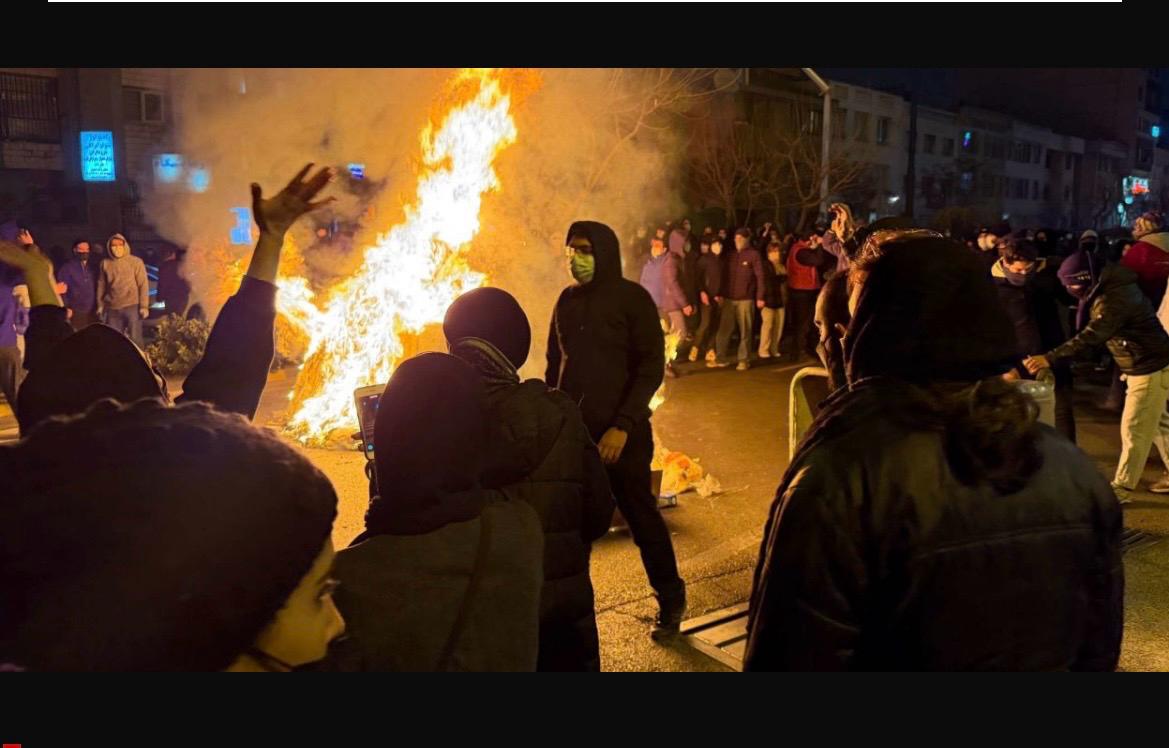
South Africa’s response to the unfolding bloodshed in Iran has been devoid of condemnation, moral urgency, or any concrete diplomatic action, according to political experts the SA Jewish Report spoke to. This as reports point to one of the deadliest crackdowns on civilian protest in the Islamic Republic’s history.
This week, South Africa had a clear opportunity to act on its human rights rhetoric. It failed. By refusing to back an urgent, emergency United Nations Human Rights Council (UNHRC) session on Iran’s “alarming violence”, Pretoria opted for deafening silence. The emergency session will take place on Friday 23 January.
Across Iran, mass anti-government demonstrations have been met with sweeping, brutal repression to supress dissent and prevent information from leaving the country. Security forces, under the authority of Supreme Leader Ayatollah Ali Khamenei, have used lethal force against protesters, imposed extensive internet blackouts, carried out mass arrests, and tightened media controls.
The number of civilians killed by the regime is in the thousands, estimated to be between 5 000 and 15 000. Precise figures remain contested and difficult to verify.
Opposition groups and international monitors estimate that tens of thousands of protesters have been arrested and thousands more injured. The scale of the repression has prompted renewed scrutiny of the international community’s response, including that of South Africa.
Though Pretoria has issued statements expressing “concern” over the situation, it hasn’t condemned the Iranian government’s actions or called for accountability through international mechanisms.
This measured approach stands in contrast to South Africa’s rapid and assertive legal action against Israel, in which the government initiated proceedings at the International Court of Justice (ICJ) following the 7 October 2023 Hamas attack on Israeli civilians. That case was launched within weeks of the massacre in Israel, in which more than 1 200 people were killed and hundreds taken hostage.
By comparison, South Africa’s reaction to the mass killing of Iranian protesters has been cautious and restrained, despite the scale of the violence and the targeting of civilians by state forces.
On 15 January, the Department of International Relations and Cooperation (Dirco) said it was “following the developments in Iran with concern”, adding that the reports of unrest and loss of life were troubling. The statement urged “maximum restraint”, and affirmed the universal right to peaceful protest, freedom of expression, and freedom of association.
The Democratic Alliance (DA) has challenged this muted position, formally writing to Dirco Minister Ronald Lamola on 14 January, calling on him to report Iran to the UNHRC.
The party said South Africa’s Constitution obliged the government to act against autocratic regimes that violently suppress civilian protest, and argued that the UNHRC was the appropriate forum for South Africa to give effect to its stated commitment to human rights.
The DA also pointed to Iran’s recent accession to BRICS+ (the economic bloc including Brazil, Russia, India, China, and South Africa, Iran, Egypt, Ethiopia, Saudi Arabia, the United Arab Emirates, and Indonesia) and the African National Congress’s close political relationship with Tehran, warning that these ties appear to be influencing South Africa’s foreign policy stance despite being incompatible with constitutional values.
Drawing historical parallels, the DA compared the Iranian crackdown to events such as the Sharpeville massacre in 1960 and the Soweto uprising in 1976, when peaceful protests in South Africa were met with state violence and the international community sided with the oppressed rather than the ruling regime.
Sara Gon, a fellow at the South African Institute of Race Relations, said South Africa’s foreign policy had long reflected a tendency to align with governments perceived as anti-Western, regardless of their human rights records or strategic value to South Africa.
“The government has a proclivity for relationships with countries that are essentially anti-American, irrespective of whether they offer any benefit to South Africans,” she said. “This is the essence of its relationship with Iran. We don’t buy energy from it or get anything of consequence for South Africa.”
Gon said Iran’s support for Hamas and Hezbollah hadn’t influenced South Africa’s stance, despite widespread international concern about the groups’ activities.
“South Africa insists that it is non-aligned, but in practice that means it’s not aligned to the US or its allies,” she said. “It expressed concern about what’s happening in Iran, but didn’t condemn it.”
Hussein Solomon, political studies professor at the University of the Free State, said South Africa’s restrained response fitted a broader pattern of selective engagement on human rights issues.
“South Africa has always adopted a muted response when it comes to its friends and allies,” he said. “Human rights has always been selective, and this is something the US has repeatedly called South Africa out on.”
Solomon said consistency was critical if South Africa wished to maintain credibility in international fora.
“If you take a stance in terms of human rights, for example, taking Israel to the ICJ, you need to be consistent,” he said. “Whether it’s the situation in Sudan, northern Ethiopia, or on the streets of Tehran.”
“Selective condemnation is problematic because it weakens the credibility of South Africa’s foreign policy pronouncements beyond its borders,” Solomon said.
The South African Zionist Federation (SAZF) said the government’s response to Iran reflected a departure from the universal human rights principles that once defined South Africa’s international standing.
“Once, South Africa championed human rights as indivisible and absolute,” the organisation said. “Today, they are applied selectively, depending on political alignment.”
The SAZF said South Africa’s continued engagement with authoritarian governments, including Iran, risked aligning the country with regimes rather than civilian populations affected by repression.
What began as widespread economic protests last year escalated into sustained unrest in major cities including Tehran, Isfahan, Mashhad, and Shiraz. The demonstrations were reportedly triggered on 28 December by shopkeepers in downtown Tehran, and quickly spread nationwide. Independent reporting has been severely restricted amid an ongoing digital blackout. Families of victims have reported intimidation, while lawyers, activists, and journalists have been detained.
Iranian officials have continued to promise harsh punishment for those arrested, repeatedly referring to protesters as “rioters” and accusing them of acting on behalf of foreign powers. Authorities have blamed the US and Israel for allegedly funding and arming the protests, claims that have been widely disputed.
In an unusual admission, Khamenei said on Saturday, 17 January, that “several thousand” had been killed during the unrest, while the theocratic establishment maintains that the deaths were caused by agents affiliated with foreign powers rather than state forces. Tens of thousands of people are believed to have been arrested, with Iranian authorities continuing to announce new detentions almost daily.
As unrest continues in Iran and reports of mass arrests mount, scrutiny of South Africa’s foreign policy posture is likely to intensify. For critics, the central issue is not whether South Africa has spoken, but whether its response matches the gravity of events unfolding on the streets of Iran.




yitzchak
January 22, 2026 at 10:54 am
Did MTN Iran switch off their network during the insurrection?
If so who ordered it and is there a secret connection (political) in RSA?
How will they import their profits””??
Non aligned?
They couldn’t walk on a straight line after all the Chivas and Jonnie walker!
Non aligned means you have to suspend all disbelief. Our navy can’t even exercise SA’s authority over our fishing limits
Francois Theron
January 27, 2026 at 9:37 am
As Sara Gon says, “South Africa’s foreign policy had long reflected a tendency to align with governments perceived as anti-Western, regardless of their human rights records or strategic value to South Africa”. It should be added that the inexperienced and gauche Ronald Lamola is particularly zealous in this regard.
Lamola went out of his way to sabotage any chance of a meeting of the minds with Washington DC throughout 2025, not to mention his blatant hypocrisy. He bandies about talk of transformation and of the revolution. It is as if he wants to destroy what’s left of the SA economy after 30 years of looting by the ANC in order to keep a large mass of the South African population mired in poverty. But there may be method in his misguided ways. As the longtime Ugandan opposition leader, Dr Kizza Besigye, has said: “Poverty remains a tool of political control in Africa”.
Ian Levinson
January 27, 2026 at 12:51 pm
South Africa’s silence in the face of Iran’s brutal crackdown is not neutrality—it’s complicity. When civilians are being slaughtered for demanding basic freedoms, moral urgency is not optional, it’s the bare minimum. Our nation, born from the struggle against oppression, should know better than to turn a blind eye to tyranny. To ignore the bloodshed in Iran is to betray our own history and the values we claim to stand for. Condemnation costs nothing, but silence costs lives.