





OpEds
ANC’s selective morality betrays SA’s anti-apartheid legacy

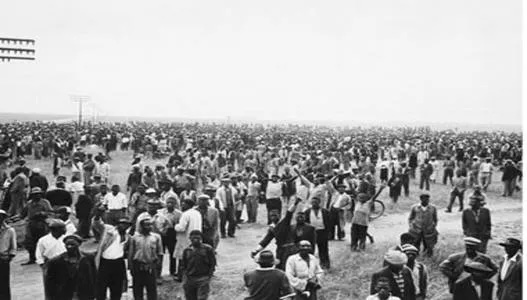
South Africa’s modern political identity is inseparable from its history of state violence against peaceful protest. In 1960, police opened fire on demonstrators in what became known as the Sharpeville massacre, killing 69 people and wounding hundreds more. Sixteen years later, during the Soweto Uprising, schoolchildren were gunned down for protesting the imposition of Afrikaans as a medium of instruction. These events shocked the world. They crystallised global opposition to apartheid and cemented South Africa as a moral reference point for the condemnation of state brutality.
That moral inheritance carries obligations.
Reports emerging from Iran suggest that thousands of citizens protesting their government have been killed or violently suppressed in recent days. While precise figures remain contested and difficult to verify, human rights organisations and international media have described a campaign of extraordinary violence directed at civilians exercising basic political freedoms. What is not contested is that the Iranian state has responded to dissent with lethal force.
Against this backdrop, the silence of the African National Congress (ANC) is striking.
The ANC, which has never been shy to invoke its own liberation history, has failed to issue a clear and unequivocal condemnation of the killing of Iranian protesters. More troubling still, South Africa’s navy recently participated in joint naval exercises with Iran, alongside Russia and China. Symbolically and diplomatically, this places South Africa not in the company of victims of repression, but in solidarity with regimes accused of it.
The ANC has, in recent years, placed great emphasis on its supposed moral authority in international affairs, most notably in its decision to bring a case against Israel before the International Court of Justice. Whatever one’s view of that litigation, it was explicitly framed as a principled stand against alleged violations of international law and the killing of civilians. Moral consistency would demand that the same concern be shown for civilians whether in the Middle East or anywhere else.
Yet that consistency is absent.
The contrast invites an uncomfortable question: why does the ANC speak loudly in some cases and fall silent in others? One explanation is geopolitical convenience rather than moral conviction. Iran has sought to internationalise its conflict with Israel and to marshal political pressure through sympathetic states in the Global South. South Africa, in turn, appears willing to trade its moral capital, painstakingly accumulated through decades of genuine struggle, for diplomatic favour and strategic alignment.
If this is so, then the invocation of human rights and international law becomes a rhetorical instrument rather than a guiding principle.
The ANC has long portrayed itself as the custodian of South Africa’s moral legacy, a movement uniquely entitled to lecture the world on justice because of what it endured under apartheid. But moral authority is not inherited permanently; it is sustained only through action. To selectively condemn violence while excusing or ignoring it when committed by allies is moral opportunism.
The apartheid regime was rightly condemned not because it was geopolitically unfashionable, but because it killed unarmed civilians who dared to protest. That principle does not expire when the perpetrators change flags.
If South Africa is willing to conduct military exercises with a government accused of massacring its own citizens, while refusing even to denounce those killings, then it forfeits the very moral standing it claims to possess. At that point, appeals to history ring hollow. Liberation credentials become camouflage for hypocrisy.
The truth is uncomfortable but unavoidable: an organisation that excuses brutality abroad while invoking justice selectively has lost its moral compass. The ANC’s foreign policy today reflects not principled internationalism, but a willingness to barter ethics for influence. A movement that once stood against tyranny now risks becoming its apologist.
History will remember the difference.
- Mark Oppenheimer is a practising advocate and member of the Johannesburg Bar. He is the president of the South African Institute of Race Relations.





ian Levinson
January 20, 2026 at 3:17 pm
South Africa’s anti-apartheid struggle was rooted in a clear moral vision: equality, justice, and accountability for all. When the ANC applies morality selectively—condemning some injustices while excusing others—it undermines the very foundation of that legacy. True leadership demands consistency, not expediency. To honor the sacrifices of those who fought for freedom, South Africa must reject double standards and recommit to principled governance that upholds law, order, and unity without fear or favor.
Robert Zipper
January 20, 2026 at 5:27 pm
Can such pronouncements not be published by way of full sight of the ANC?
CJB
January 20, 2026 at 6:06 pm
But Iran is a funder of the ANC.
It has nothing to do with morality, justice or what’s best for SA.
yitzchak
January 21, 2026 at 6:56 am
Has MTN Iran participated in the IT blackout in Iran?(internet cellphones etc)
Their partner Irancell has sacked its CEO.(for not shutting the system down)
What does this say about SA’s involvement in the Iranian uprising? or contributing to its bloody suppression?
Hein
January 21, 2026 at 7:00 am
Our own king David put it so eloquently:
Ps 12:2 They all tell lies to each other, flattering with their lips, but speaking from divided hearts.
These divided heart are also what we find in Roman mythology – Janus, god of gods with the two faces that never agree. This is typical of the ANC who like to predict to others what they should do, but not live according to those same standards.