News
US Ambassador says SA must do U-turn on Iran, Israel

US Ambassador to South Africa L Brent Bozell III has warned that the government’s stance on Israel and Iran, and its broader foreign policy alignment has created an “impasse” with Washington.
This, he insists, could carry “grave” economic and diplomatic consequences unless the African National Congress-led Government of National Unity fundamentally “rethinks itself”.
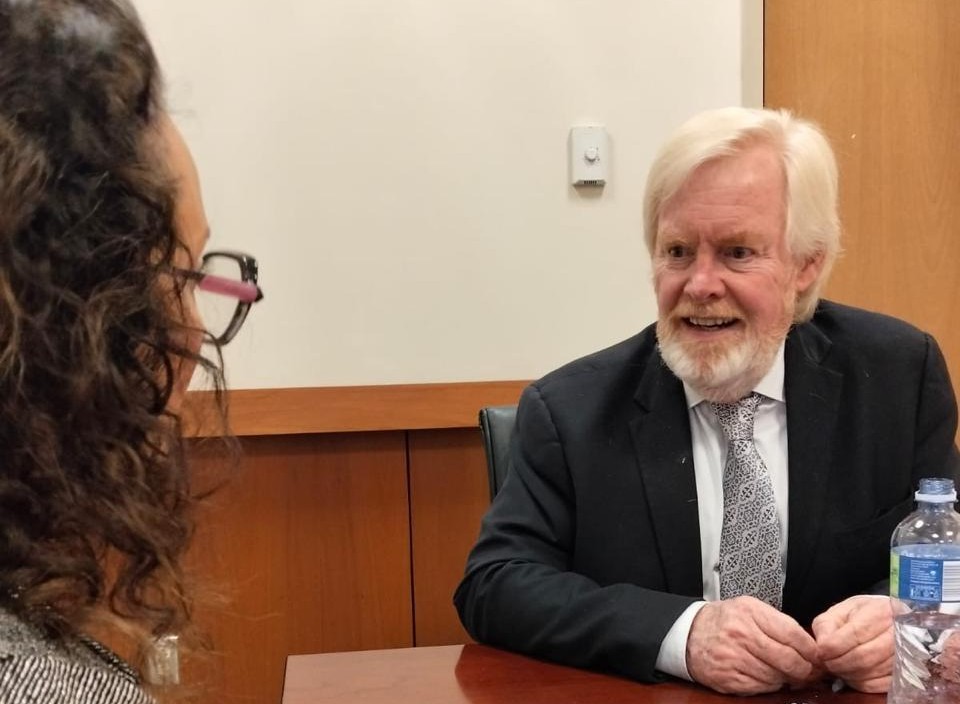
In an in-depth interview with the SA Jewish Report, Bozell made it clear that the US is “dead serious” about its concerns and hopes to see concrete changes from the South African government.
“The government knows we have to have some kind of a restart on this issue before we can say things are back on the right track,” Bozell said. “And until these things are resolved to the satisfaction of the president of the United States, we are at an impasse.”
However, despite this sentiment, the Minister of International Affairs and Cooperation, Ronald Lamola, last week held a meeting with Iranian Foreign Minister Abbas Araghchi in New Delhi. His department reported the discussions focused on strengthening diplomatic relations between the two countries.
The ambassador expressed deep alarm over South Africa’s growing engagement with Tehran, describing Iran as “the pariah of the world”.
“At the end of the day, the South African government has to ask itself the degree to which it wants to be in solidarity with a government that eagerly slaughters tens of thousands of its own people in its own streets for having the temerity to oppose the policies,” he says.
“Iran is destabilising the world economy because it wants a nuclear bomb to threaten the world with.”
Bozell references South Africa’s military cooperation exercises with Iran, China, and Russia as further evidence of Pretoria drifting into hostile geopolitical territory. “General Rudzani Maphwanya went to Tehran last summer, Iranians sending battleships to South Africa to participate in military exercises with the Chinese ‒ all these things come in a big bucket,” he says.
“South Africa tends to get on the wrong horses.”
Bozell, who had a rocky diplomatic debut earlier this year that saw him formally demarched by the South African government over controversial remarks, speaks of his relationship with the government now as “good”.
He goes on to say, “I hate the word ‘strained’ because everybody uses it, but there are challenges. We’ve had some challenges and we’ve made clear what our disagreements are. We’re talking through them. We’re having good discussions.”
Washington has previously identified five major concerns it wants South Africa to address before relations can really improve: the Expropriation Act; broad-based black economic empowerment policies; the “Kill the Boer” chant; rural violence and farm murders; and its foreign policy alignment.
For now, Bozell says, Washington is primarily focused on three issues: rural violence, economic barriers to American investment, and what he repeatedly refers to as South Africa’s troubling abandonment of genuine non-alignment.
“The rural violence and attacks on the white minority Afrikaner farmers is of grave concern,” Bozell says. “The economic issues, the roadblocks that are stifling investment ‒ [Donald Trump] is a president that cares very much about trade and there are some dramatic trade barriers that have to be addressed. We are having those conversations now and I’m feeling optimistic about this.”
Then comes the other issue at the heart of the diplomatic rupture.
“The non-alignment issue,” Bozell says, “is one of the top concerns that we have. We have seen South Africa moving in a direction that we find uncomfortable, disconcerting, and unacceptable. We need South Africa to return to a non-aligned status.”
At the centre of Washington’s frustrations lies Pretoria’s hard-line position against Israel and its deepening relationship with Iran, a stance that anti-Israel activists and sections of the ANC alliance applaud, but which Bozell makes clear Washington views as profoundly concerning.
“The South African government knows what our position is vis-à-vis Israel,” he says. “Israel is America’s staunchest ally and we are going to defend and protect Israel in return.
“There is a terrible streak of antisemitism that to me is scary as hell,” he says. “In a world that has been fuelled by hatred towards Israel, only bad things can come of it.
“October 7 was that sort of bad thing that happens and Israel was well within her right to defend herself and continues to be well within her right to defend herself. The United States stands with Israel on this unequivocally.”
He stresses the closeness of Washington and Jerusalem under the current US administration.
“The president of the United States, the secretary of state, our secretary of war ‒ everyone who is a leader in this sphere is being unequivocal,” he says. “There is no air between the US and Israel. No air escapes between the two countries.”
Bozell takes direct aim at slogans heard at anti-Israel demonstrations across the world, including in South Africa. “‘From the river to the sea’ ‒ not a lot of people are paying attention to that. That’s not a slogan. They’re deadly serious.”
Referring to Hamas, Hezbollah, and the Houthis, he says, “They make it a point to affirm this desire to wipe out the State of Israel.
“Does the South African government want to be aligned with that kind of thinking?” he asks. “It’s got to rethink itself.”
“When our allies are treated unfairly and Israel is being treated unfairly, it’s troubling.”
Bozell warns that a fallout from the challenging relationship with the US could have “dire economic consequences”.
“There’s an executive order that prevents any investment from the US in South Africa,” he says.
“This isn’t extortion at all. It’s simply saying that if you want things like trade barriers dropped, investment at a time when South Africa desperately needs jobs ‒ we have US companies that desperately want to do business and we have billions that are just sitting there.”
“There are some great deals that can be made with South Africa. We all want it to happen. But these things have to be resolved.”
Bozell says South Africa stands at a defining crossroads.
“It knows fundamentally that changes have to be made. It knows this,” he says. “Look at all the problems that it doesn’t need to have. People who want to invest in the country are just seeing a whole host of problems, and one of them is getting in bed with bad players.
“South Africa should rethink this if it wants to have good relations. Maybe it doesn’t want to have good relations, in which case it won’t listen. But I urge them to listen to the better angels.”
“You may see 40% unemployment, I see 40% employable. Huge opportunity.”