OpEds
The Book of Ruth: A book of grafters and shafters

When I was in Grade 11, I was privileged to be selected for A-guard at Bnei Akiva Machaneh with 160 of my friends. I saw it as my mission to help set up the camp site and ensure it was ready for when all the channichim would arrive a week later. Many of the others had no such intentions.
One of the madrichim who was in charge of A-guard that year taught me and a few of my dedicated friends a life lesson. “In life, there are grafters and shafters. If you’re going to be remembered, you need to be a grafter.”
The meaning was plain for all of us to see. Had all 160 of us decided to work, we could have pitched the camp site in a day. But, it took the 60 dedicated grafters three or four days to complete the work, while the rest chilled, sunbathed, and engaged in water fights.
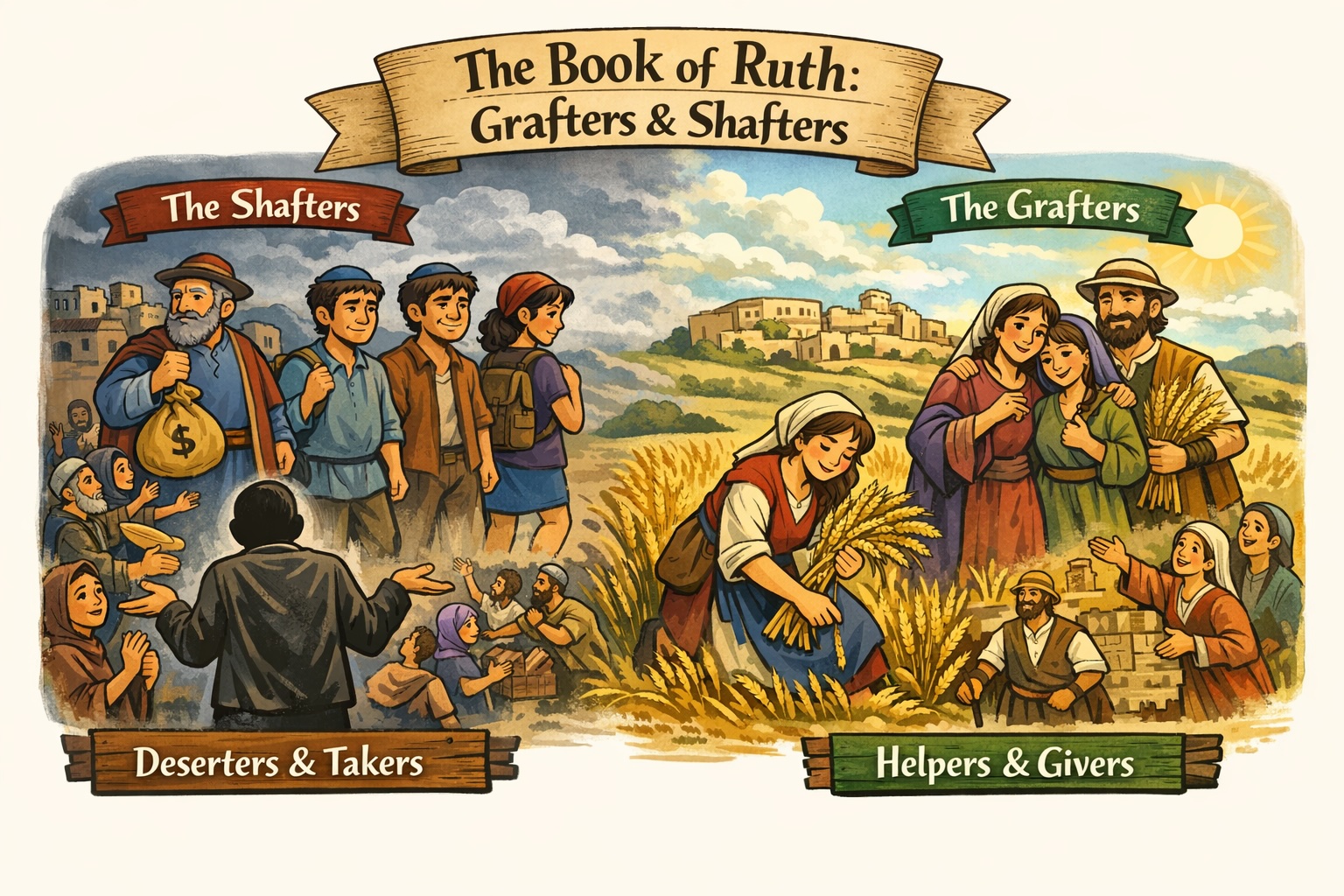
When I reflect on the Book of Ruth and its characters, we see the same split. The grafters look for opportunities to serve and are rewarded with their names being remembered for posterity. The shafters are vanquished to the footnotes of Jewish history, some not even earning the right to have their names mentioned at all.
The book is set in the days of the judges. Like the Book of Judges, our rabbis teach us that the Book of Ruth was authored by the prophet Shmuel, whose motivation for writing both books was to teach what sort of leadership the Jewish people need and what sort of leadership doesn’t work.
Each character in the book fits into one of the two categories.
The shafters
Elimelech was a leader in Judah. Rashi describes him as a very wealthy man. At the time of famine, when the community most needed him and his resources, he decided to take his family and leave the land. This left his community to fend for themselves. Why did he leave? He was distressed by all the destitute people knocking on his door (Rashi, Shoftim 1:1). By chapter 1 verse 3, this deserter has died, leaving his wife and children in a foreign land to fend for themselves.
Machlon and Kilyon are Elimelech’s sons, whose names literally mean disease and destruction. It is highly unlikely those are the names their mother and father gave them. They seem to be pseudonyms. The two followed their father out of the land and, even after his death, never returned to assume their responsibilities. They too perish within two verses.
Ploni Almoni was a pseudonym for Elimelech’s closest relative. He was a man prepared to take the land of his brother, nephew, or cousin but not responsibility for the two widows or to maintain Elimelech’s family name. This pseudonym has been adopted for posterity to denote anyone who doesn’t have a name or whose name is not important. This is still true in modern-day Hebrew.
Orpah was the widowed wife of one of Na’omi’s sons. She was good to her mother-in-law but when pressed by Na’omi, chose to go her own way to try and rebuild her life. Calling her a shafter might be a bit harsh. She maybe fits into a more neutral category of someone who is a good person but doesn’t go out of their way for others. I suppose this can be debated.
The grafters
Rut was a Moabite princess who, once widowed, was completely dedicated to her mother-in-law, Na’omi. She followed her back to the land of Israel, subjected herself to abject poverty – which I’m sure was not on her shidduch resumé – and was even prepared to glean the dropped ears of wheat in the field like the peasants of Judah. She was rewarded to be the grandmother of David, the founder of the royal family.
Na’omi, the wife of Elimelech, embraced her daughters-in-law and always looked out for them, even at great cost to herself. She remained committed to Rut and coached her to build a relationship with Boaz and ensure her survival.
Boaz, a distant relative of Elimelech, felt responsible to help the two widows in the family. He instructed those working in his field to purposefully drop extra wheat for Rut to collect and eventually took responsibility to redeem the field and marry Rut. He, too, was rewarded with being the great-grandfather of David.
The message of the Megillah is clear. If you want to make an impact and be remembered, you need to put up your hand, take responsibility, and make things happen.
- Warren Sher is an Orthodox rabbi and engineer. He’s the current Johannesburg Chair of Limmud and will be presenting “Freeing the Widow of Lieutenant Billy Gesundheit” this year. Lieutenant Gesundheit was a Capetonian whose plane was shot down off the coast of Italy in July 1944.