





Banner
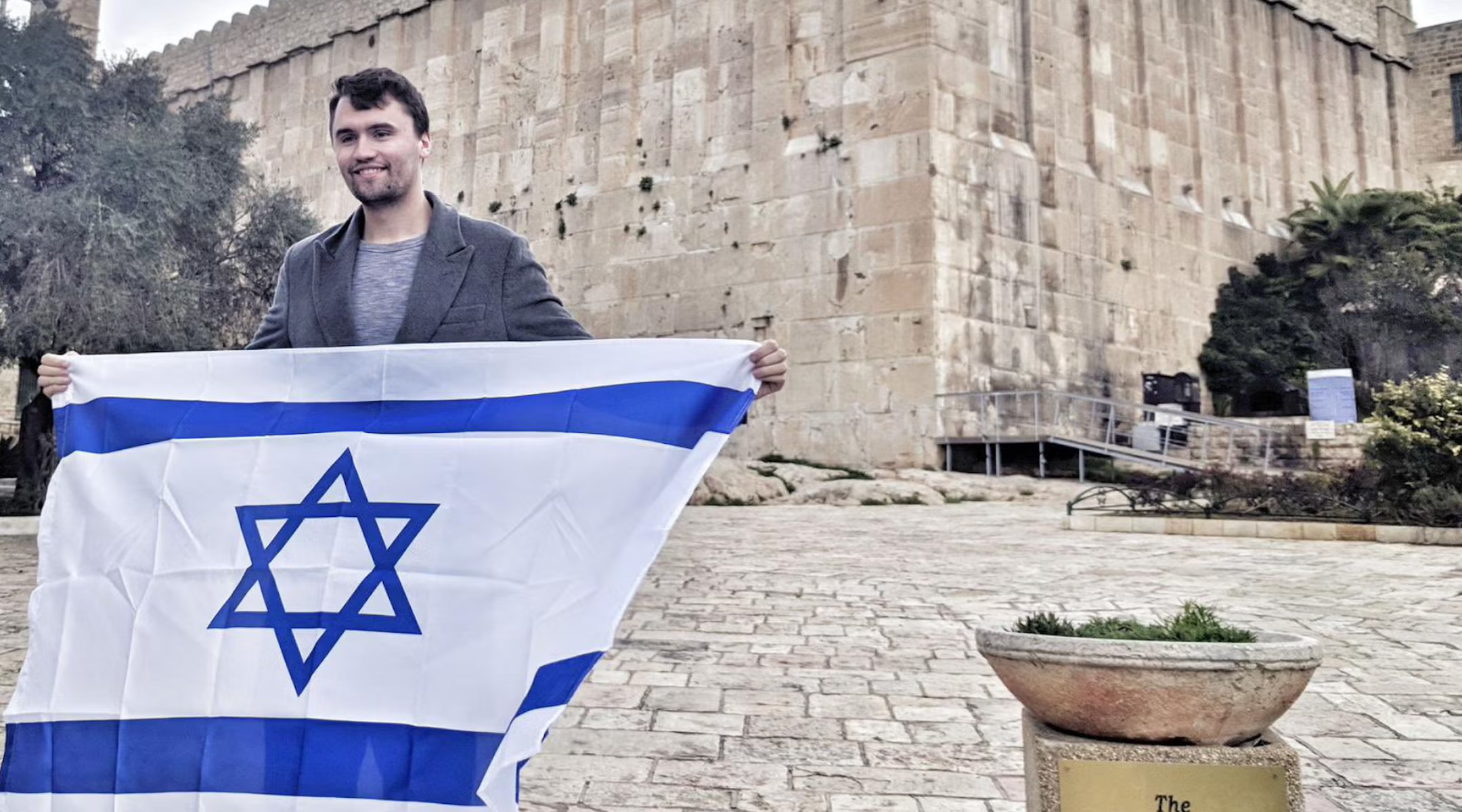
Charlie Kirk’s murder should never silence us

American conservative commentator Charlie Kirk was assassinated on 10 September 2025 at Utah Valley University in Orem, Utah, sparking global debate about free speech, political violence, and the risk of speaking out.
His murder unsettled many, not because all agreed with his views, but because it underscores a principle we cannot afford to abandon: voices must be met with voices, not violence. History, Jewish and South African alike, shows that speaking out carries risk. But silence carries a far greater cost.
Kirk was a polarising figure. Some admired his defence of Israel, while others criticised his combative style. Yet his death raises the question: when outspoken voices are targeted, do we step back, or do we stand firmer?
To explore this, the SA Jewish Report spoke to a number of outspoken members of our community, as well as non-Jewish allies who often take risks on behalf of Israel and against antisemitism. Their reflections reveal the pressure of speaking out and the resolve to continue to do so.
For broadcaster and columnist Howard Feldman, the impact of Kirk’s death was visceral. “It felt like a punch to the gut, not just because a human being was murdered, but because a voice was silenced instead of being argued with. My first response was shock, then anger, and then stubborn resolve. If the point of violence is to frighten the rest of us into silence, I’m not auditioning for that role.” His determination is shaped by Jewish memory. “Silence is never neutral. If I’m not willing to use my voice when it matters, I shouldn’t expect my children or my listeners to use theirs.”
Howard Sackstein, the chairperson of the SA Jewish Report, framed the same responsibility in South Africa’s democratic context. “I grew up in the apartheid era, where freedom of speech and expression weren’t features of our lives,” he said. “The freedoms we enjoy today are enshrined in our Constitution, and it’s something we should be eternally grateful for. A bullet thousands of miles away will not – and should not – affect anyone’s moral obligation to speak up.”
This principle, however, extends beyond the Jewish community. Some of the strongest voices in defence of Israel and against antisemitism come from non-Jewish allies who are willing to risk their reputation and safety. Tim Flack, a South African activist, has long spoken out despite the backlash. “I have had death threats, false accusations, antisemitic abuse, and I have lost friends. These are real risks. But the greater danger is to remain silent. If we leave the space open, the loudest radicals win without resistance.”
Stephen Cranston, semi-retired journalist, contributor at Arena publications and author of an upcoming history of Investec, echoes that obligation, saying, “South Africa never developed a tradition of free speech because of apartheid.” The Jewish community played an outsized role in changing that, he said, and we can’t afford to lose it now. “Most Jews I know are reluctant to speak, but I can speak more openly.” For both Flack and Cranston, defending Israel transcends religion. “You don’t need to be Jewish to recognise that Israel represents democracy, freedom, and survival against authoritarian forces,” said Flack.
The consequences of speaking out include, for Feldman, being “piled on, called names, uninvited, and deplatformed”, though he insists the cost of silence is higher. Sackstein is more dismissive of the risks, saying, “If you choose to express your rights, you must not care. As they say, a lion should not care about the opinion of sheep.” Today, these challenges are amplified by social media and algorithms that reward outrage over nuance. Flack notes that discussions about Israel are increasingly derailed by slogans. “Too often, accusations like ‘genocide’ or ‘apartheid’ replace evidence and debate,” he said.
While these modern distortions of public debate present a real challenge, Kirk’s unapologetic style offers a lesson in responding to them. Sackstein sees it as a reminder of obligation: cancelling those with differing opinions is a form of fascism; and fighting censorship and conformity is a duty. Feldman adds balance, saying, “Conviction without humility becomes performance. Be strong, yes, but stay curious and never make cruelty your brand.”
The greatest danger, however, isn’t criticism but indifference. Flack observes, “Backlash means people heard you, even if they hate what you said. Indifference is worse. It allows lies to settle as accepted truth.” Feldman echoes this, saying, “The refusal to listen is the real tragedy, because conversation dies before it begins.” Cranston is equally blunt, saying, “People not only don’t listen, they are in complete denial. They have this childish view that Israelis wear black hats and Arabs wear white hats. Reality is far more complex.”
Kirk’s assassination may silence one man, but it cannot be allowed to silence others. Jewish voices carry the weight of history. Non-Jewish allies who risk their reputations and safety on behalf of Israel and against antisemitism do so out of principle. Together, their message is clear: this isn’t the time to retreat.
As Feldman puts it, “If a voice can be erased, then the rest of us need to be louder, more careful about facts, tone, and humanity.” Silence has never been a shield. The only antidote to bad speech is better speech – said calmly, clearly, and said again.



Chris Ebersohn
September 18, 2025 at 7:07 pm
A Michael Macoko made an EXTREMELY offensive post. Someone need to adres it. I do not know where to report it.