


Community
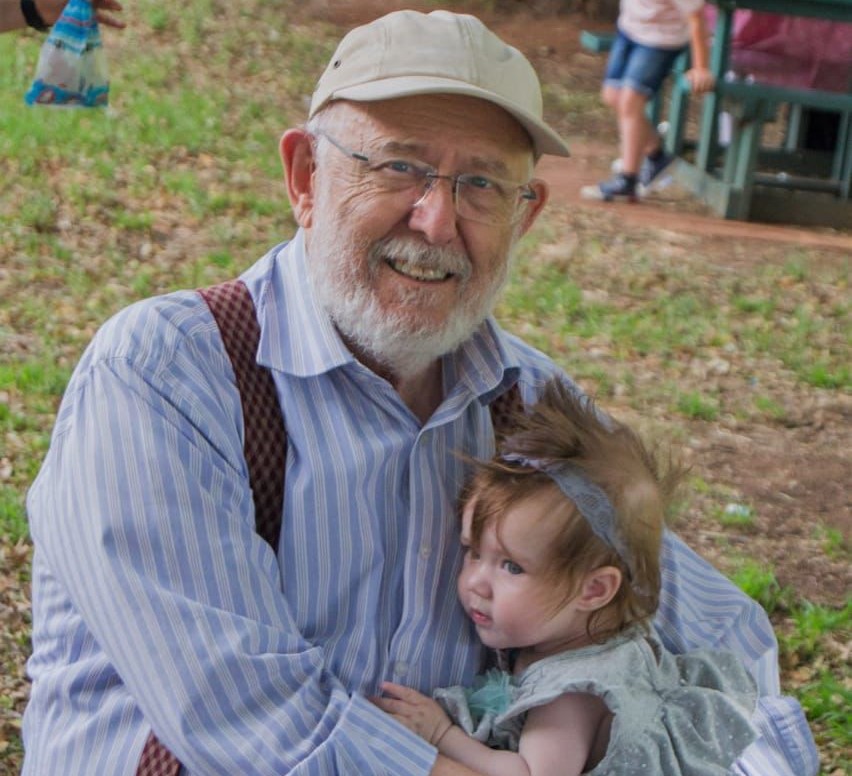
Dr Brian Jude: the heart and soul of Hatzolah

Dr Brian Jude’s dream was to save lives and serve the community with compassion and excellence. He fulfilled it by creating Hatzolah Johannesburg in the late 1990s.
Jude, who passed away on 23 July after years of battling with his health, “wasn’t just the strategic mind behind Hatzolah, he was the engine that kept it running”, Lance Abramson, Hatzolah’s chairperson, told the SA Jewish Report this week.
Jude was known to have referred to Hatzolah as, “our life, a family business”, and went on to say “we lived, ate, and breathed Hatzolah” in the organisation’s early days. In fact, before the organisation had its own premises, it operated its first training and dispatch centre from the Jude family home.
Hatzolah Johannesburg was established in the late 1990s during a period when rising crime in Glenhazel showed the limitations of local emergency services, according to an early Hatzolah magazine. What started as a vision to create a fast, compassionate, volunteer-based Jewish emergency response service, quickly became reality thanks in no small part to Jude, according to the magazine.
Jude trained first responders; funded initial operations, and involved his entire family, Jude’s oldest son, Russell said.
“We, his children, were dispatched to man the phones overnight, read out map co-ordinates, or jump in the car with him to respond to calls,” said Russell.
His home wasn’t just a base of operations, it was the birthplace of a movement, and everyone had a role, Russell said. “There was never an off-duty moment. My mother, my siblings, all of us, everyone was involved.”
As Hatzolah grew into a fully-fledged, professional emergency response service, Jude remained its compass, Abramson said. “Even after the team moved out of the family lounge and into official premises, his influence endured. The systems he built; the values he embedded; and the leadership he modelled shaped Hatzolah into one of the most respected services of its kind.”
But for Jude, his focus was singular: to save lives and serve the community with compassion and excellence. Even when resources were limited, he found a way. “When tensions rose or pressure mounted, he brought clarity,” Russell said. His leadership style was described by those closest to him as purposeful, focused, and rooted in empathy and conviction.
More than a decade ago, Jude underwent a heart transplant. “In the years that followed, he faced a relentless series of health setbacks – vision loss; blocked arteries; chronic pain; and ultimately, cardiac failure,” said his son. “Yet, through it all, he never lost his spirit.”
He remained engaged in Hatzolah’s leadership, mentoring others and reminding them what mattered most. “His smile and his often-repeated phrase ‘Yesh li kol’ [I have everything] became his legacy of faith and gratitude, even in suffering,” his other son, Rafi, said.
Russell said that his father was exceptional not just as a leader, but as a dad and grandfather. “There were seven of us kids,” he told the SA Jewish Report, “and not one of us had a complaint about our father. That’s rare. He made time for everyone.”
Despite losing his sight after the transplant, Jude knew intimate details about each of his 32 grandchildren. “He even remembered the name of my daughter, Sarah’s, horse,” Russell said. “And each grandchild was convinced that they were his favourite.”
Russell told a story that he believed captured Jude’s essence as a family man. Just days before he passed away, he was barely able to speak, but insisted on calling his 12-year-old granddaughter to tell her that the cookies she had made were the best he’d ever had. “That was him,” said Russell. “He made everyone feel like a million bucks.”
Jude’s impact radiated outward. At his funeral, strangers approached the family with stories that left them stunned. “Many said the same words, ‘Your father was my best friend.’ Russell said. “We heard that from so many people. That’s just who he was.”
He never complained, despite constant pain following his transplant, his son said. He remained a steady, uplifting presence, counselling others, training medics, and comforting families. “He used all 77 of his years fully,” Russell said. “That’s a lesson: whether times are easy or hard, make them count.”
Jude’s roots as a psychologist shone through in his leadership, Russell said. “He wasn’t just a founder, he was a nurturer. He helped build people as much as he built systems.
“After difficult calls, he would counsel medics personally through their trauma. He was a trainer; a businessman; a father who always made time to kick a soccer ball around after school,” Russell said. And despite living under the same roof for 26 years, Russell said he never once saw his parents argue. “He loved our mother. He loved his family. For him, family came first, and community came a very close second.”
Jude’s legacy in Hatzolah lives on. Rafi continues to serve as a responder, and many of the volunteers Jude mentored are now leading the next phase of Hatzolah’s journey. Jude believed in empowering others, and built a system that could grow beyond him, Russell said. And he future-proofed the mission by implanting values in it that would last.
Rafi’s eulogy at Jude’s funeral captured the magnitude of the man: “You were an exquisite father, a caring husband, and a grandfather only the luckiest children will ever have,” he said. “You suffered terribly in your last years, yet never complained. With the loss of major aspects of your health, you proudly and loudly said, ‘Yesh li kol’ [I have everything.]”
Jude gave Johannesburg more than an emergency service, he gave it heart, hope, and humanity. “May his memory be a blessing,” Abramson said. “May his legacy continue to save lives. And may his spirit forever guide Hatzolah Johannesburg and the community he loved so dearly.”