OpEds
Debate over the legality of the Iran war is about politics, not law

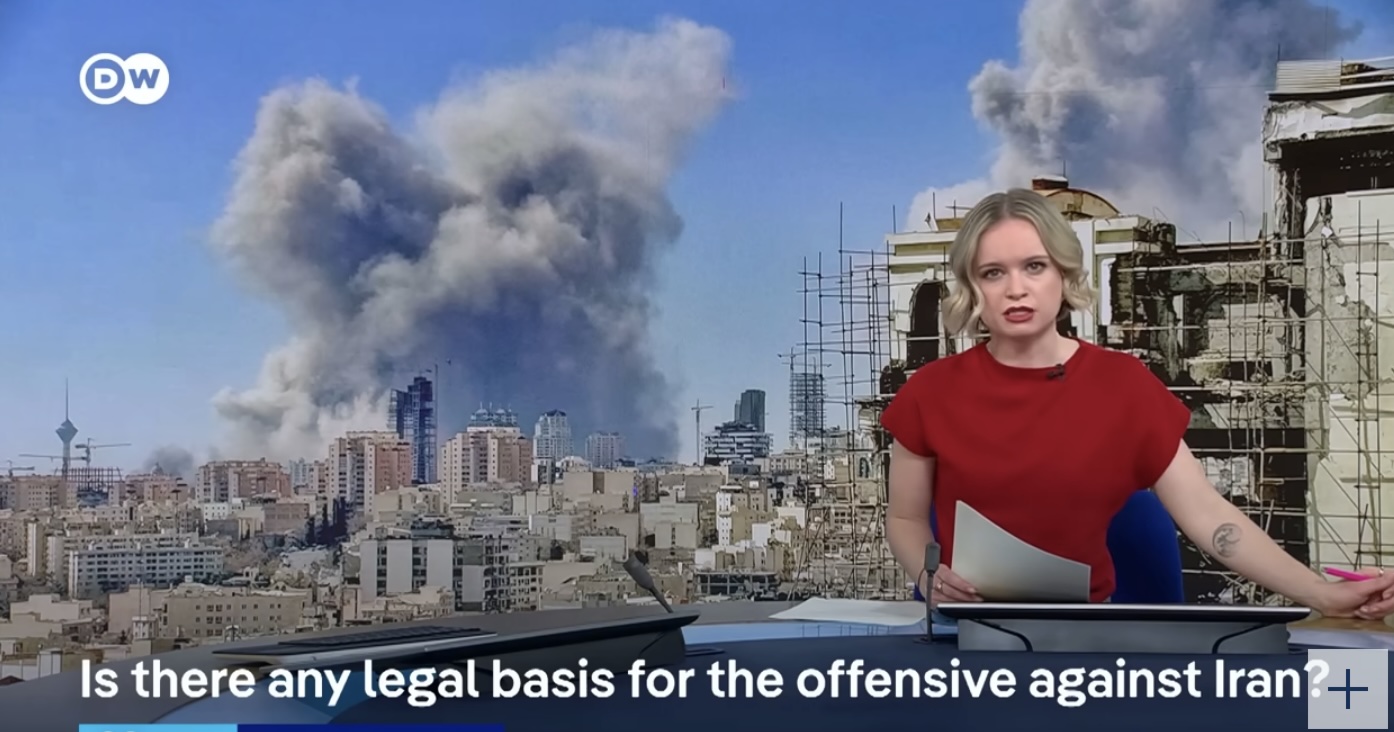
From the moment it was announced that Israel and the United States (US) had launched a joint attack on the theocratic Iranian regime, commentary revolved around the strikes’ legality. A host of left-leaning commentators, academics, and diplomats stridently criticised the US and Israel, alleging they acted in “violation of international law”. In particular, they asserted that Iran posed no “imminent threat” and therefore, Israel and the US could not be considered to be acting in legitimate self-defence.
In the US, members of the Democratic Party overwhelmingly called the moves “illegal and unconstitutional”, while almost all Republican members argued the opposite. Despite long-standing tensions with President Donald Trump, the governments of Canada and Australia issued statements supporting the US on the basis that it was “acting to prevent Iran from obtaining a nuclear weapon and to prevent Iran continuing to threaten international peace and security”. United Kingdom (UK) Prime Minister Keir Starmer went before the media to announce that the UK had not participated in the operations and had not allowed the US to use UK bases, and claimed that his government’s actions were “in line with international law”. Starmer was immediately panned by large swathes of the UK public for harming national security. When, within hours of his statement, British bases and nationals came under attack in the Gulf and in Cyprus, Starmer quickly reversed course, allowing the US to land at and launch additional strikes from UK bases.
In contrast, the Gulf States, which had heavily condemned Israel and the US during the 12-day Iranian conflict in June 2025 as illegal, now quickly directed such sentiments toward the Iranian regime. Instead of trying to play both sides, these countries were now being impacted by hundreds of ballistic missiles and thousands of drones launched at their territories.
For its part, Russia, which is entering the fifth year of its invasion of Ukraine, hypocritically called the operation an act of “unprovoked aggression”. China, another country aggressively asserting its military presence throughout the Pacific region, claimed the attack “tramples on the purposes and principles of the UN Charter”. South Africa, which has cultivated close ties with the ayatollahs, “condemned the unlawful attacks on Iran by Israel and the US, which violate Article 2(4) of the UN Charter”. But, as the country is also increasingly dependent on financing and oil from the Gulf, “expressed deep concern over the escalating crisis in the Gulf” and the “subsequent retaliatory strikes by Iran”.
These responses are illuminating regarding international law. First, they demonstrate that while international law lays down generally accepted norms and principles, such as in the UN Charter, its interpretation is highly ambiguous and hinges largely on what factual information is part of the analysis. If one ignores the decades of regional predations of the Iranian regime, its building up of a terror proxy ring of fire around Israel, its murder of 30 000 of its own citizens in January, and its deceptions regarding its ballistic missile arsenal and acquisition of nuclear weapons, and simply narrowly viewed the strikes as unprovoked, then one can characterise them as an illegal act of aggression. If one factors all of this history into account then the argument for legal self-defence is clear-cut.
Second, the divergent reactions regarding the law also highlight that characterisation of the war and its legality largely depend on one’s politics. If one is generally hostile to Israel, the US, and/or the Trump administration, then one will call the strikes a violation of international law. If supportive of Trump and long-standing Western alliances, the operation is valid and legal. If, like Starmer, one is roundly criticised for one’s stance, it might be enough to lead to a change in position. In the US, if according to polls the attack proves widely popular, Democrats will quickly shift their messaging. If the war features heavy losses and support for Trump drops, expect the legal discourse of “illegality” to accelerate.
Third, reliance on international law as a basis for policy formation is often tied to matters of national security. If serious risks are posed, one will be more likely to reject certain constraints of international law. For example, Israel views the Iranian regime and its actions as an existential threat to the Jewish State. It believes it had no choice but to attack, regardless of the legal criticisms that might be thrown its way. Both the Gulf States and Starmer reversed previously articulated policies, ostensibly predicated on international law, when their own countries and military assets came under attack.
In other words, while it is important to establish and support international norms to promote and maintain global stability, liberal democracy, and rights protections, it is questionable the degree to which they are universally understood and are binding. The discourse invoking international law, therefore, generally serves a primarily political function. The appeal to settled law is often a means to gain credibility and influence for one’s positions. By couching a preferred policy stance in terms of legality, the hope is it will garner public support and will become seen to be inviolable, thus shutting down any possible opposition or legitimate debate, while at the same time mobilising action.
Since Hamas invaded Israel on 7 October 2023, committed unspeakable atrocities, and sparked a regional war, much complicity has been exposed and conventional wisdom has been upended. This includes revelations of the extent to which the UN and humanitarian aid groups were exploited by Hamas to build up its war machine; that the terror group could be moderated; that Hezbollah was an unstoppable fighting force; that Syria would remain in the hands of Assad; and that Iran’s nuclear ambitions and threats to the region could be controlled through diplomacy. Yet another myth, that international law is explicitly clear, non-debatable, and can realistically moderate existential threats, has now also been laid bare with the launching of the strikes on Iran on 28 February. We are all better for it.
- Anne Herzberg is the legal advisor of NGO Monitor, a Jerusalem-based research institute.