News
South Africans take nerve-wracking trips to get home

Scenes of exhaustion and relief unfolded at OR Tambo International Airport this week as more South Africans arrived home after gruelling 30-hour journeys from Israel amid continued widespread Middle East war travel disruptions.
At about 07:00 on Wednesday, 11 March, an EgyptAir flight from Cairo carried at least 40 South Africans returning in a group from Israel after what many passengers described as an “insane journey”.
Among them were several sets of young parents travelling with small babies and toddlers, and many wedding guests, including families of brides and grooms and retinue members desperately trying to make it back to South Africa for at least three weddings taking place this week.
For some, the race against time didn’t end when the plane touched down.
Two sisters went straight from the airport to prepare for a photoshoot ahead of their sister’s wedding later that day. Their original fight from Jordan had been cancelled the night before it was scheduled to leave, forcing them to book another flight, from Egypt.
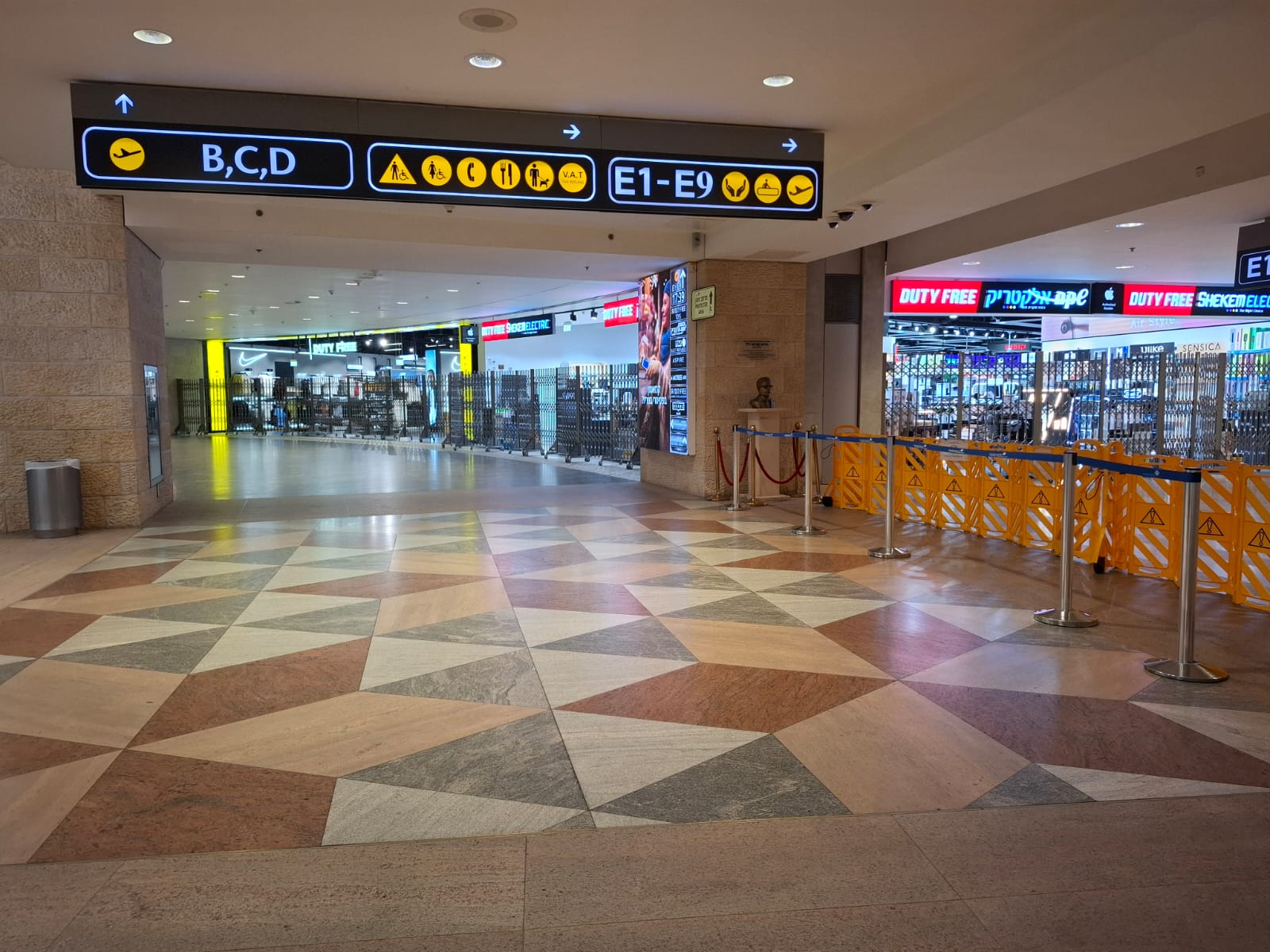
The chaotic journeys have become increasingly common as air travel in and out of Israel remains heavily disrupted. While Ben Gurion Airport has partially reopened, flights remain extremely limited, and many foreign airlines have suspended their services, forcing travellers to find alternative routes out of the country.
For Wednesday’s group, the journey began at about 04:00 when members left Israel by bus, heading south to the Taba border crossing with Egypt.
The crossing, usually a 20-minute exercise, proved to be the most stressful part of the journey, said some travellers.
“Border officials wanted to charge us double for our visas,” said one yeshiva student, “They were refusing to let us leave. Time was running out and we still needed to drive about three hours to get to Sharm El Sheikh International Airport to catch our flight to Cairo.”
Travellers were delayed for hours as officials demanded additional cash payments, causing long queues and confusion.
Travel expert Kim Kur, of Community Circle SA, said, “We will be investigating why this happened. It is usually a smooth process.”
“I was frantic,” said one Johannesburg mother. “The uncertainty about whether they would make the flight, or whether there would be further glitches along the way, was incredibly nerve-wracking.”
When they were finally cleared, the travellers piled into taxis and sped across the Sinai Desert in a desperate attempt to reach the airport before the flight departed.
“It was very beautiful scenery, but it was pretty hairy not knowing if we’d make it in time,” said one. “I think the driver was communicating with airport officials and travel agents to make sure the plane didn’t leave without us.”
EgyptAir’s local office worked with airport officials and travel coordinators, Shana Chrysler of Emunah Travel, and Israeli oleh Rabbi Gary Rogoff to ensure the passengers could still board their connection.
“It was very stressful but EgyptAir was amazing,” said Chrysler, who has been coordinating complex travel routes with Rogoff for stranded South Africans.
Behind the scenes, the two were tracking the group’s progress minute by minute as they raced to the airport.
The passengers arrived just minutes before the plane was due to take off.
They boarded the short domestic flight to Cairo before connecting to the overnight EgyptAir service to Johannesburg, where things ran smoothly.
For many passengers, the stakes could not have been higher.
“My son has two special weddings this week and wanted to be home for Pesach,” said a mother. “I haven’t seen him since June so became very emotional when he arrived home. My 18-year-old daughter is due to come back from seminary the same way later this week, so the stress and anxiety continues. We’ve had to make alternative travel plans for her as well. Professional travel coordinators are essential as they are able to speak directly to airlines and airports and relay vital communication.”
Another group of about 50 South Africans is expected to attempt the same journey on Thursday, including yeshiva students trying to return home.
“It’s hectic,” said Chrysler whose son, a yeshiva student, made it home on Wednesday after his flight from Amman, Jordan was cancelled, forcing her to rebook him a flight home from Egypt.
While many South Africans are scrambling to leave Israel, travel in the opposite direction has become nearly impossible for South Africans.
One family hoping to attend their son’s wedding in Israel next week remains stranded because they hold only South African passports and cannot transit through Europe without a Schengen visa.
Although airlines are allowing travellers to change tickets at no additional cost if they depart from European cities, South Africans cannot easily obtain the visas required to transit those routes.
The result is that some families may miss their own children’s weddings.
“For all the tea in China,” Chrysler said, “we just cannot get them there.”
Israeli Elisheva Surovsky-Miletsky is trying to get back to her older daughter and husband in Israel. She was in South Africa with her baby for a wedding and started making plans to return to Israel as soon as the war began.
She and her child first flew to Addis Ababa and then on to Athens, where the emergency flight they were waiting for to get home was cancelled two days after arriving in Athens. She said it has been a “hectic” journey, but the closer she gets to Israel, the more relaxed she feels.
As for flying from safety into a war zone, she said, “In Cape Town, my passports, credit cards, identity document, and driver’s licence were stolen from my car, and I had to fly to Pretoria to redo my passport. So I don’t feel like South Africa is so safe.”
In addition, “I prefer being with my family, to go to the shelter together and so on. It’s not the best experience, but I think it’s better.”
South African olah Georgia Daniel was on holiday with her daughter in Italy when the war broke out. Her husband and two other adult children stayed home. She continued the trip while constantly checking for return flights. “In Rome we met many other stranded Israelis, with no real solutions between us. I was having sleepless nights, worrying about my family in Israel and the uncertainty of how long we would stay in Rome.”
They were eventually able to get a flight to Taba airport, “which is basically a hut with a runway”, says Daniel.
From there, “we got a taxi from the airport to the border. Egyptian border control tried asking for bribes to fill out their border forms. I refused. On the Israeli side, the Ministry of Transport supplied buses back to Tel Aviv via Beer Sheva.”
They travelled for five hours, which included two pit stops and a missile attack.
For many the journey to reach loved ones is far from over.