Matric
Pain, perseverance, and purpose define remarkable year

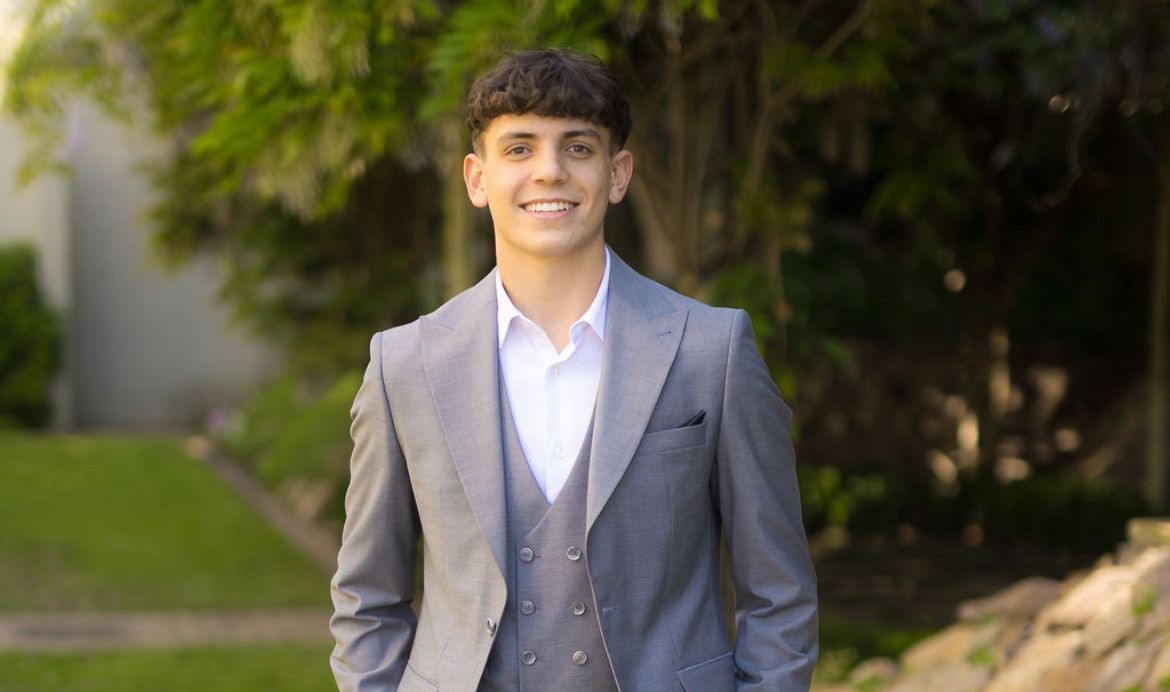
When King David Linksfield matriculant Jacob Pimstein began matric last year, all he wanted was to play rugby, which had come to a halt after he tore his anterior cruciate ligament (ACL) in Grade 11.
However, when he got onto the rugby field again, his life changed after he was diagnosed with an aneurysmal bone cyst and a giant cell tumour in his sacrum, a rare and intensely painful condition. It threatened to derail everything.
After tearing his ACL in Grade 11, Pimstein worked hard to be able to play rugby again.
“My goal became playing rugby in the first team in Grade 12. Rehab went well, and by the time Grade 12 came around, I was cleared to start running again, change direction, and ease back into rugby,” he said. “Then, in January or February, I was back on the field. I play fly-half and do the kicking, and during one training session, I started feeling a tightness in my back while kicking. I didn’t think much of it, and just played through it.”
Pimstein went to physiotherapy every week and was told that the pain was a result of his knee injury. This wouldn’t stop him from playing the sport that he loves. In Grade 11, he was selected to play for the Provincial Lions and he was asked to attend trials in his matric year.
“I made the team again last year, and reached the final round. It was at that tournament that the pain really set in. I was taking painkillers before every training session and couldn’t move without them. As time went on, I started to be in constant agony. Eventually, we went on a school rugby tour. I arrived in severe pain, but after coming that far, I felt I had to play. I managed only half a game before realising I couldn’t go on anymore,” he said.
“No-one was giving me straight answers. I played one more game, came off the bench, and was in so much pain, I knew I couldn’t continue. We went to my physiotherapist, who suspected a slipped disc, and my dad suggested an MRI to be safe. I was told the scan would take 30 minutes, but was in there for an hour and a half. When the radiographer came in, she didn’t say anything, but I could tell something was wrong. They couldn’t explain it at first, only that there was a lump in my back. A day or two later, I was told it was a tumour.”
It turned his world upside down as he would have to have major back surgery close to prelims. Because his surgery was so close to his exams, he was allowed to miss them, but was determined to continue.
“It would at least show where I stood and what to expect,” he said.
After about three weeks, having missed nearly two months of school, he started feeling better. “While my friends went on their July holidays, I had daily lessons, sometimes two or three a day. Some I did lying on my bed, others standing. I kept that up for about six weeks to prepare for prelims,” he said. “When prelims arrived, the school arranged a separate venue for me. I wrote in my own cubicle with a cushion, a comfortable chair, and a stand so I could write while standing, which I often needed to do because of the pain. I also used a machine from my post-surgery physiotherapist that sent mild shockwaves through my back to help manage pain.”
By the time of writing finals, things had become more manageable. When he finished that last exam, Pimstein said, “I’ve never felt anything like it. The joy was overwhelming.”
Pimstein, who got three distinctions, plans to study accounting at the University of the Witwatersrand and is ready to “be able to see what I’m truly capable of academically and play rugby at varsity because I was so restricted this year”.