





OpEds
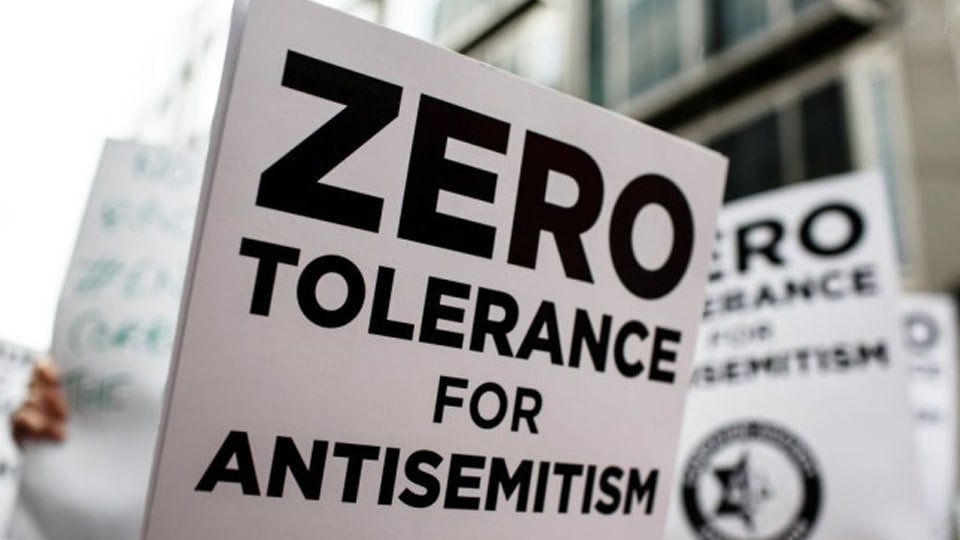
The campaign against Jewish life in SA is antisemitic, anti-democratic, and unconstitutional

In any constitutional democracy there is a distinction between protest and intimidation. Protest is directed at power, policy, and public institutions. Intimidation is directed at people, their spaces, and their sense of safety and ease in ordinary life.
In South Africa, activism around the Israel-Palestine conflict is usually presented as belonging to the first category. It is described as solidarity with Palestinians, moral opposition to Israeli conduct, and part of a broader democratic culture of international advocacy. On the face of it, that appears straightforward enough. Citizens are entitled to hold strong views on foreign affairs and to campaign around them.
However, a more troubling pattern has emerged. Increasingly, the activism in question is not directed at the state, foreign policy, or institutions of actual political power. It is directed at spaces associated with Jewish South Africans, their symbols, their religious observance, their schools, and the ordinary environments in which Jewish communal life is visible. What is emerging, then, is not simply protest in the democratic sense. It is a politics of targeted discomfort directed at Jewish communal life.
That distinction matters. Once activism shifts from public argument about a foreign conflict to the disruption and politicisation of local Jewish life, the issue is no longer only Palestine. The issue becomes whether Jewish South Africans are to be allowed an ordinary place in the country’s civic and social life, or whether their presence is now to be treated as permanently contestable.
Much of the energy in this politics now finds expression in places where Jews gather, shop, commemorate religious holidays, educate their children, and live communally. The point is not always exclusion in a formal sense. More often, it is discomfort. A Jewish symbol must no longer simply be a Jewish symbol. A Jewish religious holiday must no longer simply remain part of Jewish observance. A Jewish space must no longer simply remain a social, educational, or communal environment. Each must be dragged into the orbit of the conflict and made to bear its tensions.
Recent examples illustrate the pattern. When Pick n Pay’s Norwood branch in April 2025 temporarily removed elements of its Pesach décor after social media agitation and activist pressure, the issue was plainly not South African foreign policy. It was whether Jewish religious visibility in an ordinary South African retail environment could be made controversial. The practical message was that even the public expression of Jewish religious holidays could be transformed into something politically suspect if sufficient pressure was applied.
A 2015 incident at the Virgin Active gym at Old Edwardians in Houghton revealed the same logic in another form. The gym was turned into a site of confrontation through the wearing of Boycott, Divestment, Sanctions apparel bearing the words “In solidarity with the Palestinians, against Israeli apartheid” in circumstances that suggested not spontaneous expression, but staged provocation. Again, an ordinary space was converted into contested political ground.
The Houghton Golf Club matter last week belongs to the same terrain. There, a visitor displaying a Palestinian flag on his vehicle at a club with a substantial Jewish membership was told that political and religious symbols were not permitted on the premises. The ensuing controversy was framed as a freedom of expression dispute. But that framing is too narrow. In the present climate, conflict symbols don’t enter such spaces innocently. Whether intended or not, they form part of a wider pattern in which spaces with a known Jewish character are increasingly made to absorb the pressures and antagonisms of a foreign conflict.
The Roedean School episode in February 2026 took this logic into an even more serious setting. There, the issue was not retail or club culture, but school sport and the ordinary participation of Jewish children in institutional life. Roedean refused to play a fixture against King David School because it was a Jewish school, then later apologised and acknowledged the hurt caused to the Jewish community. That matters because it lays bare the principle at stake. When a Jewish school becomes objectionable not because of misconduct, but because of its Jewish character, the issue is no longer political dissent. It is discrimination directed at Jewish identity.
Taken together, these incidents reveal the same development. Jewish spaces are increasingly treated not as ordinary parts of South African life, but as available sites for agitation, symbolic incursion, and pressure. The common feature isn’t simply disagreement over Israel. It is the relocation of that disagreement into the daily environments in which Jews live as Jews.
This is why the campaign is antisemitic. Not because all criticism of Israel is antisemitic. It is not. But a campaign becomes antisemitic when Jewish life as such becomes the practical object of pressure. When Jewish symbols, Jewish religious observance, Jewish schools, and Jewish communal spaces are repeatedly made to carry the burden of a conflict elsewhere, the line has been crossed. What is being targeted is no longer merely a foreign government or ideology. What is being targeted is the ability of Jews to inhabit ordinary life without their identity being turned into a provocation.
It is also anti-democratic. Democracy requires more than the formal protection of speech and assembly. It depends on coexistence. Minority communities must be able to gather, celebrate, educate their children, shop, and associate without those ordinary activities being subjected to recurring political encroachment. Once a style of activism depends on unsettling the daily life of a minority, pressure starts to replace persuasion, and intimidation begins to masquerade as conscience.
And it is unconstitutional. The Constitution’s guarantees of dignity, equality, freedom of association, freedom of religion, and cultural life aren’t ornamental. They exist precisely to ensure that communities don’t have to negotiate their right to ordinary existence each time public passions rise. Jewish South Africans are citizens of South Africa, and must be able to enjoy those rights in substance, not merely on paper, no less than any other South African.
That means Jewish spaces must be allowed to remain spaces, not become permanent stages for activist intervention. Jewish religious observance must be allowed to remain religious observance, not be recoded whenever convenient as a political offence. Jewish communal and educational life must be protected not only against formal prohibition, but against the steady erosion of the peace necessary to exercise constitutional rights meaningfully.
A just cause doesn’t sanctify intimidation. Political passion doesn’t authorise the social targeting of a minority. Solidarity with one people doesn’t require the making-uneasy of another. If activism on Palestine is to remain democratic and legitimate, it must remain directed at argument, policy, and power. The moment it begins to derive meaning from making Jewish communal life uncomfortable, it ceases to be a democratic practice and becomes something uglier, and constitutionally indefensible.
What is emerging in South Africa is a campaign to make Jewish life less secure, less normal, and more contested in the public sphere. That campaign is antisemitic because it directs pressure at Jews as Jews. It is anti-democratic because it substitutes intimidation for coexistence. And it is unconstitutional because it erodes the substantive enjoyment of rights the Constitution exists to protect.
If South Africa cannot draw that line clearly, the failure will be South Africa’s, not the Jewish community’s.
- Mzoxolo Mpolase is the managing editor of Political Analysis South Africa and writes on power, governance, political strategy, and the forces shaping public life. This article was first published in Political Analysis South Africa.




Ian Steven
May 28, 2026 at 9:12 pm
Well written logical presentation. Unfortunately those who tend to be involved in the ideas of BDS with supposed support for the arabs outside Isreal seem to be immune to the logic of seeing both sides of a story or are possibly so consumed by the hatred of all things Jewish that they wont even bother to read your article. Sadly the BDS support seems to have gained a strong foothold amongst so called liberal, democratic thinkers at institutes of higher learning who have somehow been taken in by a propoganda driven narrative put out by those intent on the destuction of Isreal.