


Sport
Second wind: Cape Town’s unofficial marathon of hope

When the Cape Town Marathon was cancelled less than an hour before the start, runners across the city refused to stay still. What followed was a day of heart, generosity, and resilience that turned disappointment into inspiration.
At 04:45 on Sunday morning, 19 October, runners across Cape Town woke to a message none of them expected. The 2025 Sanlam Cape Town Marathon had been cancelled less than an hour before it was due to begin. Months of training, sacrifice, and anticipation seemed to vanish in a single moment. Yet, as the sun rose over the Atlantic, the disappointment began to shift. The city that had been ready to host a world-class event found another way to run.
The Cape Town Marathon has become one of Africa’s leading sporting events, drawing elite athletes and community runners alike. With 24 000 entries this year, it was expected to strengthen the city’s case to join the ranks of the world’s major marathons. But overnight winds ripped through Cape Town, toppling fencing, tearing signage, and damaging parts of the starting area.
With gusts reaching dangerous speeds, organisers had little choice but to cancel. Safety, they said, had to come first. The shock was immediate. Runners who had travelled from across South Africa and abroad stood in disbelief, unsure what to do with the energy they had built up. But in true Cape Town fashion, the city’s resourcefulness took over.
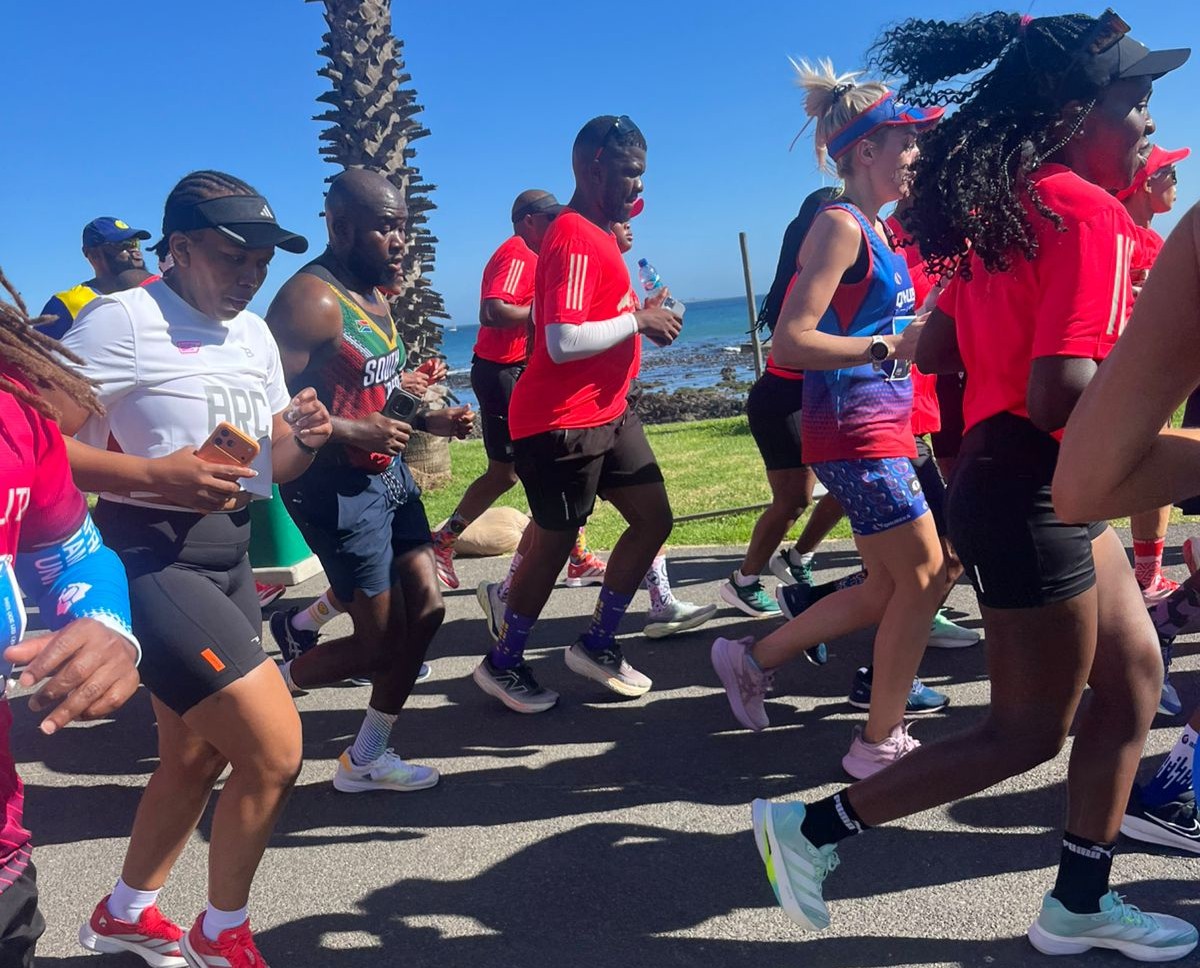
Almost as soon as the announcement spread, small groups began to gather. Along the Sea Point Promenade, through the southern suburbs, and across the City Bowl, runners tied their shoes and took to the streets. Some covered the full 42.2km, others shorter distances, but all shared the same intention: to finish what they had started.
There were no timing chips or medals, only determination. Cars slowed to offer water. Strangers shouted encouragement. Pacers who had planned to lead official groups lifted their flags anyway and guided spontaneous clusters of runners along new routes.
Among those who kept moving were 37 members of the DL Link team, who had trained to raise funds for South Africans living with cancer. Dressed in bright blue shirts, they ran their chosen distances along the promenade, cheered by supporters waving banners and shouting encouragement.
After the run, the team met for a meal and reflection. For Avidan Bender, whose five-year-old daughter, Eliana Leah, has been undergoing chemotherapy for leukaemia, the event carried deep significance. DL Link’s organisers said the day was a reminder of “strength, love, and unwavering support” for those facing cancer.
After months of build-up, early mornings, sweat, tears, and fundraising, cancellation didn’t stop its runners, the organisation says. “Even without medals, timing chips, or a finish line, they ran. Many completed the full 42.2km anyway, knowing exactly who they were running for: their DL Link Warriors.”
The group dedicated the run to little Eliana, who had travelled to Cape Town to cheer on her father. He had planned to carry her on his shoulders across the finish line. When the official line disappeared, DL Link made its own, banner and all, so that he could still keep his promise.
“Nothing stops DL Link,” the organisation said. “Nothing stops people who run with heart and soul for those fighting battles every day. No winds will stop us; they only push us further.” For the DL Link community, the day was less about what was cancelled and more about what was affirmed: courage, compassion, and commitment.
The cancellation also led to an unexpected act of generosity. As official food sponsor of the marathon, Woolworths had prepared food for 24 000 runners: everything from 26 000 bananas and 20 000 Clemengolds to 5 000 apples, 1 800 sandwiches, and hundreds of kilograms of potatoes and dried fruit.
When the marathon was called off at 04:45, the Woolworths team immediately began co-ordinating with local charities to ensure that nothing went to waste. By 10:00, more than 500kg of food had been collected by 18 organisations, including orphanages, old-age homes, and soup kitchens.
Spencer Sonn, Woolworths’ Chief Customer Officer and an avid runner, said he had planned to be at the halfway mark cheering on the athletes, including many Woolworths employees. “Of course, it was disappointing to hear the marathon was cancelled because we know how much effort goes into training,” he said. “The silver lining was that all that good food helped feed our city’s most vulnerable people. That is the Woolworths difference in action.”
The donation formed part of Woolworths’ Good Business Journey, a programme that last year provided more than 800 000kg of surplus food to South African charities. On a morning defined by resilience, the gesture reinforced the idea that setbacks can still nourish hope.
Among those who ran despite the cancellation was Nicole Glickman, who had travelled from Johannesburg to take part. She leads Catch Me If You Can, a women’s running group established to promote fitness, safety, and solidarity among female runners. “When the news broke that the marathon was off, there was confusion and disbelief,” Glickman said. “But I told my group that we could still run what we trained for.”
By sunrise, they were ready. At 06:49, Glickman and her teammates began their own marathon along the Sea Point Promenade. They covered the full 42.2km, enduring fierce winds and the absence of hydration stations or crowd support. “It was harder than an organised race because we had no entertainment or crowds to push us along,” she said. “But it was also more meaningful. It reminded us that we run for ourselves and for each other.”
For Glickman, running is more than a sport. Having taken it up four years ago while recovering from a traumatic loss, she sees it as a source of emotional healing and strength. Her group also advocates for women’s safety in public spaces, partnering with Women for Change to raise awareness of gender-based violence. “We run to reclaim our streets and to show that women belong in every public space,” she said. “That morning showed us that when women stand together, nothing can stop us.”
Across Cape Town, the story was the same. Families stood on pavements offering fruit and water; cyclists stopped to cheer; and pedestrians joined the runners for a few kilometres. Cafés along the promenade opened early to serve tired but smiling athletes. By mid-morning, the streets were filled with music, laughter, and conversation. Social media buzzed with photos of smiling runners crossing self-made finish lines and hugging friends. Hashtags such as #CTMarathonSpirit and #RunAnyway trended throughout the day.
Marathon organisers expressed regret at the cancellation, but said the safety of runners, volunteers, and spectators had to remain the priority. They commended the generosity of sponsors such as Woolworths, and the resilience shown by the running community. Future plans include reviewing the event’s weather protocols and possibly moving the date to reduce the risk of spring wind disruptions.
What unfolded on 19 October went far beyond sport. The day became a study in perseverance, creativity, and kindness. The runners showed that meaning can be found even when plans collapse, and that community can transform disappointment into celebration. For DL Link, it was a statement of faith and endurance. For Woolworths, it was a demonstration of corporate compassion. For Nicole Glickman and her fellow runners, it was proof of leadership, safety, and sisterhood in action.
Each story echoed the truth that the human spirit cannot be cancelled. The 2025 Cape Town Marathon will be remembered not for the gusts that halted it, but for the hearts that kept it moving.