



Question and Answer
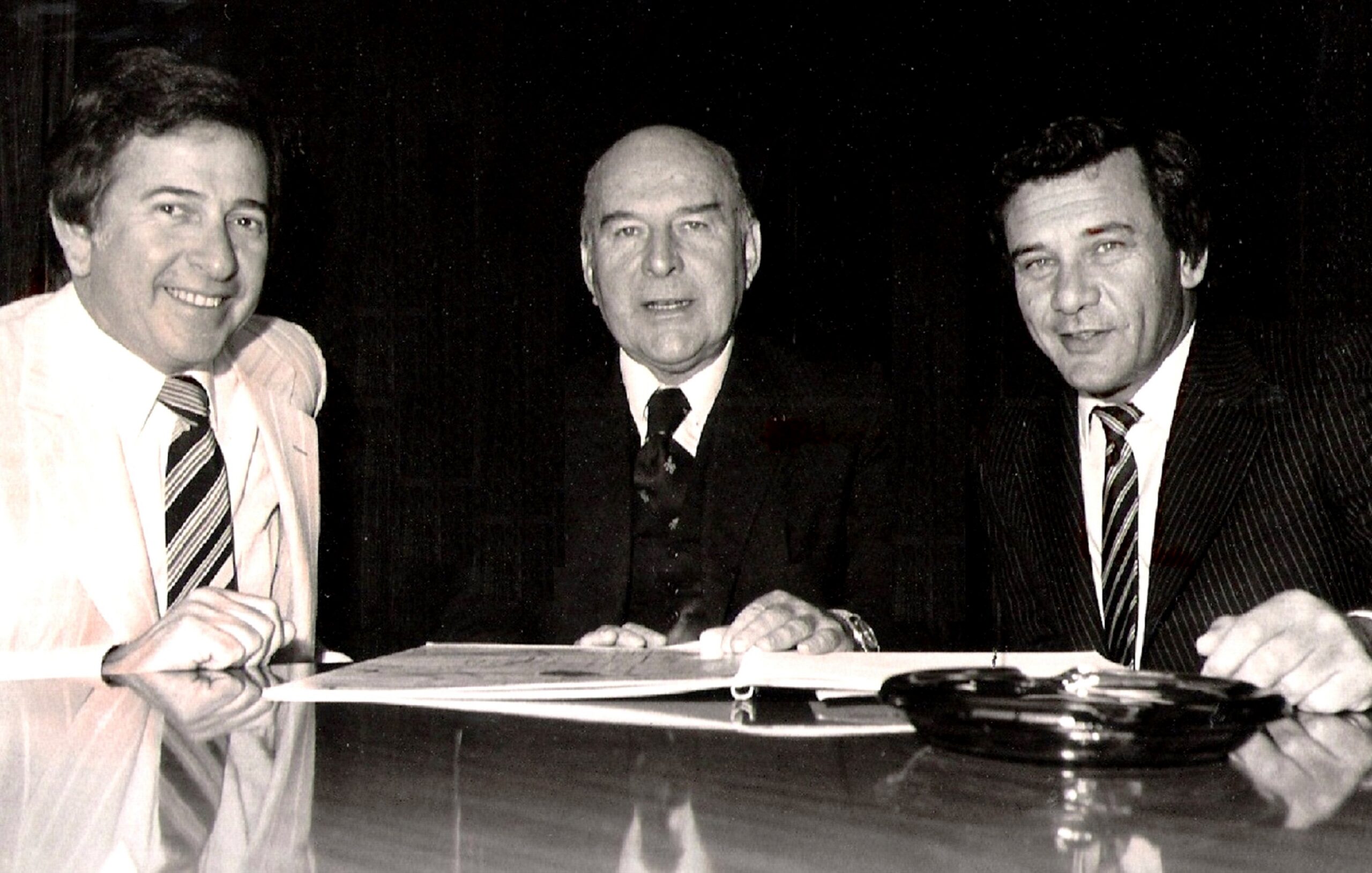
The cultural DNA of 702 was Jewish

With The Story of 702 – In Touch, In Tune and Independent recently launched, the SA Jewish Report speaks to its publisher, Batya Bricker.
Why and how do you believe 702 changed the face of radio in SA?
It pioneered talk-back radio, which had been virtually unheard of in South Africa at the time. Instead of passive listening, audiences could call in, participate, and shape the conversation. It gave ordinary people agency and a voice.
At a time when the South African Broadcasting Corporation (SABC) was widely perceived as biased, 702 stood out by offering opinions across the political spectrum. It became a space where different ideologies could be heard and debated openly, a revolutionary development in a highly controlled media environment.
The station also redefined the relationship between media and community through initiatives that changed the face of South African society. Think of the Concert in the Park; or Operation Hunger telethons; problem-solving platforms, like helplines and civic engagement projects; and even the introduction of regular traffic reports.
What was the gap that the visionary Issie Kirsh exploited to create 702?
He set up shop, as it were, in one of the so-called “independent” homelands, which was, in many ways, both opportunistic and ingenious.
Under apartheid, South Africa tightly controlled broadcasting through the SABC. There was effectively no space for independent commercial radio in “white” South Africa.
But because the Bantustan homelands were technically separate states, they were not bound by South African broadcasting monopoly laws. By placing his transmitter in Bophuthatswana, Kirsh created a commercially driven, independent radio station that spoke to South Africans while operating just outside the system meant to control them.
What was Kirsh’s vision for the station, and how did he make it happen?
His vision was to create a station that mattered in every sense of the word ‒ not just a place to listen, but a place to engage, to question, to connect, and to act.
What made this vision so powerful was how deliberately it was built. Kirsh created a space where politicians, public figures, and ordinary citizens could meet on equal ground, each able to speak and be heard. In doing so, he gave shape to something South Africa had not yet experienced: a genuinely open forum, one that reflected the country’s complexity rather than a single, controlled narrative.
At the same time, he anchored the station in a deep sense of community responsibility. This wasn’t radio for its own sake; it was radio that could mobilise help, respond to need, and make a tangible difference in people’s lives.
Crucially, Kirsh paired this idealism with sharp commercial instinct. He ensured that the station understood its audience intimately, marketed itself boldly, and built robust sales systems. The result was a station that could be both principled and profitable.
In bringing all of this together, Kirsh didn’t just launch a successful radio station. He created a new model for broadcasting in South Africa.
People speak of 702 as having been a Jewish station and a Jewish success story. What do they mean by this?
To call 702 a “Jewish station” is, at its heart, to point to the cultural DNA that shaped it from the inside out. It reflects the fact that the station was built and led by figures like Issie Kirsh and others from Johannesburg’s Jewish community, who brought with them not only networks and entrepreneurial drive, but also a particular way of seeing the world and engaging with it.
It’s no coincidence that 702 became the home of talk radio, a format that thrives on debate, multiple perspectives, and the constant testing of ideas. In this sense, the station’s culture of being curious, argumentative, open-ended, can be understood as an extension of that intellectual culture.
At the same time, there is an equally strong thread of responsibility to community.
And layered onto this was a distinctly entrepreneurial, outsider energy, the ability to operate beyond the dominant structures of the time, to take risks, and to build something bold and independent in a tightly controlled media environment. What began as a relatively small, even improbable venture became, through vision and tenacity, a defining force in South African broadcasting.
What was the magic of John Berks and why was he such a phenomenon?
What made him such a phenomenon was this extraordinary balance he held: he was both an entertainer and a listener, a strong on-air personality and a generous facilitator of others’ voices. He knew when to lead and when to step back, when to inject energy and when to hold space.
Berks also understood, almost intuitively, the emotional rhythm of radio ‒ how to move between humour and seriousness, between lightness and depth ‒ keeping listeners both engaged and invested. This range, combined with his openness to unpredictability, gave his show a feeling of aliveness that was both compelling and addictive.
What made Berks so different to Stan Katz, another 702 luminary, who became Stan to his Laurel?
What made them different is exactly what made them powerful together.
Berks brought the spark ‒ the immediacy, the humanity, the emotional connection that made listeners feel part of something alive. Katz brought the structure ‒ the vision, discipline, and commercial intelligence that turned that spark into a lasting enterprise.
Together, they embodied two sides of the same idea: that great radio needs both heart and architecture, and that when those two are in balance, something truly enduring is created.
Why did Kirsh want this story written? What did he want readers to know?
Kirsh was clear that 702 was never a one-man show. He wanted readers to see that it was never just a radio station; it was a community in motion, shaped by many hands, many voices, and a shared desire to do something worthwhile.
Also, and importantly, recording the 702 story preserves a unique moment in South Africa’s history. The story of 702 is intertwined with a period of profound national change.
Kirsh wanted to document how a small station, with limited resources, became part of the country’s social fabric and even its democratic evolution.