Lifestyle/Community
Under the palm tree: rediscovering Kibel and Lipshitz

Two South African Jewish artists whose work is internationally acclaimed found themselves briefly working side by side in a small studio in Roeland Street in Cape Town back in the early 1930s.
The are Polish-born painter and printmaker Wolf Kibel, who was partly responsible for introducing Expressionism to South Africa, and Lippy Lipshitz, considered one of the country’s foremost modernist sculptors.
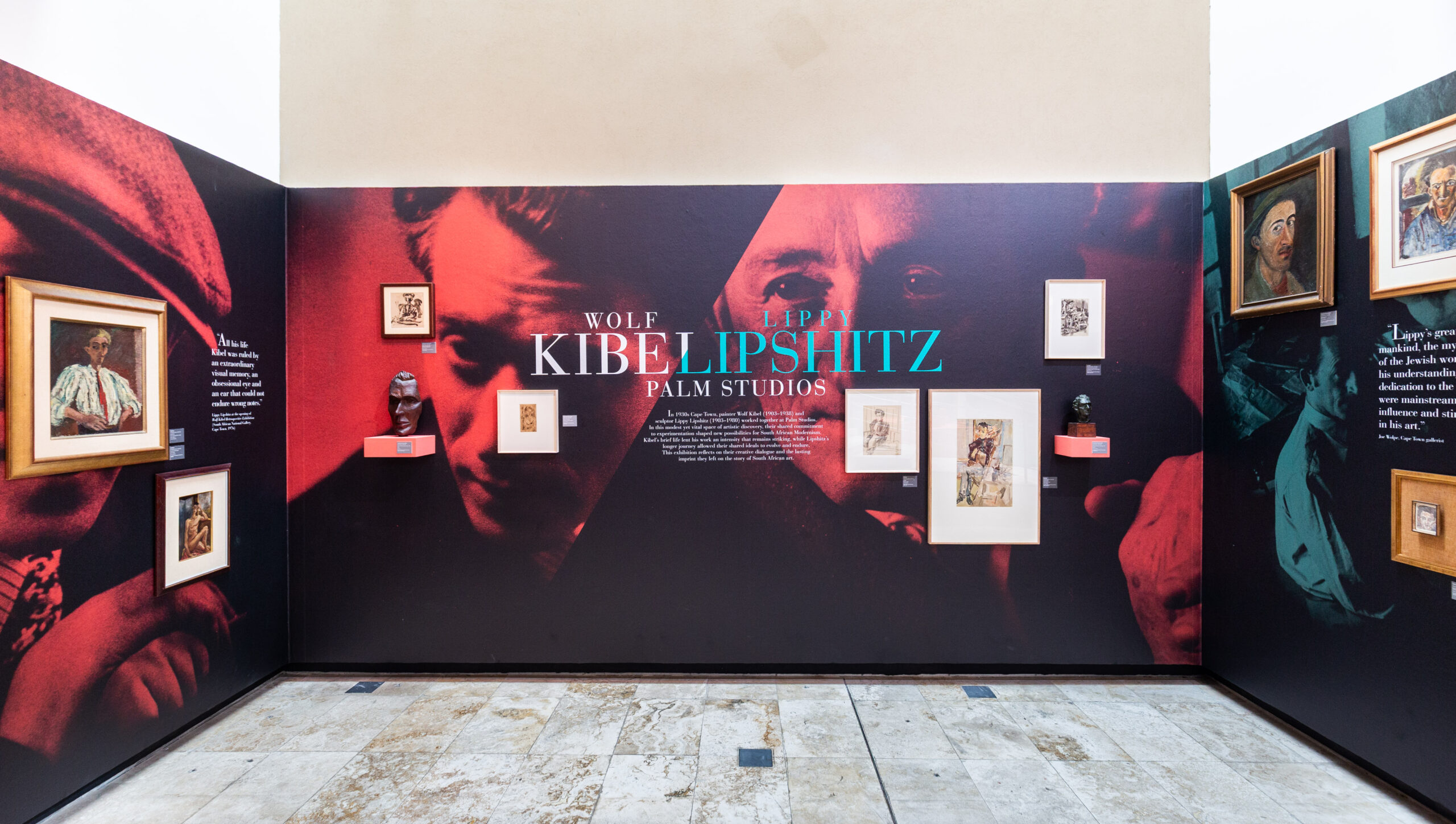
Nearly a century later, that encounter at Palm Studios is being revisited in an exhibition at the South African Jewish Museum, bringing focus to a pivotal moment in South African modernism.
Palm Studios: Wolf Kibel and Lippy Lipshitz – A Shared Vision centres on the formative relationship between Kibel and Lipshitz. Both were born in 1903 in Eastern Europe, both were shaped by migration, and both arrived in South Africa carrying the visual language of European modernism. Their meeting in Cape Town resulted in a short but intense period of collaboration that would influence the trajectory of their work in different ways.
Palm Studios took its name from a leaning date palm outside the building. The studio functioned as both a workspace and a site of exchange, where painting and sculpture developed in close conversation. As curator Jay van den Berg writes in his curatorial statement, “It was more than a place of work; it was a site of intellectual and artistic exchange, of arguments and discoveries, of shared rhythms and silences.” This sense of dialogue lies at the core of the exhibition.
The project is also an act of recovery. Kibel hasn’t been the subject of a comprehensive exhibition since the 1970s, while Lipshitz’s work hasn’t been surveyed in depth for more than two decades. By returning to the Palm Studios years, the exhibition reframes their practices as interconnected rather than isolated, and restores a chapter that has largely fallen from view.
The exhibition balances Lipshitz’s sculptures with his works on paper. Drawings, monotypes, and etchings reveal an experimental sensibility and a sustained engagement with labour, movement, and the human figure. These works demonstrate that his sculptural thinking was closely bound to drawing, and that his modernism extended across media.
Kibel’s paintings are marked by restraint and psychological intensity. Influenced by European expressionism, his work from this period is inward looking and finely controlled. Despite clear links to international modernist currents, his visual language remained distinct. Created during years of illness and financial precarity, the works convey a quiet concentration that deepened toward the end of his life.
Migration and diaspora are central to the exhibition’s framing. Kibel travelled from Poland to Vienna, Israel, and eventually South Africa. Lipshitz moved between Lithuania, Paris, and Cape Town. Their shared Jewish backgrounds and experiences of displacement shaped a modernism that was international in outlook yet rooted in cultural memory.
The exhibition situates Palm Studios within the cultural landscape of 1930s Cape Town. At a time when conservative genres dominated local institutions, Palm Studios emerged as a rare enclave of experimentation. Kibel and Lipshitz taught students there, debated music and literature, and sustained a small but influential modernist community. Van den Berg describes the studio as “a crucible of modernist experiment and of diasporic exchange”, underscoring its role within a wider cultural network.
The paths of the two artists soon diverged. Kibel died in 1938 at the age of 35, leaving behind a compact but powerful body of work. Lipshitz lived until 1980, and continued to shape South African sculpture as an artist, teacher, and advocate for modernism
Works in the exhibition are drawn from public and private collections in South Africa and abroad, including pieces not shown publicly for decades. They are presented in dialogue rather than isolation, allowing relationships between painting and sculpture to emerge.
Rather than offering closure, A Shared Vision reopens a conversation interrupted by illness, early death, and historical neglect. By returning to Palm Studios, the exhibition restores a shared modernist vision shaped by collaboration, migration, and the enduring power of artistic exchange.
- The exhibition is on now until the end of April. For more information on curated tours and times, visit https://www.sajewishmuseum.co.za/