





Lifestyle/Community
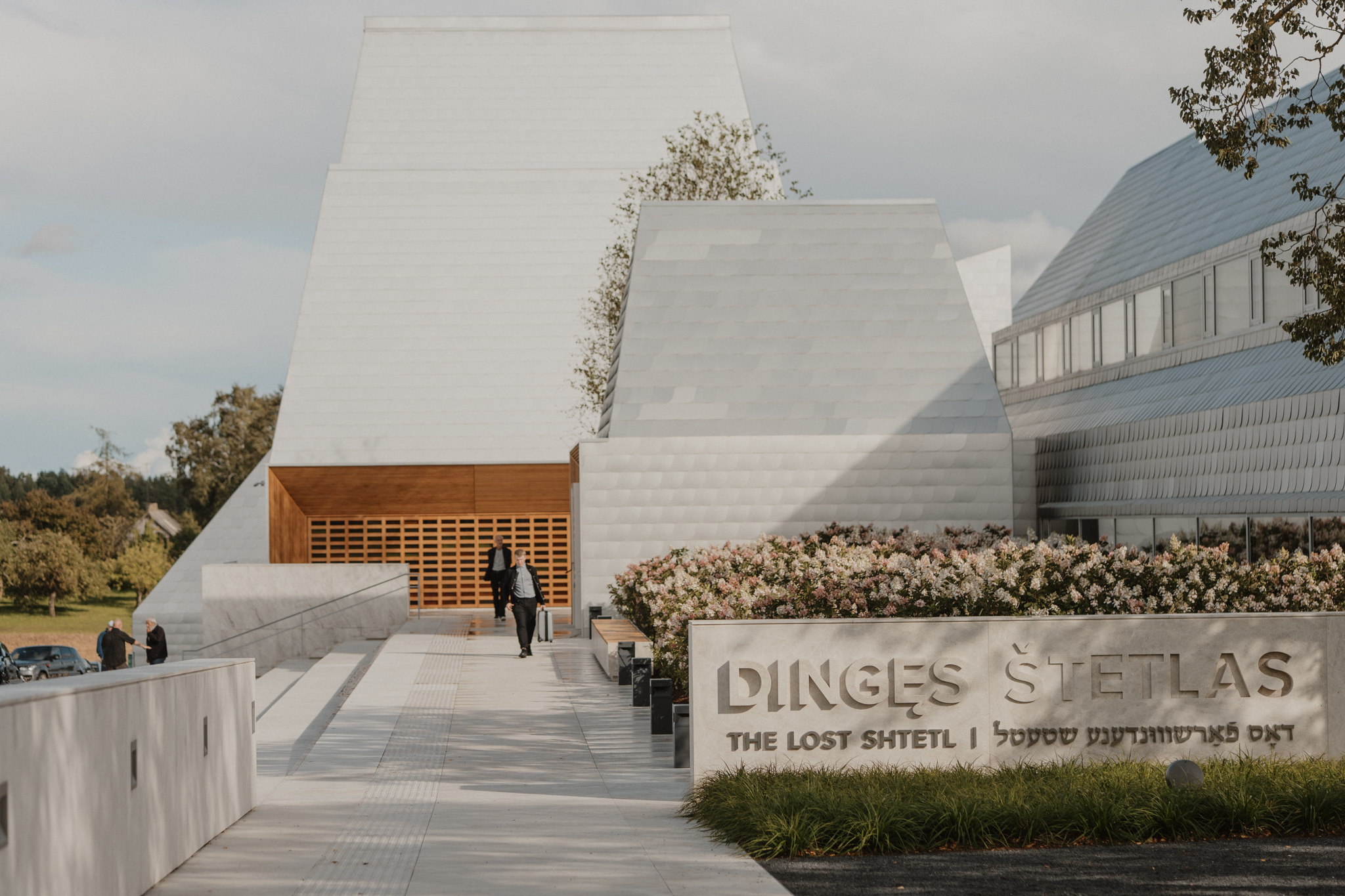
Museum tells story of Lithuanian Jewry

In 1941, Lithuanian Jews were taken from their homes, marched out of their towns or villages mostly by Lithuanians themselves into the forests, forced to dig mass graves, and shot into those graves.
In that short time, about 200 000 Jews were killed, most of the remaining Jews in Lithuania. Had so many of them not left before then – mostly landing up in South Africa and making up most of the local Jewish population – the Litvak community might not have survived.
This horrifying history represents the Holocaust before Auschwitz became its symbol, and it is this history that shaped Lithuania and, by extension, much of South African Jewry.
This is but part of the story told by the new Lost Shtetl Museum in Šeduva, a small town in Lithuania. It is this museum, opened in August 2025, that is one of the only places you can find an honest story about the Jewish community.
“In the summer and autumn of 1941, the Holocaust in Lithuania happened very fast,” said Dr Jolanta Mickutė, historian and head of education at the Lost Shtetl Museum. “There were no extermination camps yet. People were taken to nearby forests and killed there. This is what we call the Holocaust by bullets.”
She reiterated that in Lithuania, Jewish life didn’t end behind barbed wire or railway gates. It ended in forests, in silence, and in full view of neighbours. Families were taken from their homes, marched to mass graves, and shot, often over the course of a single day.
In Šeduva, she said, that destruction took place at the end of August 1941. Within two days, the town’s entire Jewish population was murdered after being held briefly in a forced‑labour camp. A community that had existed for centuries disappeared almost overnight.
It’s because Šeduva’s story mirrors what happened across Lithuania that it became the home of the Lost Shtetl Museum. “Šeduva represents the rule, not the exception,” Mickutė said. “About a third of its population was Jewish in interwar Lithuania. Using Šeduva allows us to tell the story of shtetl life across the country.”
The museum, which opened next door to the restored Šeduva Jewish Cemetery, grew out of a far smaller idea. “At first, there was just a plan to restore the cemetery and create a small memorial space,” Mickutė said. “But the project grew because people realised how much history had been erased, and how urgent it was to bring it back.”
Walking through the museum today, visitors encounter that history as lived experience rather than abstraction. The 10‑gallery exhibition begins with Jewish daily life: markets; youth movements; religious practice; political debate; and coexistence with neighbours. “We begin with life,” Mickutė said. “We want visitors to meet real people first, not statistics.”
Only then does the narrative move toward occupation, violence, and annihilation. By the time visitors reach the Holocaust Gallery, “the Jews of Šeduva are no longer faceless numbers”, Mickutė said. “They are people with names, families, and professions.”
From South Africa, Dana Lazarus was at the museum’s opening and described the exhibition as emotionally devastating but necessary. “The first half shows you what was, how rich and normal life was,” she said. “The second half shows you exactly how it ended. The museum names who were involved, what they did, and how the community was destroyed. It’s confronting, but it’s honest.”
That honesty is deliberate. The museum documents not only Nazi leadership, but also the role of local collaborators, a subject long suppressed during the Soviet era. “For 50 years, this history couldn’t be spoken about openly,” Mickutė said. “Now, with survivors and witnesses almost gone, education has become urgent.”
For South Africans, the museum resonates deeply. An estimated 80% to 85% of South African Jews are Litvaks, descendants of Jews from present‑day Lithuania. “Even if your family wasn’t from Šeduva,” Mickutė said, “this is very likely how your ancestors lived.”
Artefacts donated by South African Jewish families appear throughout the museum: letters, photographs, and objects carried across continents. Lazarus found these moments especially moving. “We know our grandparents came from Lithuania,” she said. “But most of us don’t really know their stories. This museum gives you a glimpse into the lives they left behind, and into the fate of those who didn’t leave.”
Like many visitors, I knew about Auschwitz. What I didn’t know was how many Lithuanian Jews were murdered before camps became central to the Nazi system. “Most people associate the Holocaust with Auschwitz,” Mickutė said. “But for provincial Jews in Lithuania, the Holocaust happened earlier, and it happened near their homes.”
Since opening, the response has been overwhelming. In its first four months, the museum welcomed more than 26 000 visitors despite opening outside peak tourist season. “People leave crying,” Mickutė said. “They thank us for telling a story they were never taught.”
For Lazarus, the museum represents something larger than remembrance. “For the first time, there’s a real reckoning,” she said. “A new generation in Lithuania is willing to face what happened. That matters, especially now.”
Through the story of one ordinary town, the Lost Shtetl Museum tells the story of Lithuanian Jewry, and in doing so, tells the story of most South African Jews. It’s not only a memorial to what was lost, but a reminder of how easily life can be erased and how urgently it must be remembered.

Aron Gersh
January 29, 2026 at 8:13 pm
I was there, at the opening of the LOST SHTETL PROJECT. I got the invitation when they learnt that my mother’s family actually came from Seduva. Cannot fault the project in any way — it is amazing, awesome etc. etc. What I was disappointed about is that in the evening when we all gathered in a hall, it was all about . . . what shall I call it? . . .glitz and glamour, no-expenses spared entertainment. Where else would I have seen and heard live, Yitzhak Perlman, or Andrea Bocelli. But I would have preferred a more “human” ceremony. There were a number of us, from different countries, whose ancestors came from this very town. Perhaps allowing each to tell their story for 3 minutes would have been more appropriate. There was zero time for me even to find and connect with, say an American family who also originated from Seduva. I just think the evening could have been arranged more simply, less expensively, and would have been far more meaningful. A simple thought: When about 1000 or more people were gathered in the hall, just someone at the loudspeaker asking: “Anybody here whose family came from this town, please stand up” would have been meaningful. The curators of the museum, wonderful native Lithuanians who understand the Jewish story perfectly, did communicate with us separately, outside of the opening time, about any photos and diaries we had about our family history there. I did send a good black and white photo of our family house and my young mum and aunt standing in front of it with a number of other Lithuanian girl friends.
celia levy
January 29, 2026 at 9:09 pm
Thank you for this as I lost all my grandparents in Ponevez and there is no trace of what happened to them
Celia Levy