Featured Item
Davos highlights SA’s marginalisation, Israel’s strategic centrality

Neither South African President Cyril Ramaphosa nor Israeli Prime Minister Benajmin Netanyahu made it to Davos, Switzerland, for the annual World Economic Forum (WEF) pow wow. Nevertheless, both countries featured in the discussions, and the gathering in the Swiss Alps influenced the increasingly complex web of interconnections between Israel, South Africa, and the United States (US).
Whatever the official reasons Pretoria proffered, perhaps with the parlous state of bilateral relations with Washington, Ramaphosa felt he might not be welcome this year.
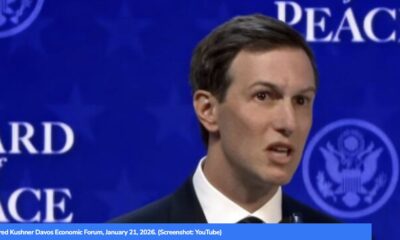
After all, Ramaphosa wasn’t invited to participate in US President Donald Trump’s “Board of Peace” unveiled in Davos, underlining how irrelevant South Africa is as regards peace-making in the Middle East.
Analyst Terence Corrigan said, “It seems clear that the breakdown of South Africa’s relationship with the US means that – for now – it is being excluded from involvement in the one global issue that South Africa has obsessed over. This will be a bitter pill to swallow.
“I think we can expect South Africa to be very vocal in all the fora available to it to protest Trump’s Gaza rebuild plan,” Corrigan said. “Expect this to place additional strain on the relationship.”
Pretoria has also been blackballed by Trump from all the US-hosted G20 meetings in 2026. At the WEF, Trump again repeated his misguided, delusional notion of a genocide against Afrikaners. The most senior South African official there was Minister of International Relations and Cooperation, Ronald Lamola.
South African-born Andrew Robinson, the chairperson of the Albanian-based Besa Foundation, was in Davos and told the SA Jewish Report that Trump’s “presence and messaging were polarising but unmistakably influential. The ‘Board of Peace’ concept was met with scepticism in form, but interest in substance. Many quietly acknowledged that Trump’s transactional, power-based approach to geopolitics had, in the past, delivered concrete outcomes in the Middle East. Supporters saw it as unconventional but potentially effective; critics saw it as simplistic. Either way, he dominated attention, which remains his defining feature.”
Corrigan said of the Board of Peace, “This looks like a pointed sidelining of the United Nations in favour of a strange coalition of countries that have agreed to operate on Trump‘s terms.”
Robinson said, “At Davos, South Africa was present but not central. When it came up, discussions focused more on governance, energy transition challenges, and geopolitical alignment than on Trump’s rhetoric. His comments about white genocide were widely viewed in Davos as inflammatory and not grounded in accepted data. They didn’t materially shift the broader conversation about South Africa, which remains framed around economic stagnation, infrastructure constraints, and political uncertainty rather than racial narrative.”
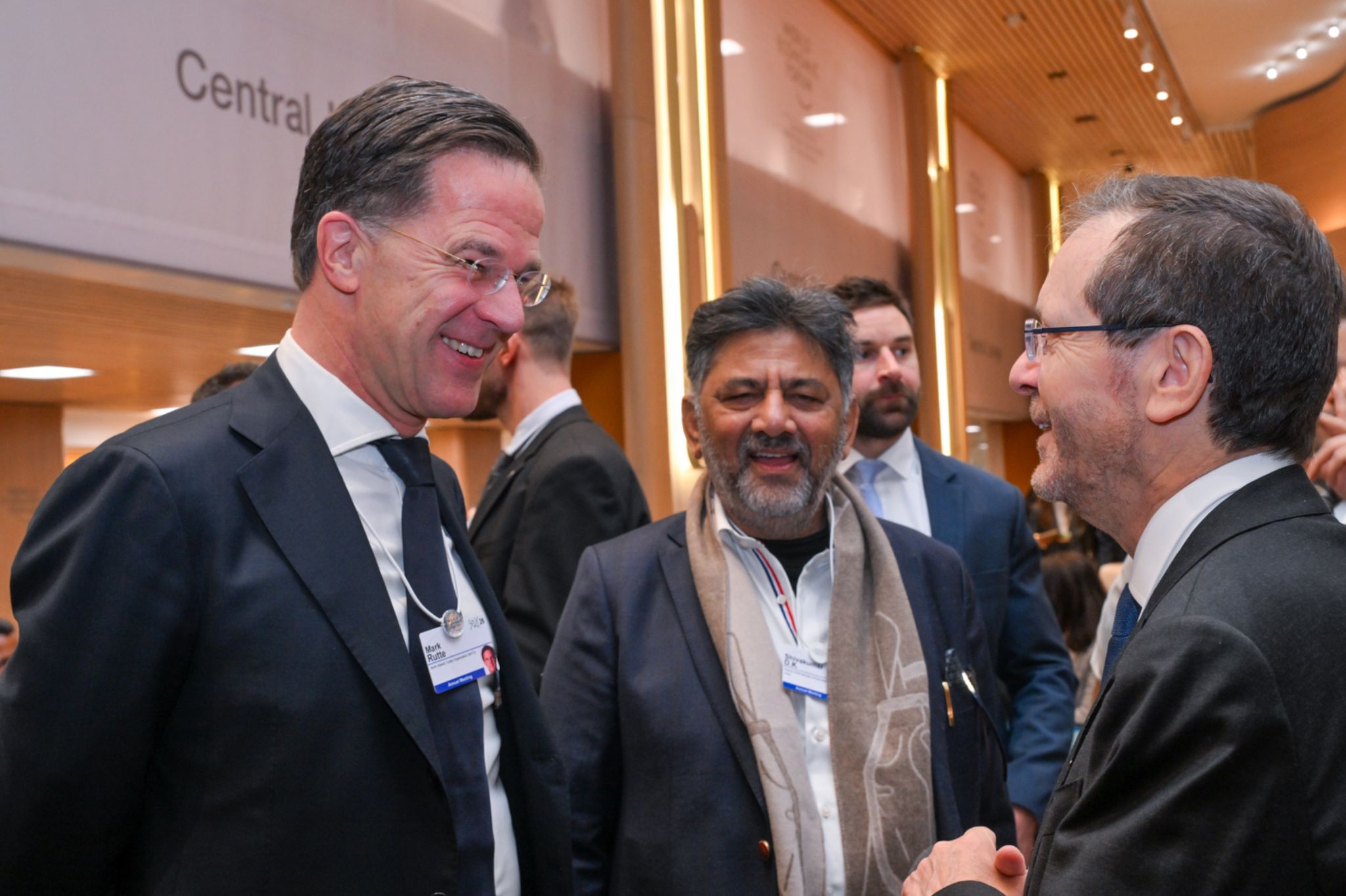
As for Netanyahu, he must be careful where he travels, as he is still indicted by the International Criminal Court for his role in the war in Gaza. Local politics is also all-consuming. Israel’s president, Isaac Herzog, was waving the blue and white flag instead.
Asked how Israel was discussed, Robinson said, “There was broad recognition that Israel sits at the fault line of many global issues: Middle East stability; terrorism; cyber security; defence technology; and innovation under pressure. While some criticism surfaced in side conversations, the dominant tone among serious policymakers and investors was that Israel remains a critical Western ally and an indispensable innovation and security partner.”
Israeli journalist Rolene Marks said Trump’s speech went down well, especially his comments that if Hamas didn’t disarm in Gaza it would be “blown away”. She said Israel was cautious about the Board of Peace, and the seats given to Qatar and Türkiye, “two countries that have shielded Hamas”.
Former US diplomat and writer J Brooks Spector said, “While Israel may not have benefited much from President Trump’s meandering diatribe at Davos – or Canadian Prime Minister Mark Carney’s warnings about a hegemon causing a rupture in the international order – they may be able to take some comfort from the launch of Trump’s Board of Peace. That body was originally designed to begin Gaza’s reconstruction. The Board, however, has gotten off to a rickety start as major Western nations declined joining in.”
“Davos has changed, but it has not faded,” Robinson said. “Its value now lies in off-stage conversations, quiet deal-making, and sensing where power, capital, and governments are truly moving. There was realism without despair. A sense that the world is entering a tougher, more fragmented phase, but also that serious actors are adapting. For Israel in particular, there was respect for its resilience and a recognition that strength, clarity, and alliances matter more than popularity. Israel’s challenge isn’t legitimacy but narrative discipline. In rooms like Davos, calm leadership, technological excellence, and strategic consistency speak louder than outrage. Israel remains firmly embedded in the future-facing conversations that matter.”