





World
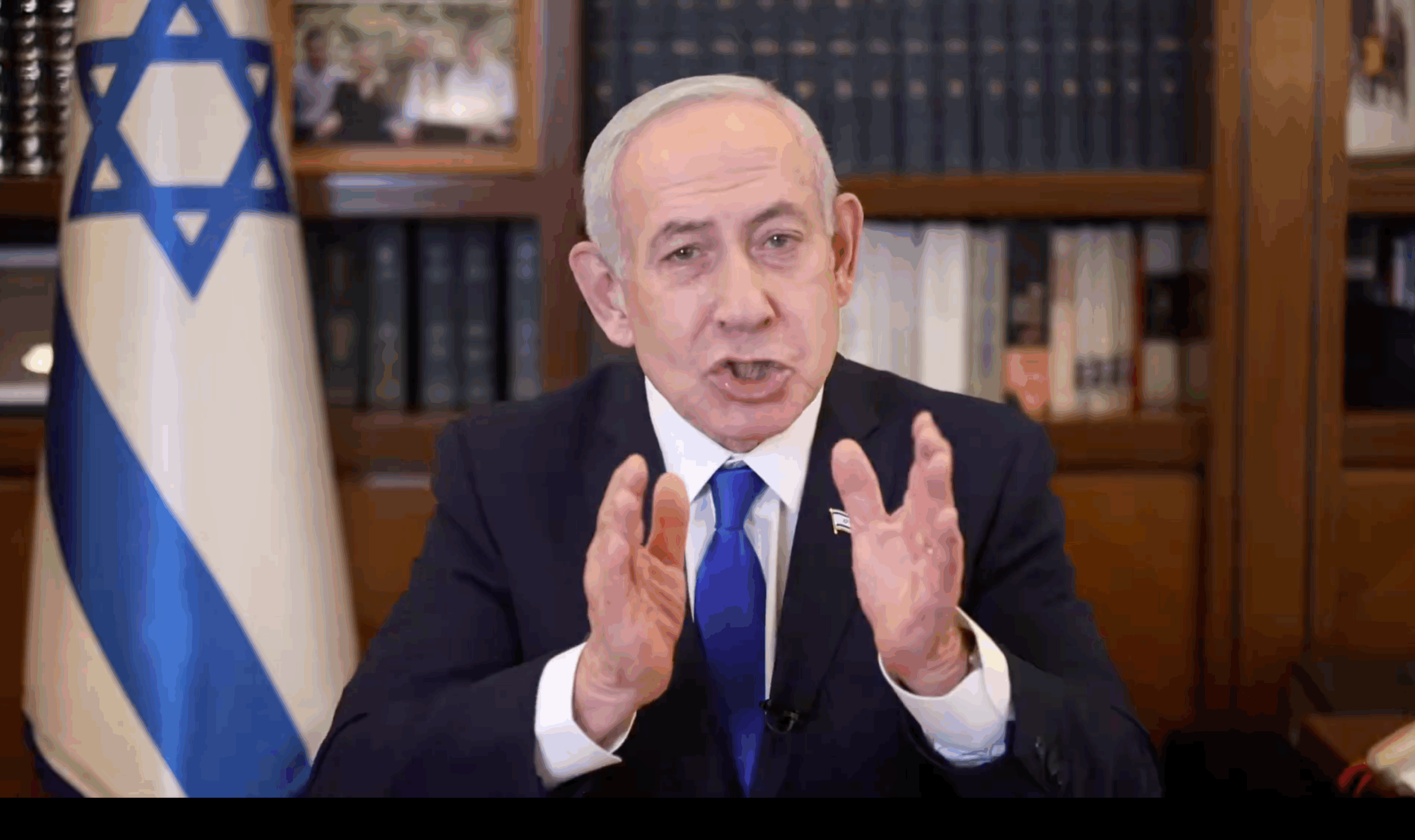
Netanyahu says he is formally seeking the pardon Trump requested on his behalf

JTA – Israeli Prime Minister Benjamin Netanyahu is formally seeking a pre-emptive pardon of the criminal charges he has long faced, saying in a video address that ending his prosecution was needed to bring unity to a divided nation.
“I am certain, as are many others in the nation, that an immediate end to the trial would greatly help lower the flames and promote broad reconciliation – something our country desperately needs,” Netanyahu said in the speech on Sunday, 30 November, as his attorneys filed a petition with Israeli President Isaac Herzog, who is responsible for granting pardons.
Netanyahu’s speech comes weeks after United States President Donald Trump wrote to Herzog advocating a pardon, which Herzog said he couldn’t consider because Israeli law requires the accused or his family to make the request.
Netanyahu has three legal cases open against him: on charges of fraud, bribery, and breach of trust. They relate to allegations that he accepted lavish gifts in exchange for political favours and that he used his position to secure positive media coverage. The trial in the cases began in 2020 and has proceeded in fits and starts, with hearings routinely cancelled as Netanyahu attends to Israel’s affairs, including the multi-front war and a protest movement that Netanyahu and his allies allege has been stoked through foreign interference.
In his speech, Netanyahu didn’t acknowledge guilt, and said, as he has long contended, that the charges against him were political in nature. He alleged that crimes had been committed in the case against him. He also cited Trump’s advocacy on his behalf.
“President Trump called for an immediate end to the trial so that, together with him, I could advance even more vigorously the vital interests shared by Israel and the United States, within a time window that may never return,” Netanyahu said.
Herzog’s office said it would consider the pardon request in accordance with Israeli law. Netanyahu’s critics lambasted the request, saying that it amounted to another assault on the country’s legal norms by the prime minister, whose right-wing government has led an effort to overhaul the judiciary.
“I call on President Herzog, you cannot grant Netanyahu a pardon without an admission of guilt, an expression of remorse, and an immediate withdrawal from political life,” tweeted opposition leader Yair Lapid while making a video address of his own.
Netanyahu’s request comes as the country nears elections that must take place within the next year. Netanyahu was re-elected most recently in 2022, after the charges against him were in place.
A previous prime minister who faced legal charges, Ehud Olmert, resigned before being charged and requested a pardon only after being convicted and jailed.





Anthony from Tacoma
December 6, 2025 at 11:07 am
This development is a profound illustration of how domestic politics, international law, and personal diplomacy are now inextricably intertwined. Netanyahu’s move to formally seek a pardon he did not initially request is a high-stakes legal and political gambit.
On one hand, it highlights the intense pressure he is under from multiple fronts—domestic political rivals, legal battles, and the ongoing conflict. Seeking this foreign-backed pardon could be framed as an attempt to secure his political survival and, by extension, a form of stability for his government during a crisis.
On the other hand, it raises immense questions about sovereignty and the precedent it sets. Should a head of government seek legal immunity from a foreign leader, especially one no longer in office? This act implicitly acknowledges an external authority over a nation’s own judicial processes. It also places the ICC in an incredibly difficult position, forcing it to weigh a geopolitical request against its foundational mandate of impartial justice.
The ripple effects are significant. Does this encourage other leaders facing international charges to seek similar “political shields”? And what does it signal about the erosion of the principle that no one is above the law, even for heads of state?
This is less about the individuals involved and more about a potentially landmark moment for international legal norms.