


Banner
Entertainers under pressure to take a political stand

With the recent controversy surrounding pop star Ed Sheeran’s United States concert tour, musicians are increasingly under pressure to express their opinions around the Israel Gaza conflict. The resultant politically charged atmosphere is being felt around the world, with South African musicians debating whether art can ever be apolitical.
“The stage has never been neutral.” So said South African singer-songwriter Jeremy Loops in an Instagram video, arguing that artists should be free to express their views onstage. Speaking of South Africa’s apartheid history and the international musicians who performed here regardless, he said their choices mattered.
“Artists should never be punished for speaking for the oppressed,” he said, referring to rapper Macklemore being removed from Sheeran’s tour.
The controversy erupted when Macklemore opened for Sheeran at New Jersey’s MetLife Stadium, accusing Israel of “genocide” from the stage and showing images from Gaza. He was dropped from the line-up when Jewish and pro-Israel billionaire Robert Kraft told Sheeran’s team that Macklemore couldn’t perform at one of his stadiums. Kraft told the Jewish Telegraphic Agency that Macklemore’s performance had included statements and images that were “deeply offensive and hurtful to the Jewish community”.
While antisemitism is real and dangerous, said Loops, so too is the dehumanisation of Palestinians. He argued that criticism of the Israeli State should not be controversial and does not equate to hatred of the Jewish people. Alongside his video, he wrote, “If we believe in human rights, we have to believe in them for everyone. Free Palestine.”
Asked questions, including whether believing in human rights for everyone means it’s important to express both sides of a conflict, Loops declined an interview with the SA Jewish Report. According to his representative, he felt that “his perspective was well captured by what he said in his original video”.
Amid fears around musicians being silenced, there has been palpable pressure on artists to speak out, especially on Sheeran himself. Despite his wishes to avoid political activism and spread unity through music, he was pushed to make a statement after his band and other support acts left the tour in solidarity with Macklemore. At a subsequent concert, Sheeran spoke of both the 7 October Hamas-led massacre against Israel and the ongoing suffering in Gaza.
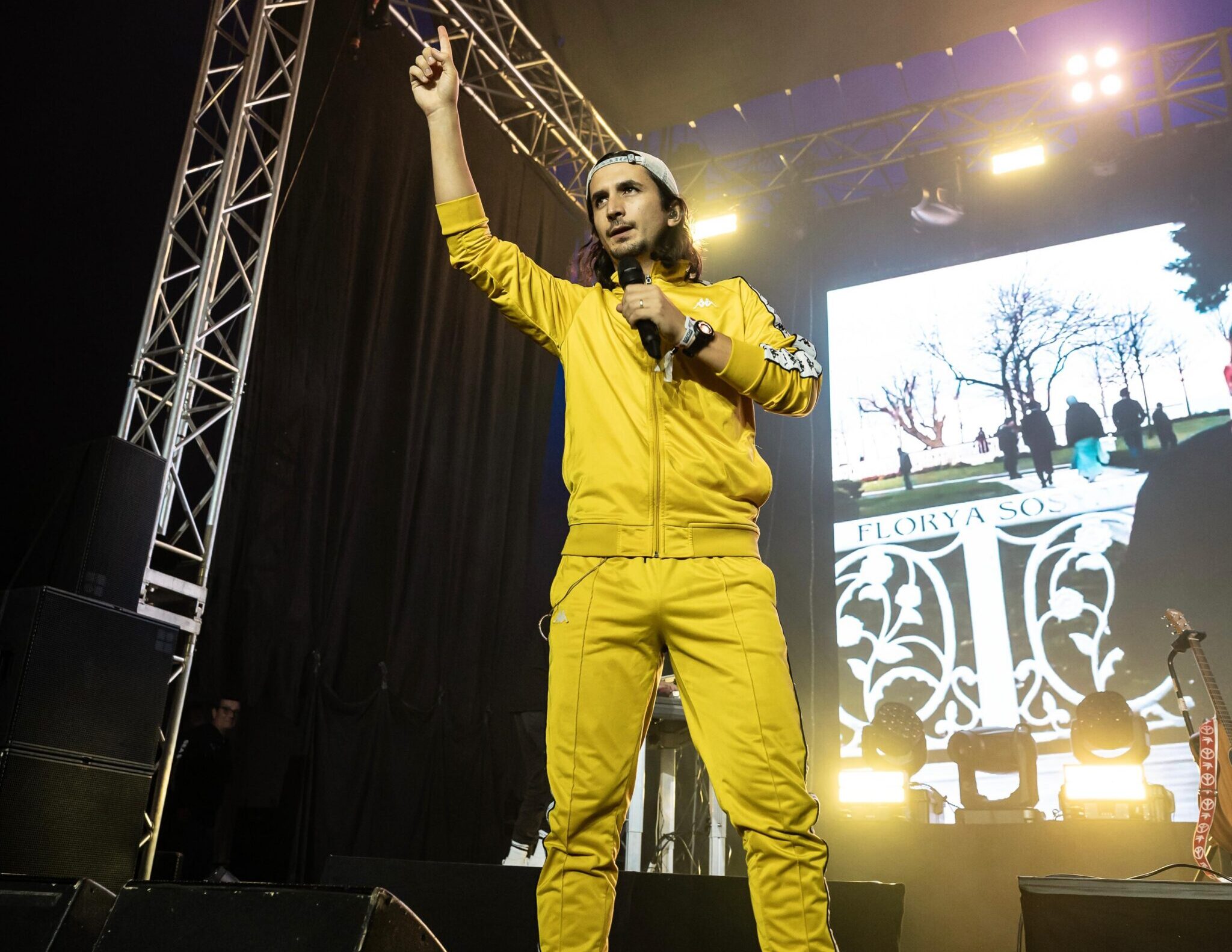
South African musician The Kiffness, whose real name is David Scott, shared a social media post expressing sympathy for the position in which Sheeran was placed. Scott has himself been targeted by the anti-Israel lobby, which pressured Kirstenbosch National Botanical Garden to drop him from its Summer Sunset Concert line-up in December 2025.
“I at least expected pushback for standing up for my convictions,” Scott told the SA Jewish Report. “Ed Sheeran is just a guy who writes bangers and wants world peace. The intense pressure and targeting he faced, simply for trying to stay out of the fray, highlights a troubling aspect of modern activist culture. It is the demand for absolute ideological conformity, where neutrality is treated as a sin.”
Yet, Scott argues, for artists with significant platforms, having a political voice should be a choice, not a responsibility.
“Punishing artists simply for wanting to share music and bring people together without forcing them into geopolitical crossfire is deeply unfair,” he says. “For those who do choose to speak out, this desire usually stems from a strong conviction to speak out in the face of injustice or falsehoods. For me, one of those moments meant standing up for Israel’s right to exist, condemning terrorist groups like Hamas, and challenging skewed public narratives after 7 October.”
Scott has remained steadfast in this position; despite the significant backlash he’s faced. “The cultural and political climate in South Africa is profoundly polarised,” he says. “There is often a heavy activist current, particularly from pro-Palestinian lobbies and captured media houses. This creates an environment where artists face intense pressure to conform to a singular ideological narrative or face severe social and professional fallout.”
If an artist doesn’t respond to threats or intimidation, he adds, activists focus their attention on brands or venues that the artist works with. “If the venues or the brands don’t bow, they will look for your family members and start intimidating them. I know this because it has happened to me. It sets a terrible precedent for the future where there is little room for nuance.”
Scott says his Christian faith and his desire to express himself through art keep him going, even in the face of death threats. “We cannot let these bullies win. Walking out on stage last year at Kirstenbosch, despite seeing hashtags like #KirkTheKiffness doing the rounds, took a level of faith and courage I’ve never had to lean into before. Yet, showing up for the audience and refusing to let intimidation win is essential if we want South Africa to remain a free and open democracy.”
Jewish singer-songwriter Cindy Alter, who in the late 1970s and 1980s was the lead singer of Clout, a South African all-woman band, is familiar with the struggle that characterised South Africa’s road to democracy. After Clout broke up, Alter formed multiracial group Zia, fusing politics and music to address apartheid.
“We felt it was important to express our views in our music without being too blatant and getting banned or arrested,” she says. “We wrote songs about what was going on, and they were veiled enough in ‘Zulu pop’ not to get banned.”
Now based in Nashville in the United States and still performing, she doesn’t feel there’s pressure for artists to take a political stance on Israel and Gaza. “I believe every artist should be free to write what they want and express themselves as they see fit,” she says. “I do not, however, support terrorism, fanaticism, hate speech, or blatant criticism of any kind. That should be left to those with political agendas.”
She argues that artists need to be well informed before expressing any political opinion. “We, as artists, need to be mindful of who we are targeting, and what, if any, backlash there might arise from using our stage as a platform to spread hate and hurt. Generally, I believe there is an ignorance surrounding many politically driven discussions. As an artist, I prefer to know that what I‘m writing about comes from a good place, even though it is always only my perspective.”