OpEds
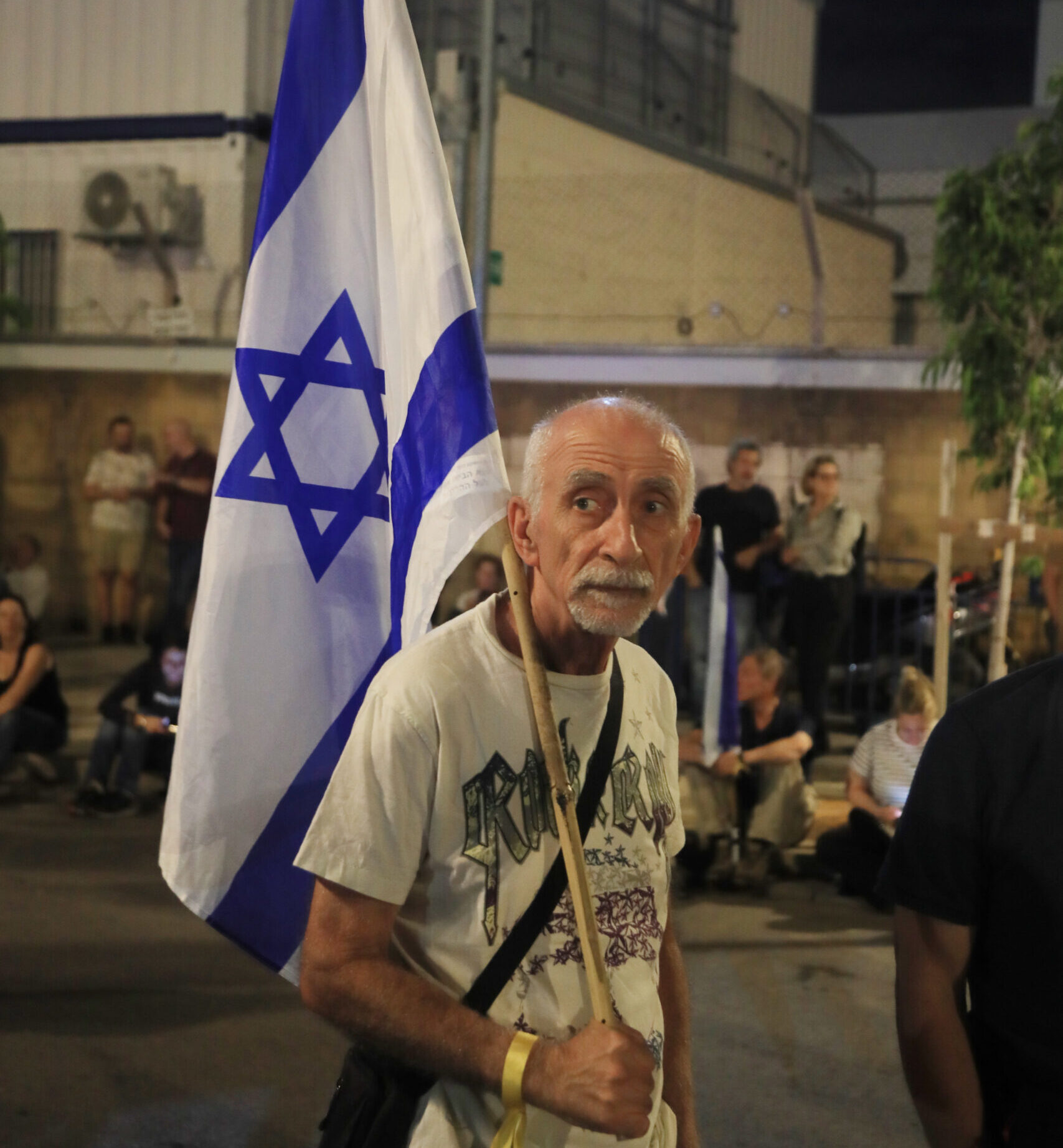
How much smaller are we expected to make ourselves?

Before 7 October 2023, I opened social media without thinking much about it. A friend’s joke. Someone’s holiday photos. A bit of news before the day began.
After the massacre, that changed.
The old accusations came back that very day. Jews control the media. One Jewish businessman behaves badly, so all Jews must answer for him. Jewish suffering is exaggerated, perhaps even invented. And wherever we live, whatever we believe, we are expected to account for absolutely everything Israel does.
None of this in itself was new. What felt new was finding it everywhere on my phone before breakfast, and now often from people I’d never thought of as hostile towards Jews.
On 7 October, Hamas murdered about 1 200 people and took 251 hostage. Families were still searching for their loved ones when, the following day, an anti-Israel rally took place in Times Square. I don’t believe that marching for Palestinians is antisemitic. But I remember seeing those images while people were still frantically trying to find out whether their children were alive.
I need to say this plainly. Palestinian civilians in Gaza have suffered terribly. I see that, and I care. Their grief does not diminish Jewish grief any more than Jewish grief diminishes theirs. Yet so much of what I encountered after 7 October seemed to demand that one be acknowledged only at the expense of the other.
It wasn’t only a feeling. The Institute for Strategic Dialogue examined comments on YouTube videos about the conflict. In the three days after the attack, the number of antisemitic comments was more than 50 times higher than in the three days before it. The researchers were measuring antisemitism, not criticism of Israel.
Fifty times higher in three days.
I cannot tell you what was in the mind of every person who posted one of those comments. I can tell you that hatred with a long history found its way back onto our screens with frightening speed.
It had been circulating well before 7 October. During the pandemic, researchers documented the spread of antisemitic conspiracy theories online. Another study found that Twitter’s engagement-based feed amplified emotionally charged posts hostile to an opposing group. The platforms did not invent the prejudice. They made it both easier to spread, and far harder to escape.
That leaves me asking questions about the people and organisations making what we see.
Al Jazeera is funded by Qatar. Its AJ+ videos are made to travel easily through social feeds. In 2019, AJ+ Arabic published a video that downplayed and misrepresented the Holocaust. Al Jazeera removed it and suspended two journalists. That does not mean every report it produces is false. It does mean the incident belongs in any honest discussion of how Jews and Israel are presented to vast audiences.
Qatar also appears prominently in American higher education. According to US Department of Education disclosures, sources in Qatar accounted for more than $1.1 billion (R18.2 billion) in gifts and contracts to American universities in 2025, much of it connected to branch campuses in Doha. A figure like that doesn’t tell us what is taught in a classroom or why a student joins a protest. It is still reasonable to examine large sources of foreign funding closely, whoever provides them.
To this exact point, I have read congresswoman Elise Stefanik’s argument in her book Poisoned Ivies that the hostility seen on campuses after 7 October was years in the making. I may not share every conclusion she draws, and I would not put every single student who protested into the same category. There was massive ignorance and huge peer pressure. But I certainly recognise the reality that something deliberate and sinister had been gathering for a long time, and that many people noticed it only when it became impossible to miss. Poisoned Ivies is an excellent book and I would recommend reading it.
Not even the university heads whom Stefanik boldly questioned would dare admit that calling for the murder of Jews was unacceptable. “It depends on the context,” they each responded. What context?
Then there were the posters.
Photographs of Israelis kidnapped on 7 October appeared on walls in cities around the world. Some were of small children. Some were of elderly people. Strangers tore them down. I kept wondering what someone had to tell themselves to remove the face of a missing person. A human being. They would never tear down a poster of a missing cat or dog.
The real damage that lasts is often less visible. A person now hesitates before posting a photograph from Shabbat dinner. Another reads the comments with a sinking feeling before deciding whether to say anything at all.
In a 2024 Anti-Defamation League survey, 41% of American Jews said they had changed their behaviour online to avoid being identified as Jewish.
Jews make up about 0.2% of the world’s population. How much smaller are we expected to make ourselves?
I do not want criticism of Israel banned. Its government should be challenged for its decisions, just as any government should. I want its actions judged seriously, without asking Jews everywhere to defend them, and without applying a standard no other country ever faces.
The United Nations Human Rights Council, for example, has a standing agenda item concerning Israel and the occupied Palestinian territories. It is the only permanent item devoted to a particular country or territory. North Korea, Iran, and Syria do not have one.
I think it is fair to question that distinction.
What I want in my own life is less complicated. I want Jews, like any other people, to be able to mourn without having to explain why the people they mourn matter.
I want us to be open about who we are without being appointed spokespeople for a government we have never voted for.
October 7 did not create antisemitism. It amplified it. It showed me how readily it could enter an ordinary day, through a screen, a conversation, a poster pulled from a wall.
We should be able to recognise it without calling every critic of Israel an antisemite. We should also be able to criticise Israel without making any excuses for people who hate Jews.
I would like to open an app without bracing myself. I don’t think that is too much to ask. Nor is a little more room, in a hard world, for all of us to remain human.
- Ezra Stone was born in KwaZulu-Natal, and now writes from Buenos Aires. His work explores history, resilience, and identity, tracing the unbreakable threads between past and present.