Israel
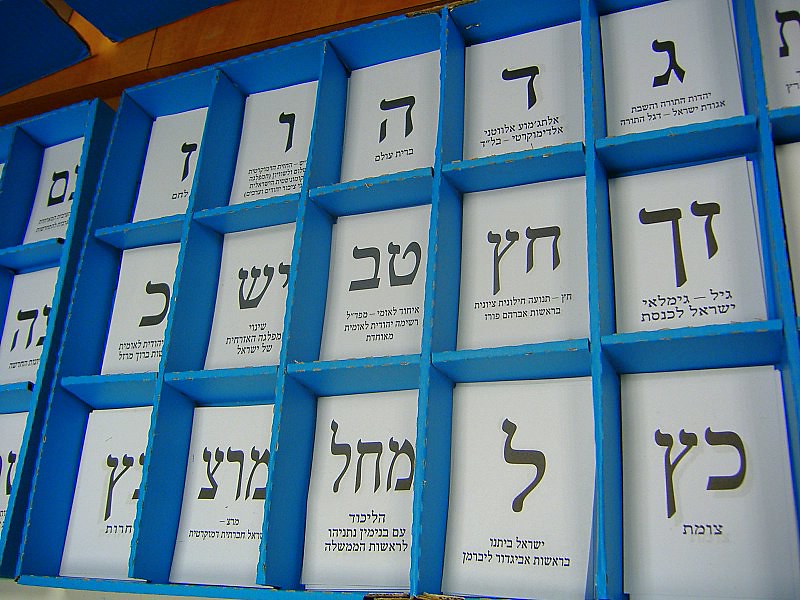
Will Israelis in SA fly home to vote?

Israelis living in South Africa will have to spends thousands to vote in the upcoming election. They will have to fly home as there is no way to cast their ballot outside Israel, not even at the local embassy.
With the election scheduled for 27 October, Israelis are trying to decide whether one vote is worth that cost, time, and effort.
A new initiative, Fly&Vote, has registered more than 30 000 Israelis living overseas who intend to return for the election. Among Israelis in South Africa, however, the decision is far from unanimous. Some see voting as a democratic responsibility. Others question whether people who’ve chosen to live abroad should influence decisions affecting those who remain in Israel.
Guy*, a software engineer living in Sandton, Johannesburg, will fly home specifically to vote. He moved to South Africa four years ago to expand his technology company into Africa, but still has business operations and a residence in Tel Aviv.
“People ask why I’m spending tens of thousands of rands on a flight for a single day, but democracy isn’t a convenience,” he said. “It’s a duty. If I can fly back for work meetings twice a year, I can fly back to ensure there is a functioning country to return to.”
Guy said living in Johannesburg had given him a different perspective on governance and stability. “You realise very quickly what happens when civil institutions erode,” he said.
His parents and siblings remain in Haifa, making the election particularly personal. “Every vote cast from the diaspora is effectively a vote for the security and future of the family members we left behind.
“Israel’s voter laws force your hand,” he said. “Without absentee ballots for citizens abroad, physically standing in that line is the only leverage we have left.”
Rachel* has reached the opposite conclusion. The former Haifa resident moved to Cape Town with her husband and children six years ago and does not plan to go to Israel in October.
“When you look at the cost of flights from Cape Town right now, combined with taking time off work, you have to ask yourself if one vote in a proportional system actually alters the coalition maths,” she said. “Realistically, it doesn’t.”
She questions whether Israelis abroad should still influence policies in Israel. “If my children are growing up here, going to school in Cape Town, and not serving in the Israel Defense Forces, do I really have the right to fly in for 24 hours and dictate the security policy for people who live there full-time?”
Years of political instability have also left her feeling exhausted. “After watching coalition after coalition collapse, that urgency has turned into complete burnout,” she said.
For younger Israelis with plans to return, the calculation is different. Talia*, 22, was born in Jerusalem and moved to South Africa as a teenager. She is studying and plans to return to Israel within two years.
“This will be my first time voting in an Israeli general election since turning 18, and there was never a doubt in my mind about whether I’d be on that plane,” she said.
“Because I plan on making aliya back to Tel Aviv once I finish my degree, the outcomes of this election will directly dictate my career, housing market, and social realities in just 18 months.”
Her flight will come at the expense of a holiday. “My flight budget was meant for a summer holiday, but choosing the future of the Jewish State easily takes priority over a vacation,” she said.
Zev*, 67, is also planning to return. He owns property in both countries and spends about half the year in South Africa near his grandchildren. “I’ve voted in almost every Israeli election since 1977, and I’m not about to break that streak now just because I’m spending six months of the year in South Africa.”
He believes living abroad doesn’t sever an Israeli’s connection to their country. “My pension, my property, and my children’s heritage are tied to Israel,” he said. “Why shouldn’t my voice count?”
Netser, an electrical engineer who has lived outside Israel for three years, is also going home to vote. He works remotely as a freelancer and continues to work for an Israeli employer. His family visits Israel regularly.
He told the SA Jewish Report that he plans to arrive the day before the election and vote the following morning. He described voting as the most significant action he can take while living abroad. “I care about what’s happening in Israel and I care for Israelis. I care about it as the home that I would like to go back to one day.”
For Netser, the decision to leave Israel was closely connected to one issue he believes voters should address: education.
“The gap in quality between Israel’s education system and the education options in Cape Town, specifically Herzlia, but also other private schools, is what made us decide to move in the first place,” he said. “That was the number one reason to leave Israel.”
Netser believes education should receive greater attention during the election, alongside the cost of living, equality, judicial reform, and a Constitution. He said the war had highlighted inequalities between different sectors of Israeli society.
Security concerns could overshadow issues affecting Israelis’ everyday lives, according to Netser. “When people go to vote, unfortunately, they tend to go to what politicians are putting the focus on, their fears. Then they forget about what actually matters to their own everyday lives, which is what they pay for and what their children are learning at school.”
The election has Israelis in South Africa weighing more than the price of a plane ticket. Their decisions reflect different views of responsibility, belonging, and their continuing relationship with Israel. Those making the journey see their physical presence at the ballot box as a way of remaining part of Israel’s future, despite living thousands of kilometres away.
*Interviewees have requested anonymity for privacy reasons.