


OpEds
Talkin’ Bout a Revolution

Everyone loves a revolution! Every few years we get an opportunity to overthrow our government in what’s called an election.
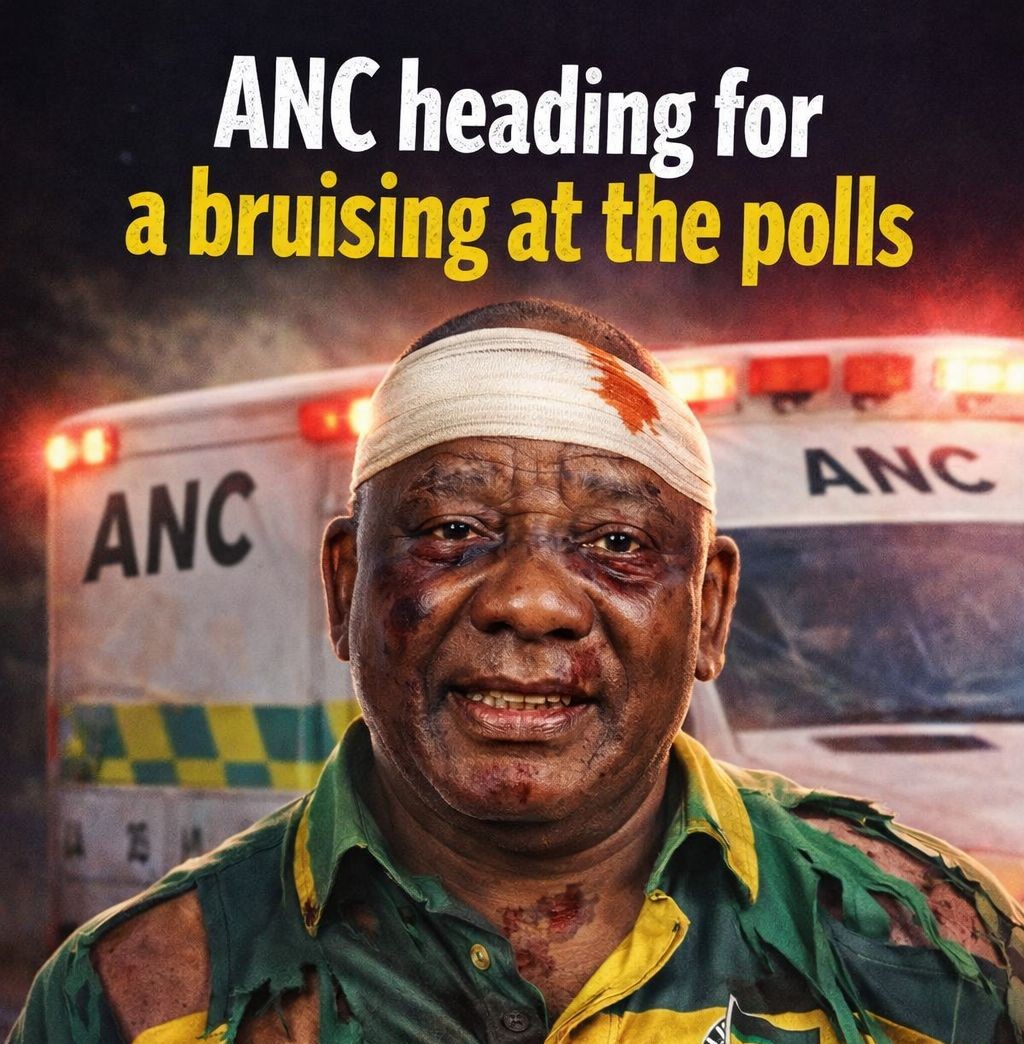
After the battering inflicted on the African National Congress (ANC) in the 2024 national election, where support dropped from 57% to 40%, everyone waits to see whether that decline will be echoed in the municipal elections, likely in November 2026.
How a party leader like President Cyril Ramaphosa remains in office after such a drubbing, relegating his party to minority status and forcing it into a coalition with the Democratic Alliance (DA), says more about the ANC’s shallow leadership bench than anything else.
With local government elections just eight months away, the Social Research Foundation, together with the news website The Common Sense, has released fresh polling data. The results are startling.
More than 75% of South Africans, including 75% of black voters, believe the country is heading in the wrong direction. While the ANC still polls at 39% nationally, support has collapsed in major metros.
In the Zulu heartland of eThekwini, ANC support has fallen off a cliff, now sitting at a paltry 8%. Jacob Zuma’s ethnically aligned uMkhonto weSizwe (MK) Party leads with 44%, followed by the DA at 28%, and the Inkatha Freedom Party at 18%. In Durban, the ANC has been all but decimated.
In Tshwane, which includes the nation’s administrative capital, Pretoria, the DA appears within striking distance of an outright win. Led by the charismatic Cilliers Brink, the party polls at 45% against the ANC’s 42%. Whether Brink can push past the 50% mark and avoid a coalition remains to be seen.
For now, Tshwane is governed by an unholy alliance of Herman Mashaba’s ActionSA, the ANC, Julius Malema’s Economic Freedom Fighters (EFF), Gayton McKenzie’s Patriotic Alliance (PA), and a collection of political minnows. The municipality has been mired in the stench of corruption and incompetence. Collapsing service delivery, water failures, and the grotesque spectacle of councillors profiting from water tanker contracts have left voters deeply disillusioned.
Johannesburg, South Africa’s economic crown jewel, has become a symbol of urban decay and squalor. The mayoral race is crowded, with the DA’s Helen Zille, Mashaba, and the PA’s Kenny Kunene all in the mix. The ANC has yet to name a candidate and remains consumed by internal infighting, including attempts to oust Mayor Dada Morero after a dubious and fiercely contested internal election that may or may not have been rigged.
Zille, for her part, is running a savvy campaign, sitting in potholes, visiting broken water towers, and engaging directly with communities, often in fluent isiXhosa. Aware that her style can be abrasive, she’s leaned into it with an insightful slogan: “You don’t have to like me; you just have to love Joburg.” As the city crumbles, she’s positioning herself as its last hope.
If an election were held today, the DA would secure 39% in Johannesburg, compared with the ANC’s 30% and ActionSA’s 10%.
And yet, among black voters, a striking contradiction persists: 80% believe their local conditions would improve under DA governance, but only 25% intend to vote for the party. In other words, mistrust still trumps perceived self-interest.
Much of this scepticism stems from the DA’s perceived lack of credible black leadership. Voters want leaders who understand their lived realities, who understand why a child cries in Soweto, not just how to fix the budget. The DA still has work to do in shaking the perception that it remains, politically speaking, too pale.
Even with its growth, up 14.4% in Johannesburg since 2024, the DA numbers are still not sufficient to clinch control of the city. Ultimately, the future of Johannesburg rests on the ability of either the DA or the ANC to cobble together a workable coalition. But the dirty and murky horse trading involved in forging a coalition takes compromise, something that doesn’t come naturally to Zille.
How does the ANC still hold 39% nationally despite collapsing in the metros? The answer lies partly in the decline of its challengers. Support for MK outside KwaZulu-Natal is fading, while the once-formidable EFF is losing ground. MK now polls at 10%, down 4.5% over 18 months, while the EFF sits at just 6%, down from 9.6% in 2024. Its brand of confrontational, disruptive politics is no longer resonating with voters.
Another shift worth watching is the rise of the PA. While it polls just 3% nationally, recent by-election results suggest it is peeling away significant support from coloured voters who once backed both the DA and the ANC. McKenzie presents as an authentic voice for that constituency. Whether untested allegations of drug dealing, raised by KwaZulu-Natal police commissioner Nhlanhla Mkhwanazi at the parliamentary ad-hoc inquiry into police corruption, gain traction remains to be seen.
The sands beneath South African politics are shifting. And when voters head to the polls later this year, we may find out whether folk singer Tracy Chapman got it right when she sang, “And finally the tables are starting to turn … talkin’ ’bout a revolution.”
- Howard Sackstein is chairperson of the SA Jewish Report, but writes in his personal capacity. He has a Bachelor of Arts in International Relations and a Master’s in political advocacy and international conflict resolution.