





Israel
New SA olim overwhelmed but undeterred

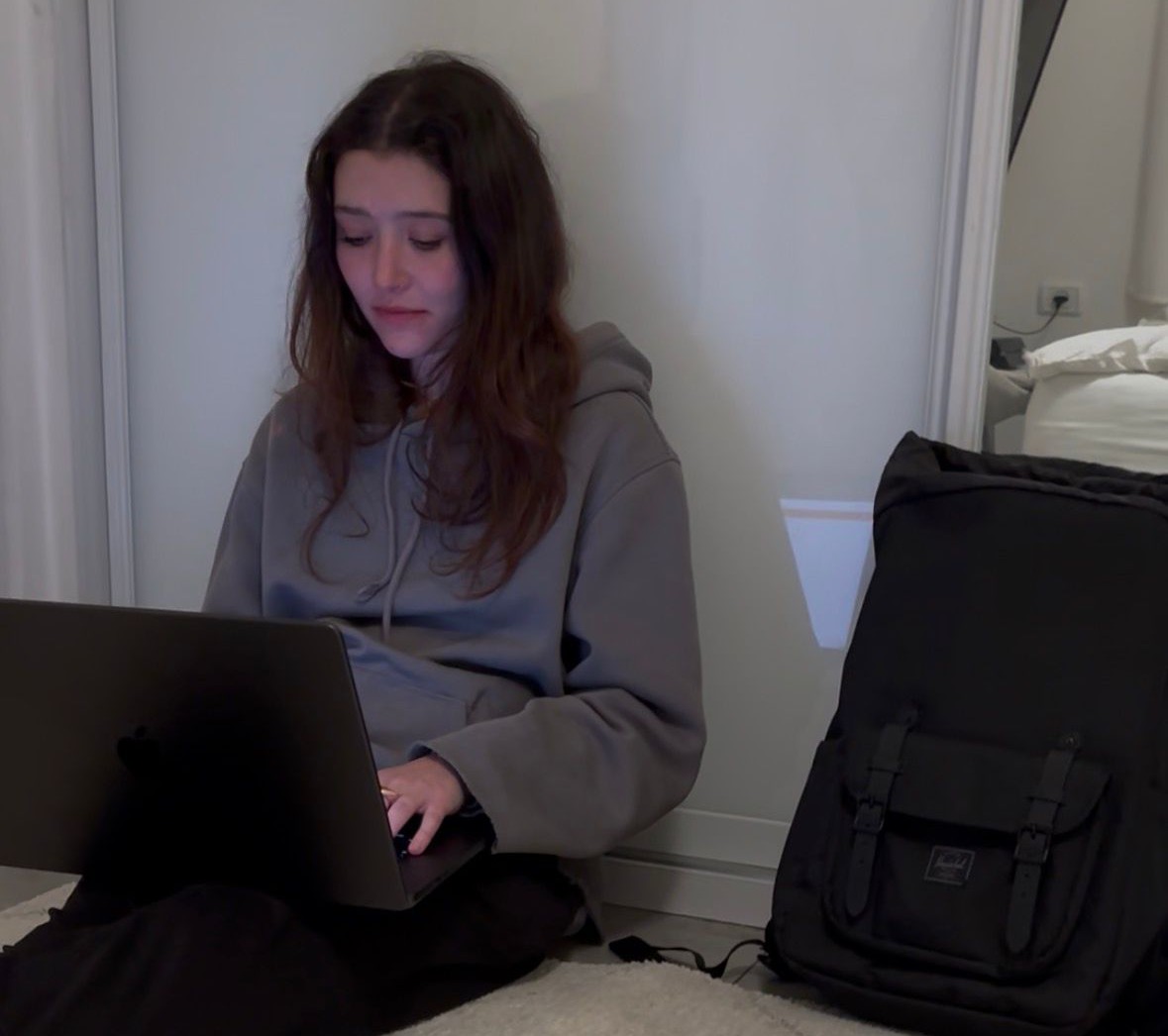
Just months after stepping off planes into new lives, hundreds of South African olim have found themselves running for shelter as sirens sound across Israel, forced to navigate not only the challenges of immigration but the shock of living through war for the first time.
For many, the adjustment has been immediate and unrelenting. They’ve had to learn quickly what it means to live with uncertainty, warning systems, and the constant calculation of risk.
According to Dorron Kline, chief executive of Telfed, 255 South Africans made aliya in the past year. He describes them as “remarkably resilient”, noting that outreach efforts to check on each oleh revealed that they were largely coping, with only minor issues requiring attention.
Kline says that for many, context matters. He recalls one oleh telling him, “This is home. This is where the action is” and this is where he wants to be. Even when families abroad questioned their decisions, the response was firm: they would stay.
Yet resilience does not mean ease.
For South African-born Brenda Frank, who made aliya on 3 November 2025, the experience has been overwhelming. Arriving from London, after 25 years abroad, she was still settling into her new apartment when the reality of war set in. “It hasn’t been easy,” she says. “You’re just getting settled, meeting people, and then this happens.”
Daily routines are shaped by uncertainty. “You think, should I start something? Should I go out? Will I make it before the siren goes off?” she says. Even simple activities, like showering or leaving the house, require calculation.
Frank describes a constant awareness of proximity to shelter. “I do have a shelter in the building, which is convenient,” she says, noting that it’s just below her apartment. That physical reassurance, however, doesn’t remove the emotional strain.
“It’s depressing,” she admits. “You think you’re settling in, and then you’re back to square one.” Still, like many others, she emphasises the need to continue. “You just get on with it. People are amazing. You just carry on with life.”
For younger olim, the experience can feel both surreal and formative. Sydney Wohlman, who made aliya in December 2025, describes hearing a siren for the first time as “an out-of-body experience”.
Despite the shock, she says she had prepared herself. “I had mentally prepared to live in a war situation,” she explains, adding that she doesn’t regret her decision.
For Wohlman, the move was driven by a desire for a fully Jewish life. In South Africa, she says, she struggled to balance her career with religious observance. “I was seeking a Jewish life where I could completely embrace my culture and traditions.”
In Israel, even under fire, she has found a sense of belonging. “A sense of community is built in shelters,” she says, describing how life continues even in constrained spaces, with events like weddings taking place in shelters.
She describes the experience as “a baptism of fire”, but one that has reinforced her commitment to her new home.
Others also draw comparisons between life in Israel and life in South Africa, reframing perceptions of danger.
One recent oleh, who asked to remain anonymous, says that while the threat of missiles is real, it’s also structured and mitigated in ways that feel different from the unpredictability of crime back home.
“You have warnings. You can take precautions,” he says, describing the sequence of alerts that precede incoming fire. He contrasts this with South Africa, where violence can be sudden and unavoidable. “A car crash, getting shot while you’re walking down the street, there’s nothing you can do to prevent it,” he says.
From his perspective, the systems in place in Israel, including missile defence and early warning alerts, provide a sense of control. “I would much rather be here,” he says, adding that statistically he feels safer.
However, he acknowledges a gap between outward behaviour and internal reality. “There’s an unspoken rule that you put on a brave face and tell everyone everything’s fine, when actually you’re not coping,” he says, reflecting on conversations with Israeli friends who admitted privately to anxiety and fear.
This duality, of resilience alongside vulnerability, is something organisations like Telfed have had to address directly.
Kline says that since 7 October 2023, Telfed has expanded its support systems significantly. New initiatives include WhatsApp groups providing real-time updates in English, webinars on coping with stress and trauma, and increased access to counselling services.
“We brought in a second social worker,” he says, noting that demand for emotional support has grown. Workshops have also tackled less obvious effects of prolonged stress. One recent session focused on emotional eating, described as part of the body’s coping mechanism during sustained anxiety.
The response, he adds, has been consistently strong, indicating a clear need among olim adjusting to both a new country and a high-pressure environment. Beyond the war itself, olim continue to face the standard challenges of integration.
Language remains a barrier for some, though English-speaking communities offer a soft landing. Social networks often form quickly, particularly through ulpan programmes and community structures, where newcomers share similar experiences.
Employment, however, can be difficult. Many olim take jobs below their qualifications as they establish themselves in a competitive market. Yet even these challenges are often framed within a broader sense of purpose.
For some, aliya is less a choice than a calling. The anonymous oleh describes it as “going back to your homeland”, something he felt drawn to despite years of resistance.
That sense of belonging appears to anchor many through the instability. For Frank, despite moments of doubt, the decision remains in place. “What can you do? This is the way it is,” she says.
For Wohlman, the experience has strengthened her connection to Israel, even under difficult circumstances. And for Kline, the collective response speaks to something deeper. “They’re remarkably resilient,” he says.
In a year marked by upheaval, new South African olim have had little time to ease into their new lives. Instead, they have been tested immediately, learning to navigate sirens, shelters, and uncertainty alongside the usual demands of starting over.
For many, the adjustment is ongoing. But the decision to stay, despite everything, appears to be constant.






Seanne Lemel
March 25, 2026 at 12:45 pm
Having lived in SA for 25 years, London for 25 years and Israel for 3 years. There is no place like home in our holy homeland with our remarkable people. Am Yisrael Chai!