


Community
Kurt Landauer Youth Cup: Using sport to remember, and to unite

In a time of growing polarisation, rising antisemitism, and increasing attempts to use sport as a platform for division, events that bring people together across lines of difference feel more important than ever. This is also true here in South Africa, where sport is once again not immune to political tension and social fracture.
Against this backdrop, the Cape Town Holocaust & Genocide Centre offers a different vision.
On Sunday, 15 March, nearly 150 young footballers from across the city gathered at the Herzlia Sports Field for the Kurt Landauer Youth Cup, a tournament that combined sport with an exploration of history and memory. Organised by the Cape Town Holocaust & Genocide Centre in partnership with FC Bayern Munich and Herzlia Highlands, and with the support of the South African Jewish Board of Deputies, the event brought together 13 teams – 10 boys’ and three girls’ – for a day defined as much by reflection as by competition.
The tournament is named after Kurt Landauer, the erstwhile long-serving Jewish president of Bayern Munich. Forced out of his position after the Nazis came to power in 1933, Landauer was later arrested and imprisoned in Dachau. Following his release, he fled to Switzerland, becoming one of the very few members of his family to survive the Holocaust. In 1947, he returned to Munich and resumed his role as president of the club.
His story is one of resilience, but also a reminder of how quickly institutions – including those in sport – can be shaped by exclusionary ideologies.
For the organisers, the tournament is part of a broader effort to make Holocaust education more accessible and relevant, particularly to younger audiences. The idea grew out of the exhibition Forgotten: Victims of Nazism at FC Bayern, presented at the centre in 2025. While the exhibition explored history through archival material, the tournament extends that learning into lived experience, meeting young people in a space they know well: the sports field.
Following the success of its first edition last year, the 2026 tournament expanded in scale and ambition. Teams competed for a central trophy, while FC Bayern Munich provided jerseys, shorts, jackets, and other prizes. Every participant also received a special certificate marking their involvement.
But the significance of the day went beyond the matches themselves. Participants were introduced to Landauer’s story and encouraged to reflect on the role sport can play in shaping values, whether by reinforcing divisions or breaking them down. Two video messages reinforced this message: one from Bayern Munich president Herbert Hainer, and another from François Pienaar, former captain of South Africa’s national rugby team, widely recognised for his role in using sport to promote unity during the country’s democratic transition.
At a time when sport is increasingly drawn into broader social and political conflicts, the Kurt Landauer Youth Cup stands as a reminder of what it can also be: a space for encounter, learning, and shared experience.
More than just a tournament, it’s an educational initiative, one that suggests that even in a fractured world, not all is lost. Through efforts like this, sport can still help foster empathy, understanding, and a sense of common humanity.
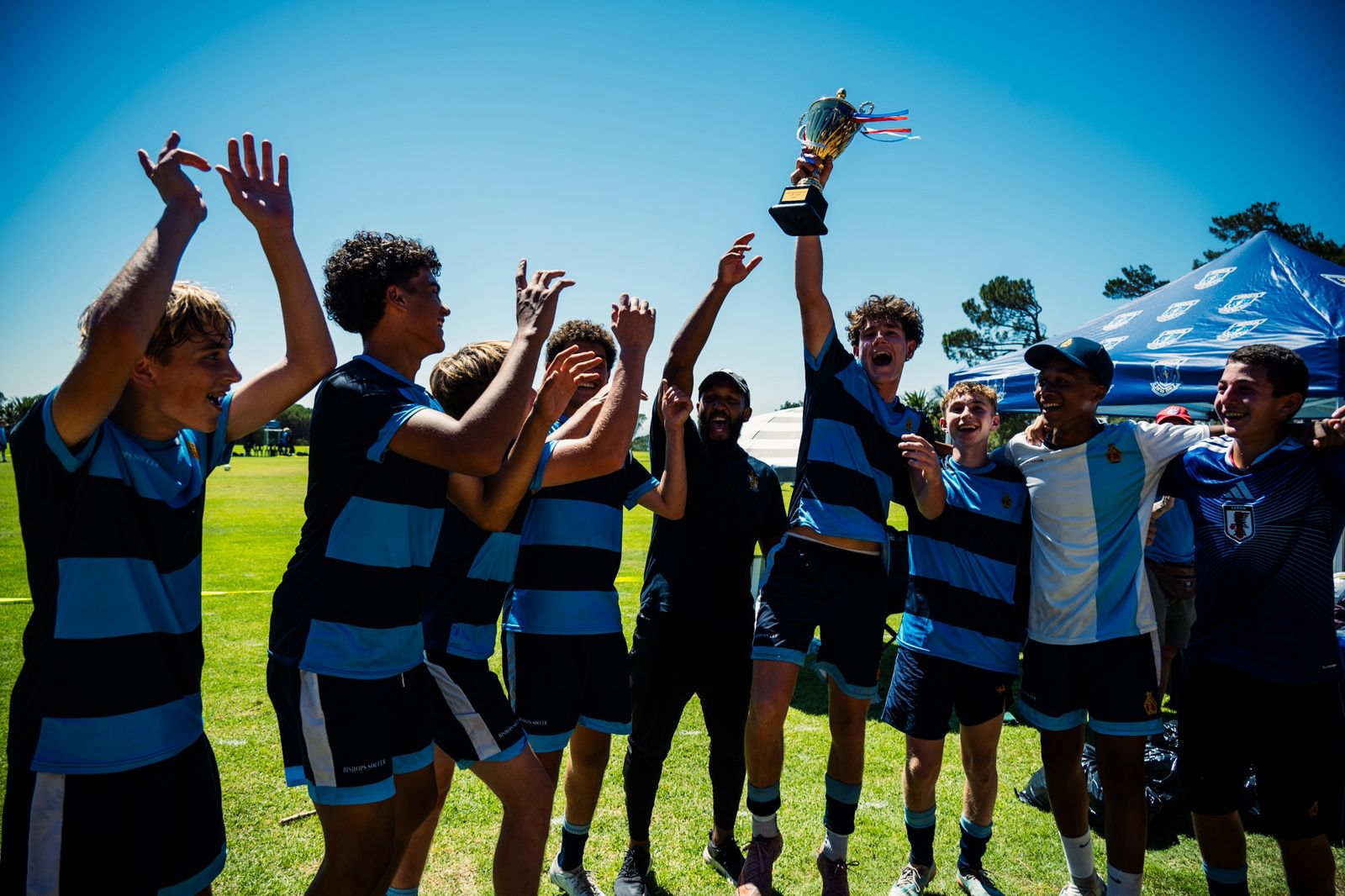
The 2026 trophies were awarded to the boys’ team from Bishops Diocesan College and the girls’ team from Herzlia Highlands. But the deeper success of the day lay in something less tangible: the connections formed, the lessons shared, and the reminder that even small initiatives can push back against division.
- Jakub Nowakowski is the director of the Cape Town Holocaust & Genocide Centre.