


Sport
Jewish South Africans ride for endurance, health, and friendship

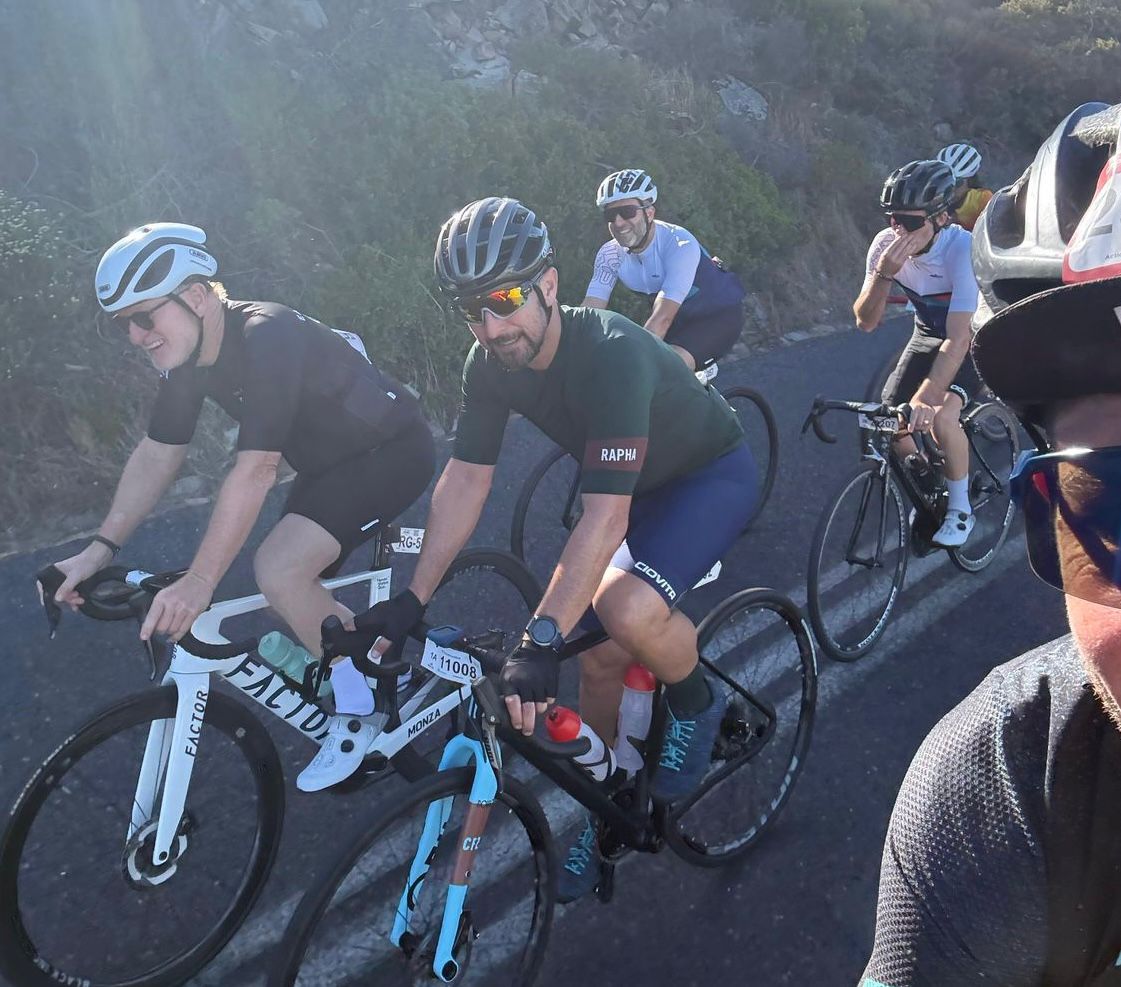
“I actually started crying right there on the bike,” says Michelle Christian. “It wasn’t just about finishing a race.” Christian was among the Jewish South Africans who took part in the 2026 Cape Town Cycle Tour on Sunday 8 March. For some riders in the community, the event has become a long-standing tradition repeated over decades. For others, it represents a personal milestone reached after years of change.
Gail Blacher completed the race for the 26th time this year. Cycling became part of her life when she was living in Johannesburg and joined a group of friends who regularly went mountain biking. “At first it was really hard,” she says. “But it got easier.”
The group would meet on weekends to ride together, often followed by coffee or lunch. Blacher says the routine quickly became something they looked forward to each week. Within a year of starting to cycle, she travelled to Cape Town to take part in the Cycle Tour for the first time. “I saw that I could do it and I haven’t missed one for the past 26 years,” she says.
Nevertheless, Blacher says cycling has always been more social than competitive for her. She rides regularly throughout the year and continues to meet friends through the sport. “After the ride you talk about how you felt, and you always have that in common,” she said.
During this year’s race, one moment stood out. Her chain slipped off her bicycle and she struggled to put it back on. Another rider stopped to help. “She got off her bike and helped me put the chain back on,” Blacher says. “That’s the camaraderie you get from fellow cyclists.”
Blacher says the Cycle Tour has also taken on a charitable dimension for her. She now rides to raise money for the Society for the Prevention of Cruelty to Animals. Her brother, Colin Blacher, also rode the race this year. He has been cycling for about 30 years and has taken part in the Cycle Tour more than two dozen times.
Cycling became his primary sport after a long period playing squash competitively. In his younger years he played provincial squash and later spent time coaching the sport in Israel while travelling. As he got older, injuries made squash more difficult. He began cycling instead and gradually built up a routine of regular rides with friends.
“It’s just become a way of life really,” he says. Blacher now lives on the West Coast and rides frequently to maintain his fitness. He says he believes regular cardio exercise is important as people get older. “I try and keep myself in condition throughout the year,” he says.
This year’s race came shortly after he tore his Achilles tendon and had surgery in December. After a period in plaster and rehabilitation, he was unsure he would be able to take part. “I actually thought I wasn’t going to ride,” he says.
He eventually returned to the saddle and completed the race, although he says he felt the effects of the injury during the ride. At one point along the route he stopped briefly in Scarborough with friends for coffee before continuing to the finish. “Just bumping into people I hadn’t seen in a while was really nice,” he says.
Jacob Hirschmann’s connection to the Cycle Tour also stretches back decades. He first heard about the event many years ago and decided to attempt the distance, even though he had not ridden seriously since he was a child cycling to school. “I thought if other people can do it, so can I,” he says.
He bought a bicycle, trained, and entered the race. Hirschmann recalls that finishing the event left a strong impression. “The only unhappy part about the ride was when I crossed the finish line, because that means it’s over” he says.
Over the years he became involved with a cycling group that travelled widely to take part in events across southern Africa. Their rides took them through Namibia, Botswana, and various parts of South Africa. Hirschmann has also completed international rides, including a journey from the north of Israel to the south on mountain bikes.
For him, mountain biking remains particularly appealing because of the environment in which it takes place. “We’re in the open, we’re in the bush,” he says. “It’s a whole different world out there.”
This year’s Cycle Tour came after an injury that forced him to stop training for several months. He resumed training only in mid-January, leaving about six weeks to prepare. “I had no idea whether I was going to be able to make it,” he says.
He approached the race cautiously, pacing himself and focusing on steady progress along the route. Hirschmann says he divides long rides into smaller sections to make them easier to manage mentally. “It’s me against the road,” he says.
Michelle Christian represents a newer generation of Cycle Tour riders whose journeys into cycling began more recently. She started cycling during the COVID-19 lockdown as a way to exercise and improve her health. “What started as a simple idea to be more active quickly became something I looked forward to every day,” she says.
Her first attempt at the full 109 km distance ended when she missed the cut-off time. She returned the following year to ride the shorter route, before attempting the full distance again this year. “For me, this year was about unfinished business,” she says.
Christian says preparing for the race involved both physical training and mental preparation. She trained consistently over several months to build up the distance. “Preparing for a 109 km race is as much about what happens in your head as it is about the hours in the saddle,” she says.
Her participation is also linked to a broader health journey. Several years ago, she weighed more than 147kg. During a visit to Dubai to celebrate her son’s 21st birthday, she and her wife decided to change their lifestyles. “We realised our size was stopping us from truly living and celebrating that milestone,” she says.
Since then, both have lost more than 70kg and focused on improving their health. Cycling has become central to that change. When she reached the final stretch of the race this year, the emotions of the journey became overwhelming. “That feeling when you see the finish line after conquering Chappies and Suikerbossie is something I’ll never forget,” she says. “Completing the Cycle Tour is the ultimate proof that I have reclaimed my life”
Across these riders’ experiences, the Cycle Tour remains a shared point of connection. Some have returned to it year after year for decades. Others arrived more recently through personal change. Each rider faced the same route around the Cape Peninsula and the same challenge of reaching the finish line.