





Lifestyle/Community
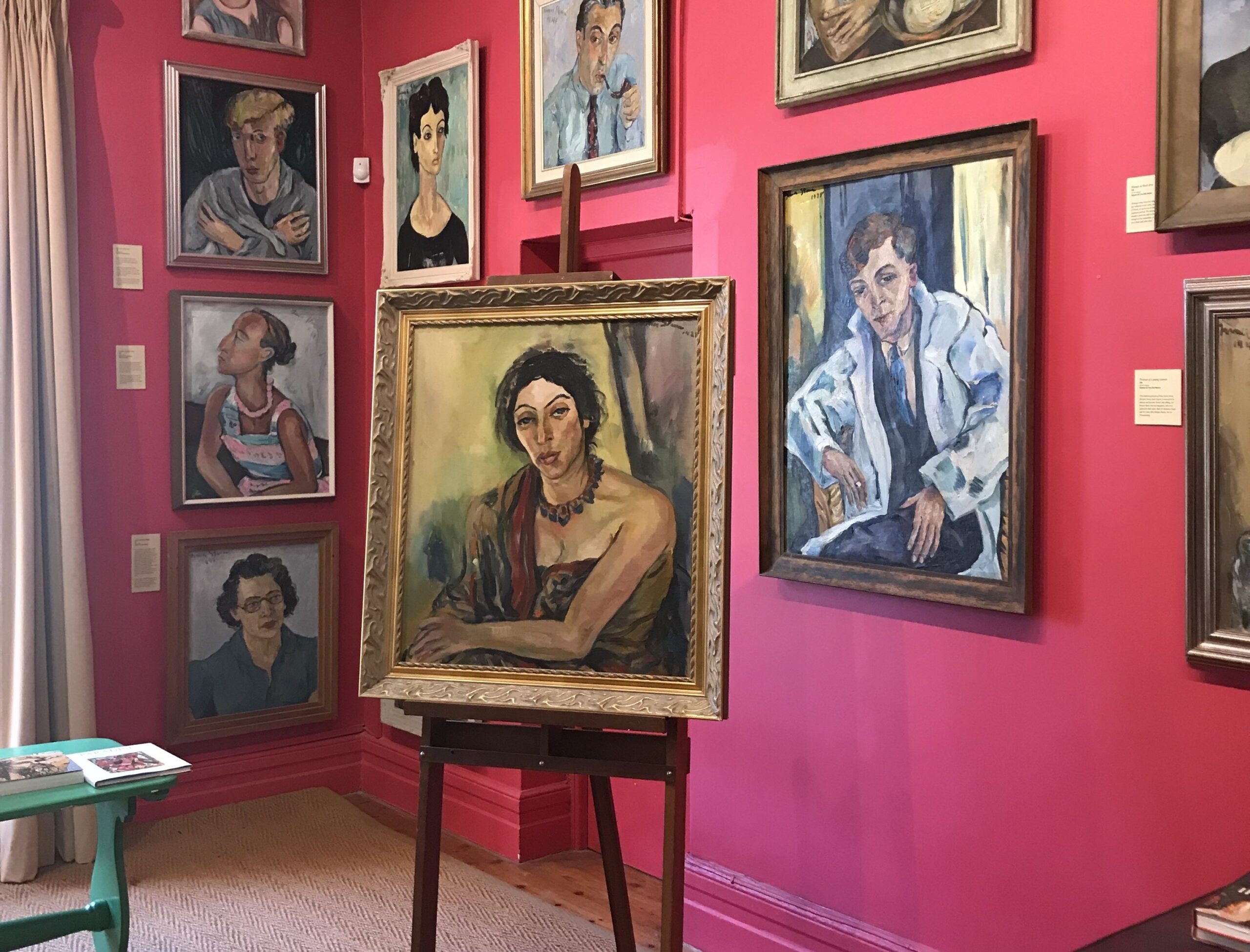
Outrage and suspicion over Irma Stern Museum closure

The sudden closure of the Irma Stern Museum in Cape Town has ignited outrage across the South African arts community, with campaigners accusing the University of Cape Town (UCT) and the Irma Stern Trust of secrecy, mismanagement, and neglect of a national treasure.
Heritage researcher Phillippa Duncan said the decision had “left people angry and deeply suspicious”.
“Staff were removed from the museum without clarity about their future, the public was kept in the dark, and the official announcement came only after pressure,” she said. “There’s been a complete lack of transparency.”
Art historian and specialist art writer Robyn Sassen described the closure as “a crying shame”.
“The South African arts community is alive and vibrant, and an announcement that the museum would close the next day effectively silences all dialogue and possible help,” Sassen said. “The explanations we have been offered are insufficient. It seems like my generation is leaving the arts in hands which don’t care for this country’s heritage.”
Many believe that the decision, framed by UCT as an administrative and logistical step, represents something deeper, the quiet dismantling of an irreplaceable part of South Africa’s cultural identity.
On 30 October 2025, UCT and the Irma Stern Trust issued a joint statement confirming the end of their 56-year partnership managing the museum. Stern’s collection will be moved to a secure storage facility, and her former home, The Firs, will be repurposed.
The statement called the change “not an ending, but a renewal” and promised “exciting plans” in 2026 to showcase Stern’s work “in new ways that will engage an even wider audience”.
UCT Deputy Vice-Chancellor Professor Elelwani Ramugondo said in the statement that the university was “proud to have been a custodian of Irma Stern’s legacy for decades”, and looked forward to “seeing her work reach new audiences in innovative and more impactful ways”.
Dianna Yach, the chairperson of the Irma Stern Museum Committee, is quoted in the statement as saying that the decision “opens new doors for audiences to encounter her art and be inspired by the passion and curiosity that defined her life’s work”. Yet for many, the closure was far from inspiring.
Duncan, who completed her master’s research on the mismanagement of Stern’s legacy, said the process appeared to unfold behind closed doors. “I put two and two together already in January 2024,” she said. “There was an email from UCT and the museum praising the university’s arts work on Upper Campus, and announcing that the museum’s interim director had been seconded there full time. That was the first red flag.”
She said she later learned that UCT’s Council had approved the termination of its 1969 agreement with the Trust on 18 October 2025 but delayed the announcement. “I was told the Council had already ratified the decision and that the press release sat on the vice-chancellor’s desk for two weeks,” she said. “During that time, museum staff were reassigned elsewhere with no explanation.”
According to Duncan, the public announcement came only because “UCT was cornered by media attention. If it hadn’t been pushed into a corner by my interview on Cape Talk, I believe we’d be hearing about the closure only now,” she said.
Duncan said there was little chance for the public to visit the museum before it closed. “I’d love for someone from UCT to come out and say they wanted to give people a moment to say goodbye,” she said. “But the reality is that most people had one day, Friday 31 October, to see a space that’s been part of Cape Town’s cultural life for 60 years.”
Attempts by the SA Jewish Report to engage UCT further were met with references to already published statements. The university said it was in the process of internal communication on the matter and couldn’t speak to the press at this stage.
Duncan said the closure is the culmination of decades of underfunding and missed opportunities. “There has never been any proper attempt from either UCT or the Trust to bring funds into that space that would sustain it for the future,” she said.
She said UCT’s policies prevented the museum from fundraising independently. “UCT would say, we support you in fundraising, but you can’t approach our existing funders because then you’re taking money away from us,” she said.
She also cited a lost restoration offer. “About 15 years ago, Qatari donors offered to fund a full restoration,” she said. “UCT blocked it because the donors would pay into an account only in the name of the Irma Stern Museum, and that account has never existed.” Even the museum’s entry fees were misallocated, she said. “If you paid your R65 ticket, that money went into a student-fees account.”
The building, which dates to 1842, has also suffered from long-term neglect. “Old houses need airflow,” she said. “In its current state, it hasn’t liked being locked up with no ventilation for a very long time.”
Duncan said that warnings about damp and deterioration had been raised repeatedly since the 1960s. “When Johannes du Plessis Scholtz examined the collection after Irma’s death, he was already noting damage from damp and oxidation,” she said. “Everyone has known about it, but nobody has been listening.”
She said Scholtz, who knew Stern personally, resigned soon after. “He couldn’t be part of what he saw happening between the Trust and UCT,” she said. “If you read the minutes, it’s the same conversation repeated decade after decade.”
Since Nedbank took over administration of the Trust, Duncan said, “there has been a high turnover of trustees and no proper continuity”. She believes “many trustees simply don’t understand what that space represents”.
“Future plans are deeply concerning because Nedbank has no intention of reopening the Irma Stern Museum in a preserved, renovated state with her collections in it,” she said. “It talks about finding a new, larger, better venue, but it fails to understand what Irma’s home has become in terms of her legacy.”
She described The Firs as “the only true house museum in South Africa”, saying that it’s “where Irma worked, created, and hosted the cultural figures who shaped mid-20th-century Cape Town. Once that connection is broken, it’s gone forever.”
The petition Stop the Closure of the Irma Stern Museum is calling for an immediate halt to the relocation of the collection, and an independent review of the decision. Campaigners are urging UCT, the Nedgroup Trust, and the Department of Arts and Culture to ensure the museum’s protection and long-term restoration.
Duncan said the estimated R30 million needed for specialist repairs “is achievable if proper governance and accountability are in place. The Irma Stern Museum isn’t just a gallery. It’s a living record of South African art history. Once it’s gone, we can’t get it back.”
- The petition can be accessed at https://www.change.org/p/stop-the-closure-of-irma-stern-museum
- “Save the Irma Stern Museum” will be holding a public meeting in the Nedbank Auditorium, located in the Clock Tower, V&A Waterfront on 13 November at 15:00.

yvette polovin
November 6, 2025 at 5:01 pm
come on, Diana Yach, tell us the truth! hope you will be there on thursday 13 th Nov at Nedbank headquarters to tell us the details of this fiasco?? You are directly involved..
Larry Osrin
November 6, 2025 at 8:49 pm
Hope the paintings are not going to be looted…..
Robert de Vos
November 8, 2025 at 10:30 am
I do not trust UCT to continue Irma Stern’s legacy. How do they propose to show her painting the doors and furniture etc, at The Firs? It would appear from their anti-“colonialist” – AKA pre-ANC society – policies that they want to, in some way, reposition her work in the context of some woke concept of black African art.
Philip Steiner
November 11, 2025 at 11:18 pm
Saddened to hear of this abrupt closure. Glad I had the chance to visit the museum on my last trip to Cape Town in 2023. Let’s hope UCT truly does find a way to at least rehouse the collection and honour her legacy, if they can’t be pressured into an about-face and keep it as it is (or improve it!).