Lifestyle/Community
Victory Park shul’s anxiety allayed

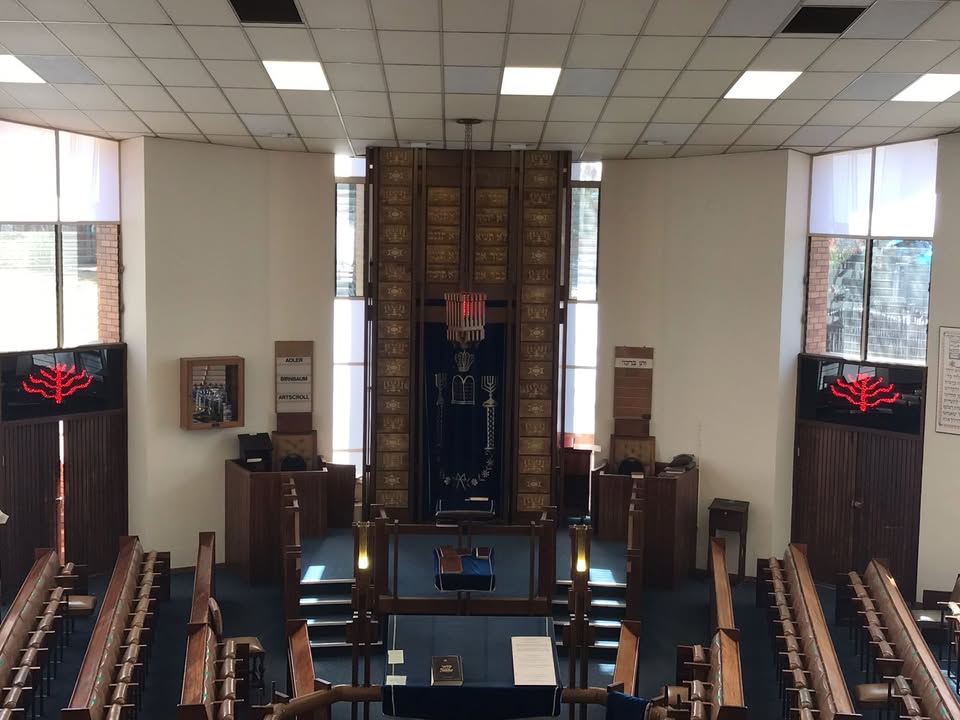
Members of the Victory Park Hebrew Congregation heaved a sigh of relief on 13 February when they were sent a letter explaining that their beloved shul wasn’t going anywhere.
The letter published by Rabbi Ricky Seeff, the executive director of the South African Board of Jewish Education (SABJE) and the shul’s chairperson, Alan Joffe, said that the King David Victory Park campus hadn’t yet been sold, and that when it was eventually sold, there was a condition that the shul be given at least 24 months to remain on campus to find the ideal permanent, long-term solution, whether that be in the shul, elsewhere on campus, or at an entirely new location.
“In line with halachic requirements, we will work with the shul committee to ensure that at no stage will the community be left without a shul,” the letter read.
“There was understandable anxiety from the community in not knowing what the future holds,” Seeff said. “Even though the SABJE also doesn’t have complete clarity, a lot depends on the sale. We are working closely with the committee, want to be transparent and give the community all of the information we have, and hopefully to allay its fears that we are working hard on ensuring the best outcome for the shul. I think the letter helped achieve that.”
Victory Park Shul’s Rabbi Azriel Uzvolk, said, “There’s a lot of pain in the closing of the [Victory Park] campus because there was a whole culture behind the school, and almost three generations of students had gone through the system. It’s been emotionally difficult for any of the Parkers to handle the news of the closing of the campus.
“But to separate that from the actual Victory Park Hebrew Congregation and districts we service like Linden, Blairgowrie, Parkhurst, Parkview, and now Emmarentia, we are still going strong, and intend to do so for many years to come.,
“We need to be strong and not allow our sadness at the closing of the campus to affect our attendance, community building, and growth,” Uzvolk said. “That’s still there. We have, thank G-d, strong minyanim every day, twice a day.”
Though the campus hasn’t yet been sold, the SABJE appointed an agent in January 2026 who has begun the sealed-bid sale process and anticipates it will take about two months, with the intention of selling to another school group.
Seeff said there had been considerable interest from several buyers, and that the reason they began the process of a sealed-bid sale was that “we didn’t want the sale marketed in an overtly public way as we didn’t believe it to be in the best interests of the community”.
One of the conditions of the sale to prospective buyers is that the shul be given at least two years to stay on campus until it finds a perfect long-term solution.
“The SABJE has been committed to helping secure the future of the shul. The closure of the Victory Park campus was a decision that had a significant impact on the Jewish community on the western side of Johannesburg. While closing the school was necessary, we want to ensure that there is Jewish continuity in those suburbs,” said Seeff. “Attempting to secure a longer runway from the potential purchasers will allow the shul and SABJE to plan for the future with the peace of mind that it can continue to operate.”
He said all parties involved had agreed on this condition, and that the SABJE had also been engaging with the shul committee to explore the possibility of purchasing a property in Victory Park with a view to developing a standalone shul with the necessary amenities.
Seeff said the SABJE wanted to ensure that the shul continued to exist, saying, “There’s a lovely, warm, and vibrant community that the shul serves. It’s a special place, and with the school closed, it has now become the focal point of Jewish life in that area. It’s important that it can continue performing the communal and religious services it does.”
Seeff also said there was still a chance that the shul would remain on campus, whether it be in its original location or elsewhere. This would be subject to the offer and negotiations with the buyer.
Uzvolk said that though everything was up in the air about where the shul would ultimately be, whether on campus or in a house in Victory Park, the community had been kept in the loop every step of the way with the SABJE.
“There isn’t clarity on where the shul will be because there isn’t clarity in this situation yet. No-one is withholding any information. The board is doing its best, it wants to get the best deal that it can get, keeping us very much in mind of whatever will be best for the shul.”
Uzvolk said that the shul’s board wasn’t investigating alternative locations for the shul yet, as it didn’t have clarity about whether it needed to find a new location or not, it all depended on the sale.
“When there is clarity, the board has also said that nothing will happen straight away,” Uzvolk said. “There will be a good amount of time for us, if need be, to relocate either to another place on campus or to a property in Victory Park. These things do take time, and the SABJE isn’t going to hold back information from us. It’s not in its interest. It wants what’s best for the community. It was a difficult decision for the board to make. Part of the difficulty of the decision was that there’s a Jewish community out here, how it was going to affect the community.”
Seeff said that until the campus was sold, the SABJE would continue to support and ensure the day-to-day maintenance and running costs of the campus, including the shul. Depending on the outcome of the sale, the SABJE would also contribute financially to the establishment of a new shul. However, it’s still too early to say what will happen.