Lifestyle/Community
After 7 October, Jews reclaim identity boldly

It’s not just the Hollywood actor who recommitted to his Judaism after 7 October 2023. It’s the woman who lit Chanukah candles for the first time since she was a child; it’s the people who began wearing chais and Magen Davids around their necks; and it’s many of the hostages themselves.
For Jews around the world, 7 October 2023 marked a turning point, a desire to reconnect to their Jewish identity or express it in more obvious ways. This shift was so prevalent, there’s even been a term coined to describe it: “October 8th Jews”.
Arguably the most prominent among them, American actor Michael Rapaport, an outspoken Israel-supporter, has frequently discussed how his relationship with his Judaism evolved since 7 October. “My Judaism has changed 100%,” he said in an interview with Israeli news and content website Ynet. “I’m more in tune with it. I’m more proud, I’m more aware, I’m more educated. I’m more proactive in every single way possible, and I’m really glad about that.”
Closer to home, Tania Levy, who lives in Johannesburg, says she feels she’s been in the process of “reclaiming” her Judaism since 7 October. “Before that, being Jewish was always part of my identity, but it was one of several things,” she says. “I’m South African, I’m a woman, etc.” So, while she’d always been quite traditional, celebrating chaggim with family and so on, her Judaism was never central. “I wasn’t particularly connected to the Jewish community other than peripherally.”
Levy says her connection to Judaism completely changed after 7 October. “The Jewish segment of how I identify myself has become much more prominent. It’s mainly internal, but it’s also extended to observing more of the holidays; going for Shabbat more often; and reading more about Judaism and Jewish issues.”
Having returned from a trip to visit family in Israel just more than a week before 7 October, Levy says she was devastated by the attacks. “My response to it was visceral. It shook the hell out of me. It felt like something had happened to me and my people.”
It has continued to feel personal for Levy in the more than two years that have followed, with feelings magnified by the hostages and war in Gaza. “I was consumed by it. On top of that, I was in an environment, socially and at work, where people’s reactions to what was going on were so very different to mine, which made me feel even more Jewish.”
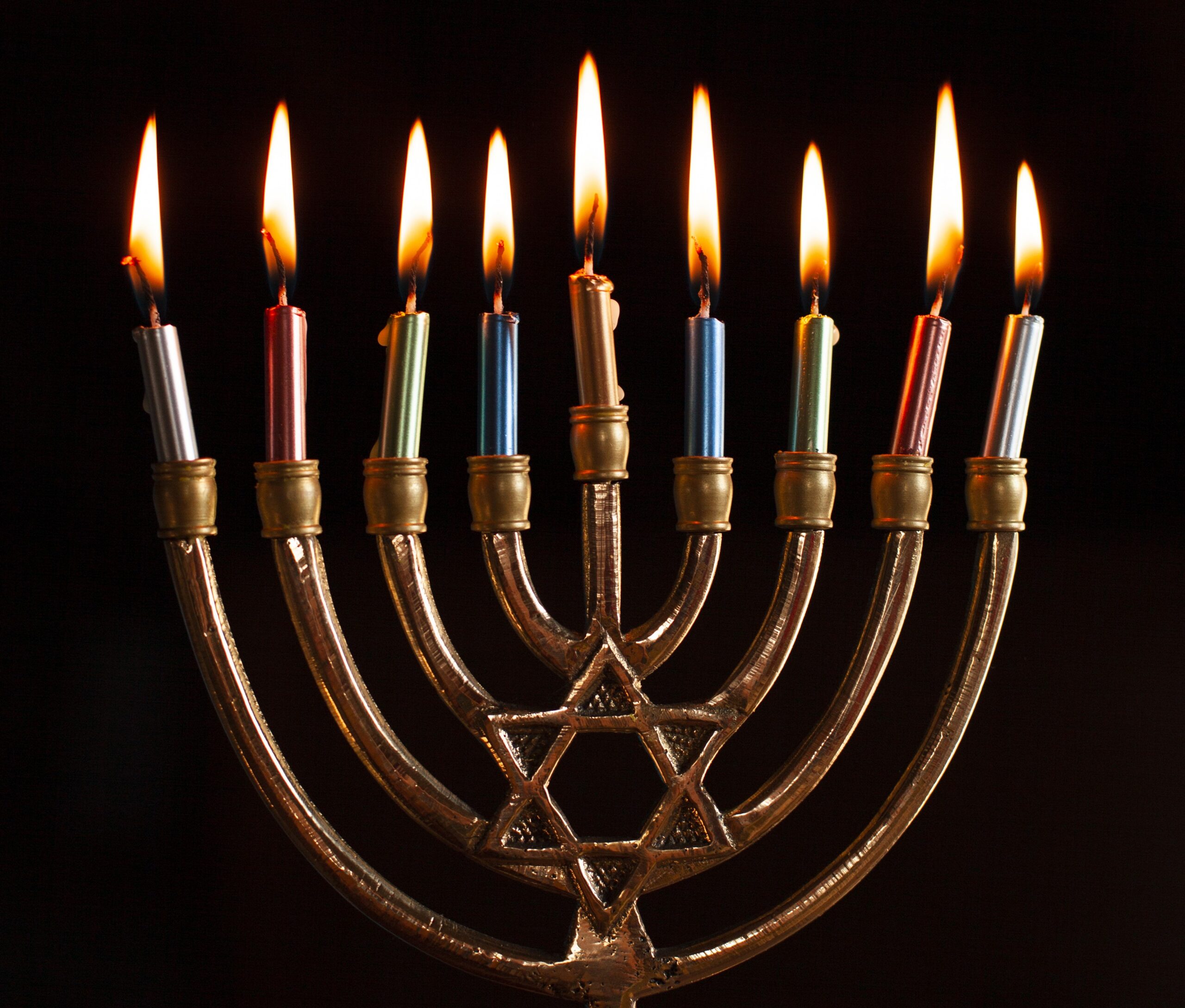
Though she wishes it hadn’t taken something as terrible as 7 October to draw her closer to Judaism, she’s happy to have reclaimed that part of herself. “It’s like going back to what my late mom and dad taught me. I lit candles this past Chanukah for the first time since I was a kid, and earlier in the year, I went to the communal Yom Ha’atzmaut celebration, which I never do. I’ve started learning Hebrew. It takes different forms.”
Amanda Horwitz has always been aware of her Judaism. “One part of my life is comedy, and my flavour of humour is Jewish, so it’s part of who I am,” she says. “I never felt I needed to make a statement about my Jewish identity though. But somehow, after 7 October, I wanted to.”
Yet, it was the recent Bondi Beach Chanukah shooting in Sydney that spurred her to action. “It was no longer just a Palestine-Israel issue,” she says. “It was such blatant antisemitism. For me, it’s unbelievable, because I integrate so comfortably into society. I love being with different people. So, it’s bizarre to think someone would dislike you because you’re Jewish. It just felt so alien.”
Horrified that this could happen in a democratic country like Australia, something in her shifted. “I needed to come forward, to step up, to identify with Jews, and be part of a community. So, I put on my chai and Magen David. I’m certainly not going to shy away from my Judaism, downplay it, or be ashamed. You need to know who I am, and if that’s a problem, I have a problem with you too.”
The fact that the Bondi shooting happened just months after her mother passed away, added another element to Horwitz’s desire to express her Jewish identity. “My mother had my bobba’s candelabra and menorah in her home. It became important to me to start lighting candles and understand what each candle meant. It was enriching to reconnect again. There was a level of security and something comforting in identifying with other people who, on different levels, are going through the same horror.”
Reflecting on connecting more deeply to Judaism post-7 October, Rabbi Levi Avtzon says that when things are going well, we can generally get away with a skin-deep narrative on the purpose of life. “It’s when the façade of what we think life is about – being successful, wealthy, strong, beautiful, and so on – is ripped apart, that we question what purpose is.”
He applies this to the hostages, who almost all emerged from captivity saying that their faith was stronger. “You may say, ‘What do you mean? Faith stronger? G-d, let you down.’ But yet they’re there, sitting in a tunnel. There’s nothing – no home, status, Facebook, Instagram, popularity contest, bank accounts. There’s nothing. Absolutely powerless in the face of their captors. They then discover, ‘I’m not hopeless; I’m not powerless; I have faith that G-d is with me,’ and it tears away the façade.”
We pray that such moments will never come, Avtzon says. “But how do I start seeking G-d, not only when granny passes away, not only when I go bankrupt, not only when there’s a terrorist attack? How do I find meaning and purpose in my life in the day to day? How do I find time to reconnect, not to buy into what this physical world seems to tell us is important, to remember that there’s something much bigger than us? That’s our soul, our G-d, and our destiny, and that’s our Judaism.”