





Community
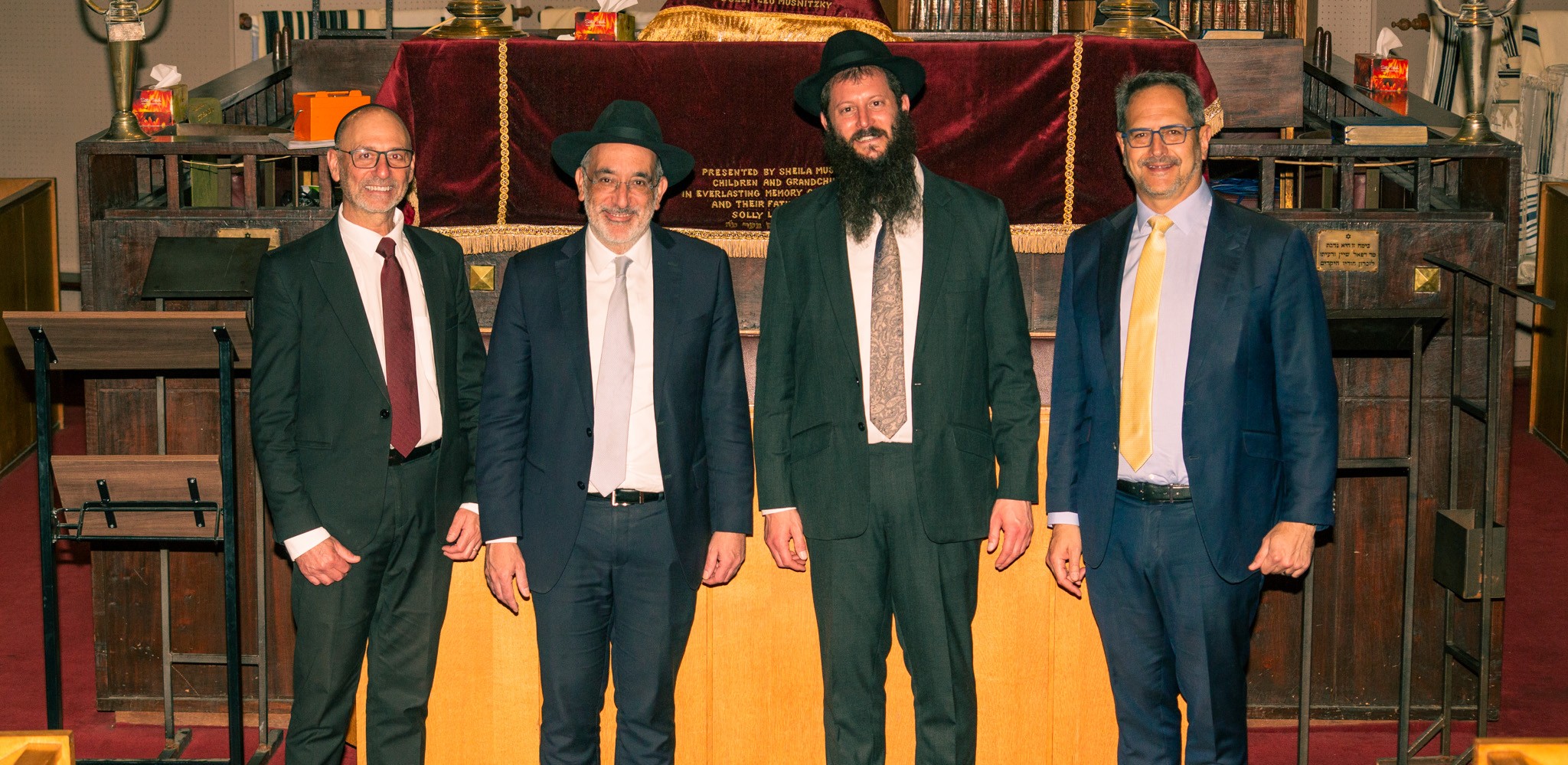
Pine Street Shul bids farewell to 65-year-old home

Just days before the last Shabbat at Pine Street Shul on 29 November, before the congregation moves from the location it occupied for 65 years to its new home, members spoke of a sense of new beginnings not an ending.
“Community isn’t about numbers. A successful shul isn’t about how many people come to shul on Rosh Hashanah and Yom Kippur. It’s not about three days a year. It’s about engaging with those who show up and even those who don’t, every single day of the year. It’s about creating a space of community, of Torah study, and mitzvot.”
So said Rebbetzin Temmi Hadar at the closing afternoon tea on 23 November. “Though the shul’s current building is beautiful,” she said, “it was built for the needs of the Jewish community of the 1960s, a vastly different community from the one today.
“What used to be the epicentre of the Jewish community, on the corner between Jewish Orange Grove and Orchards, is now nestled in the corner of our community,” Temmi said.
“We have a large, grand sanctuary for the formality, pomp, and circumstances people appreciated and wanted in those days,” she said, “Today, our sanctuary is often too big. Our social hall is often too small. Our children play cricket in the corridor, and sometimes our sons even come into the sanctuary on a bike. And our neighbours throw rubbish across the road.”
Rabbi Motti Hadar said that when he and Temmi arrived at Pine Street Shul in August 2022, the shul was discussing selling the building, moving to a smaller space, or amalgamating with another community. However, they witnessed a community that was warm and has expanded over the past three years.
For him, the hardest part of this move will be keeping the warmth of the community. “Pine Street Shul is about its people,” he said.
“We have one week left on this beautiful, special campus. By next Sunday, we’ll be out, and eight days from now, we’ll be ready for the next chapter, bringing the energy and heart of Pine Street Shul into an interim space while we build its future,” the rabbi said.
Temmi said that after reviewing the shul’s rapid growth over the past three years – the new programmes, children returning, and events so full they had to turn people away – it became clear that the community needed a larger, more flexible space. It needed a shul that could seat 500 people on Rosh Hashanah and Yom Kippur, yet still feel warm and inviting on a regular Shabbat.
“We needed space for mothers with babies, and for our children to play, learn, and feel like they belong in shul,” she said. “Our new shul will seat 250 on a regular Shabbat, with the ability to expand to more than 500 when needed. It will have a dedicated floor for youth and teens; a moms-and-babes area; formal learning spaces; a library; a lounge; and the kind of facilities a 21st-century Jewish Joburg community needs. It will be bright, light, modern, and have excellent acoustics.”
The new shul will prioritise accessibility, with a raised women’s section that still accommodates anyone who needs assistance. There will be dedicated parking; outdoor grass areas for children to play; and an events space that extends outdoors.
Chief Rabbi Dr Warren Goldstein said that though for some the relocation of the shul is a sad occasion, for him, it signifies that the Jewish community in Johannesburg is only growing stronger.
“This community is on the other end. It’s glowing, strengthening, improving, and the move is a sign of life, not the sign of an end. It’s a sign of a brighter tomorrow,” he said.
“The health and the dynamism of the South African Jewish community is directly dependent on our shuls. If our shuls are succeeding, then our community will succeed,” said Goldstein, “Johannesburg doesn’t have too many shuls. We have too few shuls. If you calculate the number of Jews in Johannesburg, and you calculate all the seats in all the shuls, you’ll find that there are more Jews than there are seats in shuls. If there are more seats than Jews, then it’s time to start closing. Until then, we have to open as many shuls as we can to reach as many Jews as we can.”




Adele Schneider
January 14, 2026 at 12:21 am
I went to Pine Street Nursery school from 1950-54. I remember my one teacher Dina Berry, a wonderful lady. We lived around the corner on Oaklands Road, I think it was, until we moved to Oaklands in 1953.
I have very fond kid memories of the shul!