World
SA Jews wary but staying in UK, despite antisemitism

South African Jews living in the United Kingdom (UK) say they remain largely safe despite a sustained surge in antisemitic incidents since 7 October 2023, including two terrorist attacks against Jewish communities in the past year.
The comments come as Britain records antisemitic incidents at almost double the monthly rate seen before the Hamas invasion of Israel. They also follow Foreign Secretary Ed Miliband’s speech in Parliament just before Rosh Hashanah, in which he said that holding British Jews responsible for the actions of the Israeli government was antisemitic.
Miliband’s remarks came as Britain announced new measures against trade in goods from Israeli settlements in the West Bank.
For South Africans interviewed by the SA Jewish Report, however, the increasingly hostile political climate has not translated into a uniform sense of personal danger.
Amy Lazarus, who has lived in Britain for three years, said, “I don’t feel threatened.” Her everyday life continues normally, although additional security around Jewish areas has made her more aware of potential threats.
Lazarus experienced antisemitism once, shortly after moving to Britain, when someone shouted antisemitic insults at her while driving past. She has not experienced anything similar recently.
She also feels comfortable with her children being visibly Jewish. Her 15-year-old son wears a kippah and travels into central London. Her daughter attends a religious school and dresses modestly. “I’m definitely not scared,” Lazarus said.
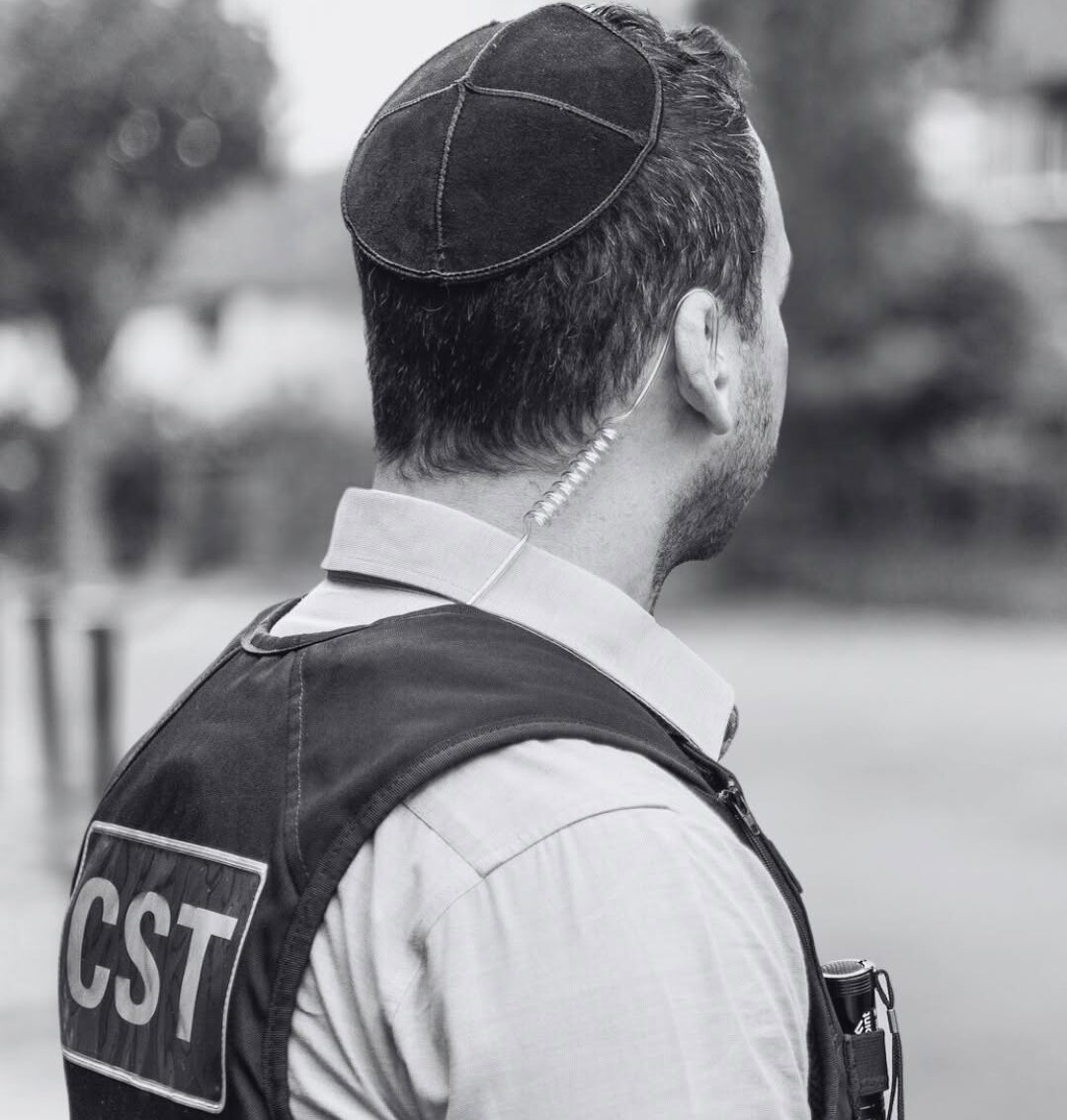
Her experience comes against a significant rise in antisemitism since 7 October 2023. The Community Security Trust (CST), which monitors antisemitism in Britain, recorded at least 600 incidents in the 17 days after the Hamas attack. This was a 641% increase on the same period in 2022.
The annual figures have remained high. CST recorded 4 296 antisemitic incidents in 2023, followed by 3 528 in 2024, and 3 700 in 2025. Last year’s total was the second-highest annual figure ever recorded.
In the first six months of 2026, CST recorded another 1 926 antisemitic incidents. This was 21% higher than the 1 598 recorded during the same period last year. It was also more than the total recorded for the whole of 2022.
Physical attacks have formed part of this increase. CST recorded 135 incidents involving assault during the first six months of 2026, an 82% increase compared with the same period in 2025.
On 29 April, two Jewish people were wounded in a stabbing in Golders Green, north London. Counter Terrorism Policing declared the incident a terrorist attack.
It was the second declared terrorist attack against Britain’s Jewish community in seven months. The first was at Heaton Park Synagogue in Manchester on Yom Kippur on 2 October 2025. Two people, Melvin Cravitz and Adrian Daulby, were killed and three others were seriously wounded in the car ramming and stabbing. It was the first antisemitic terrorist attack in Britain to result in deaths since CST began recording incidents in 1984.
The Golders Green attack also triggered further antisemitism. CST recorded 21 antisemitic incidents on the day of that stabbing, followed by 24 the next day, and 26 on the third day. Four involved face-to-face abuse directed at Jewish people.
Jewish children have also been targeted. On 10 September, three 14-year-old Jewish boys were allegedly assaulted and subjected to antisemitic abuse on a bus in north London. Police are treating the incident as an antisemitic hate crime.
Lazarus said she believes British authorities are doing enough to protect Jewish communities. She pointed to increased security in Jewish areas and police statements that there is zero tolerance for antisemitism.
Another South African Londoner, Sarah*, shares that view. She said she currently feels “very safe”.
But she acknowledged that the atmosphere had changed immediately after 7 October. “Initially after October the 7th happened, there were a lot of those [pro-Palestinian] marches happening in central London and everything was just rife.”
Sarah said that she had become more wary, but her everyday life had not changed. She works in central London and has two young children. Her six-year-old attends a Jewish school. Sarah said she has never felt that her children are unsafe because they are Jewish.
She also praised the government and police response to antisemitism, pointing to the visible police presence in Jewish areas and around synagogues during Rosh Hashanah. “I didn’t feel vulnerable, or any more than I would if I was in South Africa.”
However, Tanya*, a South African-born woman living in Golders Green, described a more significant psychological impact. She said she still loved living in Britain and could continue with her normal life, “but there is definitely a heightened sense of tension and awareness since 7 October”.
Before the Hamas attack, her husband had worn his kippah everywhere, but she had subsequently asked him to remove it when travelling on the Tube because she was worried about his safety. He now generally avoids wearing it outside the Jewish areas of Hendon and Golders Green.
The Manchester synagogue attack was significant for her. “After the attack at Heaton Park Synagogue in Manchester last year, it was the first time I genuinely questioned whether it was still safe to raise our family here.”
Tanya has not experienced antisemitism in person. However, she received significant antisemitic abuse online after using social media to discuss 7 October.
Incidents closer to home have also affected her. She cited the Golders Green stabbing and the burning of Hatzola ambulances as examples of attacks that made her more conscious of her surroundings. “There is a feeling that even walking around our own neighbourhood isn’t quite as carefree as it once was,” she said.
Tanya is less satisfied than the others with the authorities’ response. “Unfortunately, I don’t feel they are doing enough,” she said, adding that authorities often respond by increasing security after an incident rather than addressing the rhetoric and attitudes that allow antisemitism to grow.
Her concerns come amid a broader debate about the relationship between anti-Israel activism and antisemitism.
Of the 1 926 antisemitic incidents recorded during the first half of 2026, 787 referenced or were linked to Israel, the Palestinians, Hamas, or the war in Gaza, while also containing anti-Jewish language, motivation, or targeting.
Miliband addressed this distinction directly in Parliament. “Our argument is not with the people of Israel,” he said. “Our argument is with the conduct of its government.”
The government’s new measures target goods and services connected to Israeli settlements rather than British Jews. The measures are expected to be implemented through a new sanctions regime.
Lazarus described the sanctions as “unnerving”, but said similar political tensions existed elsewhere. She believes Britain remains a country where Jews can live openly. She cautioned, however, that she could not vouch for the future.
Tanya similarly has no plans to leave Britain, despite her concerns. “We love our life in the UK and have wonderful friends and family around us,” she said.
The experiences of the three South Africans reflect a Jewish community navigating a changed security environment without reaching a single conclusion about its future in Britain. There is a greater awareness of antisemitism and, in some cases, changes to everyday behaviour. Yet none of the three currently plans to leave the country.
The attacks and rising number of antisemitic incidents have made the question of Jewish safety harder to ignore. But the interviews also show that increased concern does not necessarily mean British Jews feel unable to live openly in the country.
As Tanya put it, the psychological impact remains difficult to escape. “However settled you feel, you can never completely take your safety for granted.”
*Interviewees have requested anonymity for privacy reasons.