





Featured Item
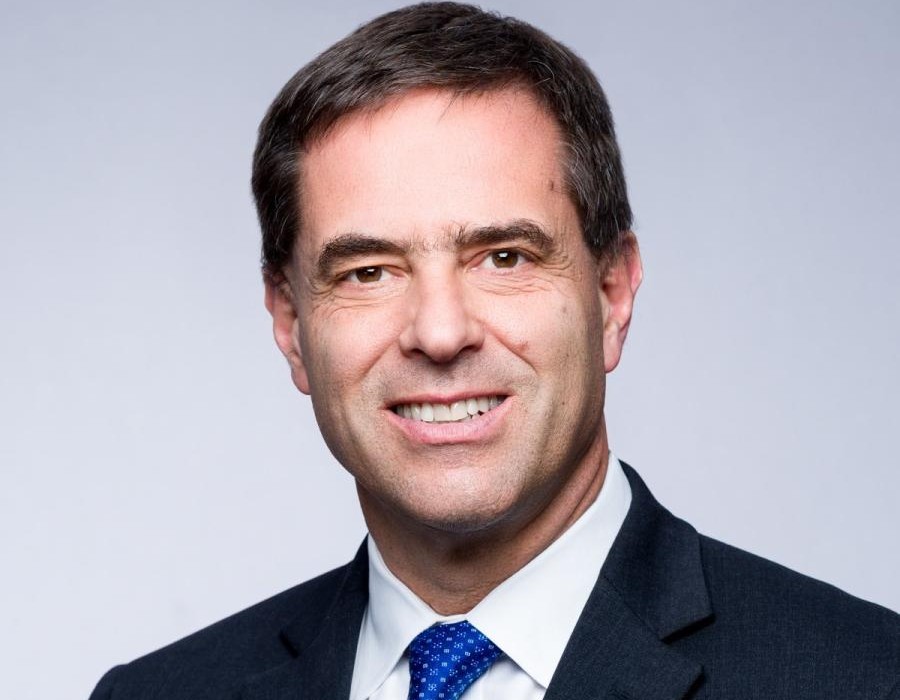
South African, Jewish and running for Georgia’s Senate

Cape Town-born Kevin Abel, who left South Africa as a child almost 50 years ago, is running for the Georgia State Senate in the United States (US), but says the country that shaped his earliest memories still colours how he sees the world.
The Atlanta businessman and community leader told the SA Jewish Report how growing up in apartheid South Africa formed his political conscience.
Abel moved to the US in 1979. He was a young teenager at the time, old enough to understand the political reality of apartheid and the contradictions within his own home environment.
“I was very young, but on the cusp of awareness that apartheid South Africa was what it was, and I came from a family that, by South African standards, would be considered liberal,” he said “So, while we took full advantage of the apartheid system in terms of maids and gardeners, there was chatter in my house that suggested that this was all wrong.”
His family’s departure was shaped by a mixture of idealism and self-preservation. His parents were divorced, and with five boys of military age between them, the prospect of the border war felt immediate.
“There was this need-to-get-out-of-here mentality,” he said. America, meanwhile, symbolised excitement and promise. “America was always kind of a vision of the shining country on the hilltop. Disney World, Hollywood, Coca-Cola, and freedom.”
Abel grew up in Camps Bay and often returned to Cape Town in later years to visit his father, who had remained in South Africa until his death in 2021. His connection to the country is rooted mainly in family memories and the landscape of his childhood. “Over the years, my family emigrated, and so my connection dwindled. My stepmom still lives in Cape Town. Going back, I always appreciated the amazing beauty of Cape Town. Never once was I not amazed by it.”
Although he values his heritage, he said he never felt attached to the apartheid state. “To be perfectly honest, I have never had an attachment to the country. The country I knew was apartheid South Africa.” He said he felt pride during South Africa’s democratic transition. “I was proud to be able to identify with the Mandela years. The movie Invictus was a great encapsulation of all of that, a way to communicate to my friends, ‘This is the new South Africa.’”
Abel and his wife founded Abel Solutions, a technology consulting firm, in 1994. He described entrepreneurship as part of his upbringing. “It felt like it was in the blood, the Jewish South African blood. You start your own business, you don’t work for anyone else. Between my grandfather, my father, my stepfather, and my brother, who all had their own businesses, it seemed inevitable that was what I had to do.” Running the company, he said, gave the couple independence and flexibility as they raised their family.
Public service followed later. Abel first ran for elected office in 2018, seeking a seat in the US Congress. He said this decision emerged naturally after he sold his business. “It was just opportunistic. I had the flexibility to do something new. Once you’re in, you’re in. It’s hard to drop out of an election.”
Although he lost the race, the experience encouraged him to continue serving his community. Supporters asked him to run again, but opportunities were limited. “You cannot run to displace an incumbent. It had to be an office I would want to run for, and a race I thought I could win.” The chance came when the incumbent in Georgia’s State Senate District 14 announced a run for lieutenant governor, creating an open seat in a Democratic district. Abel said state government dealt with many of the same issues as national government, but in a different context.
Abel’s Jewish identity has shaped his community work and political life. His maternal grandfather escaped Nazi Germany in 1933, and this history formed the family’s understanding of migration and seeking safety. Growing up Jewish in South Africa also shaped his sense of responsibility. “There was the understanding that as Jews, we do right by others and serve. I have been given a lot of opportunity and I have to give back. This is my something.”
He is chairperson of the Antisemitism Task Force of the American Jewish Committee in Atlanta. The task force was formed after the rise in antisemitic incidents following the events of 7 October 2023. Said Abel, “We didn’t want to reinvent the wheel. We carved out a lane. We get an audience and they hear us and ask questions. You realise just how much ignorance there is on the topic. I’m not being mean. People are just ignorant. They don’t think about this stuff every single day.”
Linking criticism of Israel with antisemitism remains one of the most challenging aspects of the work. “People are loath to correlate anti-Zionism with antisemitism. You have to explain why their interest in condemning Israel isn’t okay when it’s the only country they seem to have any opinion on.” Despite the frustration, he said the task force aimed to help communities and institutions recognise unconscious or unexamined bias.
Abel has also been involved with a refugee resettlement agency in Georgia for many years and sees immigration policy as central to his world view. “As an immigrant, I’m aligned with the idea that this country was all immigrants. We all come from somewhere else, and immigrants contribute significantly to the success of this country.” He expressed concern about rising hostility towards immigrants from certain regions. “It’s extremely painful to see the malice and anger directed at immigrant communities.”
If elected, Abel intends to prioritise healthcare access, food assistance, the security needs of Jewish institutions, and economic affordability for lower-income families. He said the state had repeatedly chosen not to expand Medicaid, the public healthcare programme, even though doing so would extend coverage to residents who earn too much for existing support, but not enough to afford private insurance. “The state is passing up on federal dollars to provide healthcare to a group of Georgians who need it.” He is also concerned about recent changes to food assistance at national level that may leave legal immigrants and refugees without aid.
The rise in antisemitism has increased security expenses for synagogues, schools, and community centres in Georgia. Abel supports expanding state support for these costs, and addressing antisemitism in public schools. If elected, he would become one of only two Jewish legislators in the state.
He also opposes proposals to eliminate the state income tax. He said this would lead to increases in property and sales taxes, and would disproportionately benefit wealthier residents while placing pressure on households with less income. “It would adversely impact those who can least afford it.”
Asked what “home” means after living most of his life in the US, Abel said, “Home for me is America. South Africa is my heritage. My Jewish heritage, my South African heritage, my immigrant heritage.” He said his accent ensures that he will always be seen as coming from somewhere else. “I still cannot start a sentence with someone new without them interrupting to guess where I am from or ask where I am from. I will always be American by choice, but South African by birth. That will always influence my worldview.”
