



OpEds
From royal letter to restored Jewish identity

In the final chapter of Megillat Esther, the book itself is described as an iggeret, a letter. This is an unusual term for a work that ultimately became part of Tanach. Rather than being presented as a formal sefer or scroll, the Megillah is cast in the form of correspondence.
Because Megillat Esther is framed as an iggeret, halacha treats it with greater flexibility. The requirements governing how it is written and how it is read aloud are less rigid than those that apply to other books of Tanach. These leniencies reflect its origins as a letter sent to a dispersed nation to establish the observance of Purim and give it lasting form.
Roughly 500 years before the Purim story, history entered a new phase. For the first time, large multiregional empires emerged. In the late tenth and ninth centuries BCE, Assyria rose to power and gradually conquered the Levant and much of the Near East. In the late seventh century BCE, Assyria collapsed and was replaced by the Neo-Babylonian Empire, which ruled the region for several decades. In the mid-sixth century BCE, Babylonia itself fell to Persia. The Persian Empire then established a vast realm of “127 provinces”, stretching across much of the ancient world. Governing such an empire required systems of communication that could project authority across great distances.
Previously, empires such as Egypt were largely confined to a single region. In that setting, a monarch could dispatch messengers who carried decrees personally. In multiregional empires, that model no longer worked. Authority had to be transmitted through letters, documents capable of moving from province to province and hand to hand.
Letter-based communication became so central to imperial rule. For this reason, toward the end of the story, when Esther and Mordechai ask Achashverosh to rescind his letter, he refuses. Cancelling a royal decree would undermine the authority of all royal correspondence. A monarch had to protect the integrity of his letters so that, when they were read aloud in the public square of a distant province, they would command obedience. Achashverosh was willing to issue a second letter, but to repeal an earlier one would have weakened the integrity of the system on which his rule depended.
Erosion of identity and language
There is a second drama unfolding in the background. About 70 years earlier, we had been exiled from Yerushalayim. With the loss of the Mikdash came the loss of Jewish sovereignty, and with it a deep rupture in Jewish identity. With no clear future and no visible return on the horizon, that identity began, slowly and quietly, to erode.
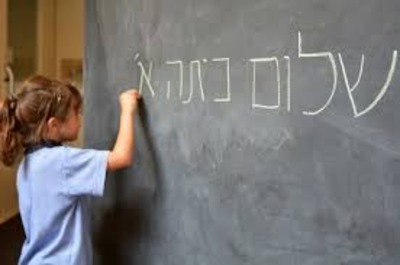
Central to this erosion was the decline of language. Language sits at the heart of identity, shaping how a people understands itself. As Jewish identity weakened, Hebrew itself came under threat. This tension is reflected in the books that chronicle the first exile. Daniel and Ezra are written partly in Aramaic. The sections that describe exile and imperial life appear in Aramaic; while the passages that trace return and rebuilding revert to Hebrew.
The story of Esther unfolds roughly 70 years after the exile from Yerushalayim. A few years earlier, we had returned to Yerushalayim with the authorisation of Cyrus, and laid the foundations of the Mikdash. Those efforts, however, were quickly obstructed. Opponents of renewed Jewish settlement lodged complaints with the Persian court, and the rebuilding was halted. With the stalling of the return and the suspension of construction in Yerushalayim, Jewish identity and the language that sustained it were further weakened.
Persian names
The names of the heroes of the Purim story reflect this struggle over Jewish identity and language. Mordechai, whose Hebrew name was Petachyah, and Esther, known in Hebrew as Hadassah, are identified throughout the Megillah by their Persian names rather than their Hebrew ones. Mordechai’s name echoes the Persian deity Marduk, while Esther’s recalls Ishtar, a Persian star-goddess. The Megillah’s choice of names places its heroes within the linguistic world of Persia, highlighting the tension between Jewish identity and the culture in which they lived.
Hebrew disappeared and returned
The first two letters in the Purim story are translated into every language and every script, except Hebrew. No-one imagined translating royal decrees into Hebrew, a language already viewed as fading along with Jewish identity itself.
Imagine the terror of Jews in distant provinces receiving word of an impending war to be fought in the coming month of Adar. Unable to read the decree in their own language, they were forced to turn to a non-Jewish neighbour to interpret it for them. In that moment, they discovered that the letter was their own death sentence, translated by their future executioners.
But as the Purim story turned and redemption began to stir, the final letter changed everything. The decree granting Jews the right to defend themselves was translated into every language, and this time, into Hebrew. Hebrew returned because the people it spoke for had returned.
Within a few short years, the return to Yerushalayim would resume and the Second Mikdash would begin to be built. In the Megillah, the rise and fall of letters and language track the shifting fortunes of the Jewish future. For this reason, the book of Esther is canonised as a letter.
Our community has excelled in building rich religious experiences, expanding Torah study, and strengthening halachic observance. Jewish religious life and Torah learning are at historic highs. But have we invested with equal seriousness in building strong Jewish identity?
For the first time in centuries, there are deeply religious people who don’t speak a Jewish language. Without language, our access to Torah texts is often second-hand, filtered through translation. Without a Jewish language, we limit our ability to connect with Jews across the world beyond our immediate cultural setting. More importantly, without language, Jewish identity itself cannot reach the depth or resilience we seek.
Have we, in some measure, compromised aspects of Jewish identity-building in our focus on Torah and mitzvot? Perhaps this was a necessary price to pay, but is there a way to advance both?
- Moshe Taragin is a rabbi at Yeshivat Har Etzion/Gush, a hesder yeshiva. He has smicha and a BA in computer science from Yeshiva University as well as a Master’s degree in English literature from the City University of New York.