Featured Item
Space pioneer sets sights on bridging earthly divides

An aeronautical engineer turned humanitarian, South African-born Israeli Alice Miller has broken barriers all her life. From successfully suing the Israeli Air Force (IAF) in 1995 to allow female fighter pilots to overseeing medical and psychosocial health assistance in Gaza, she sees past divides to the humanity beneath.
Miller, now chief executive of Israeli non-profit organisation (NPO) Natan Worldwide Disaster Relief, says her simple view of the world means she’s not afraid to fight for what she believes in. We all have the same bodily functions and navigate relationships with people each day, she says, regardless of our position in life. “We all suckled from our mother’s breast. I recognise me in you. I could see myself as that mother in Gaza.”
It’s that inherent empathy that guides her along an often-challenging path. “I don’t see great separation between my child in Israel and that mother’s child in Gaza; the same way I saw irrelevant separation between men and women in the case I fought 30 years ago. It had nothing to do with women’s capabilities or incapabilities.”
Yet Miller’s professional journey hasn’t always been as clearcut as her worldview. Having left South Africa at the age of six, she returned to the country at 19 to train as a private pilot on a Cessna in Germiston. Years later, she won the right to become a fighter pilot in Israel. Having served for a decade as an air force aerospace engineer and officer in the IAF after her landmark court battle, she then worked in aerospace and technology.
As vice-president of space at Israeli start-up Helios, she attended the biggest space conference on earth in Azerbaijan. “I stood there with NASA [the National Aeronautics and Space Administration] and displayed a system we were going to build on the moon,” she says. “Then I came back to my hotel room and just burst out crying. I said, ‘What the hell am I doing with my life? Why am I putting all my love, energy, smartness, and history into the moon? What for?’ I felt a deep desire to do something that served people in a more meaningful way. It was like a moving of the heart.”
Ironically, this occurred in September 2023. On 7 October that year, the world shifted. “I live in the north of Israel,” Miller says. “While this massacre was going on in the south, we were sure that the Arabs are going to come down the mountains around us and slaughter us as well.” She and her neighbours prepared to handle mass casualties but thankfully, their fears didn’t materialise.
“Yet the more the resulting war advanced, the more my friends’ hearts closed towards anything different or other,” she says. “It’s a natural process – when your life is threatened, you don’t care about anything except protecting your own. I felt my heart also just closing up like a clam. And I said to myself, ‘I don’t want this. I’m not interested in leading a life like this.’”
So, already looking to serve others, Miller was finally pushed to her new path after 7 October. “I want to do something where I can help people on earth and spread the word that all people deserve to fill basic humanitarian needs. It took many years to understand that this was what I wanted to do and once I did, there was no going back.”
So, when the opportunity arose to serve as chief executive of Natan Worldwide Disaster Relief, Miller knew she’d found her purpose. Named after famous Israeli humanitarian leader Abie Nathan, the organisation has been around for 20 years, with medical volunteers and social workers going on disaster-relief missions around the world.
Following 7 October, Natan needed a more professional structure, and so Miller became chief executive. “We had the capability to put up clinics in the Dead Sea in Eilat to support thousands of evacuees that ran away from their homes. We run many other projects within Israel, including free dental clinics serving refugee women at risk. We also have a beautiful project supporting children with disabilities in war zones in Syria, Ukraine, and Gaza.”
Miller admits that even for her, it was difficult to work in Gaza in the beginning of the war. “You’re running at all hours of the morning with your kids to the safe room, with missiles falling all over. It’s a complicated notion being able to serve someone who’s bashing at you while they’re bashing at you. Yet as the ceasefire was agreed and we felt safer in Israel, we could continue serving people in Gaza with an easier heart.”
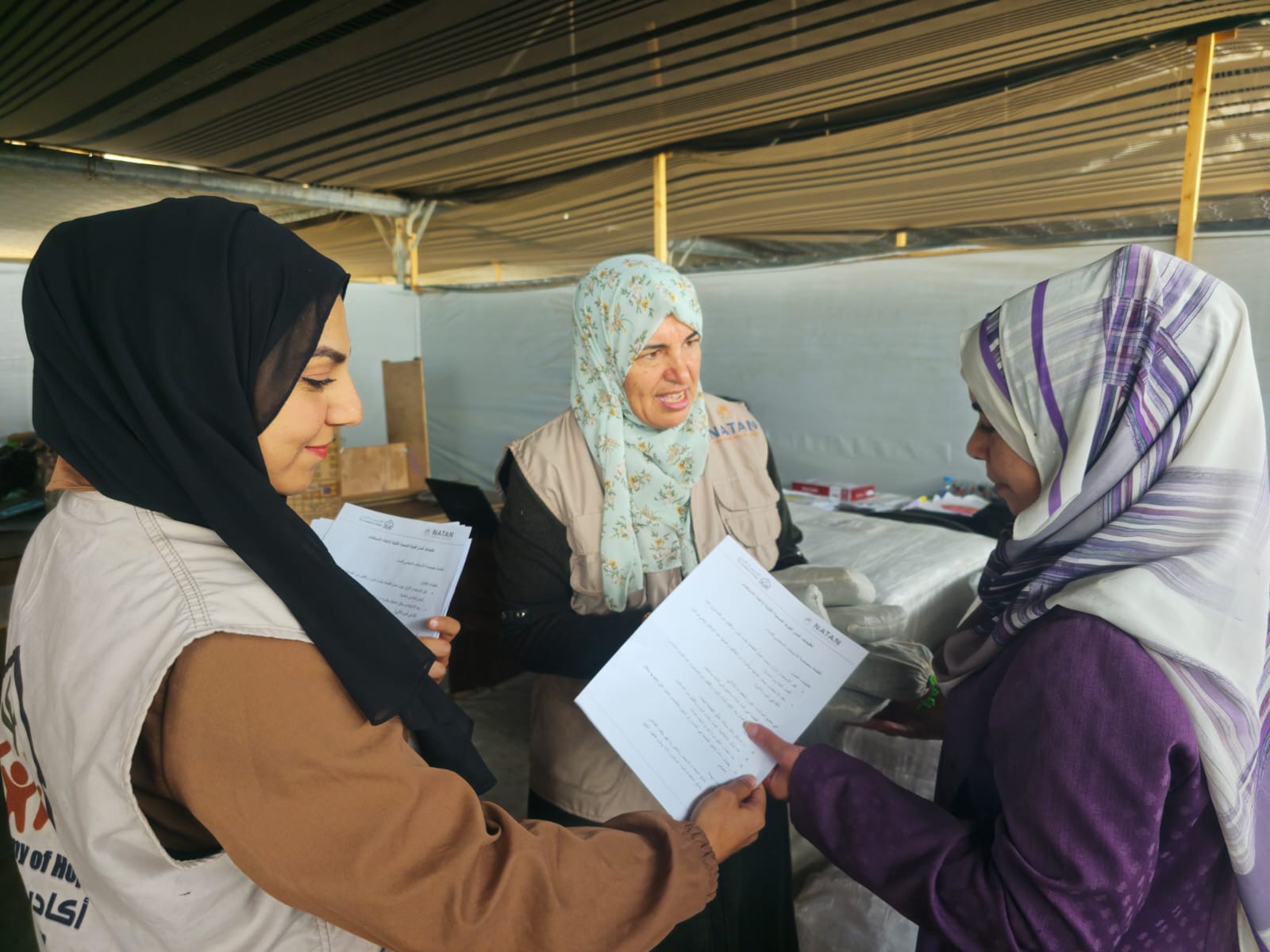
While Israeli organisations cannot enter Gaza physically, Natan works through its United States partner, a NPO called Gaza Children’s Village run by David Hasan. “He has put up these academies in Gaza where 9 000 children are studying,” Miller says. “They get a hate-free curriculum, a hot meal from NPO World Central Kitchen, and medical attention through Natan. We’re also supplying reusable period pads through these academies to teenagers and the mothers of these children.”
Natan will also put up a clinic at these academies with its Arabic speaking volunteers in Israel already supporting staff in the clinic in Gaza, mainly via WhatsApp texts. “We have specialists who help with cases that the doctors there can’t deal with.”
Miller has experienced significant backlash for assisting in Gaza, but says she’s realised that although it’s extremely loud, support is more subtle. “I choose what I listen to. Obviously, there are those who are too hurt to be able to see the needs of other people. I really wish these people would find a way to lessen the pain in their hearts so that they’re able to see that supporting a 14-year-old child in Gaza the first time she receives a period and has nothing to use isn’t threatening to them.
“On the contrary, it’s for our own benefit in Israel. We’re all connected. We’re all human beings. Gaza isn’t far away, literally and figuratively. It’s something that’s so strange to say these days because people don’t really look at life in this way, but I feel strongly that we’re one family.”