





National Jewish Dialogue
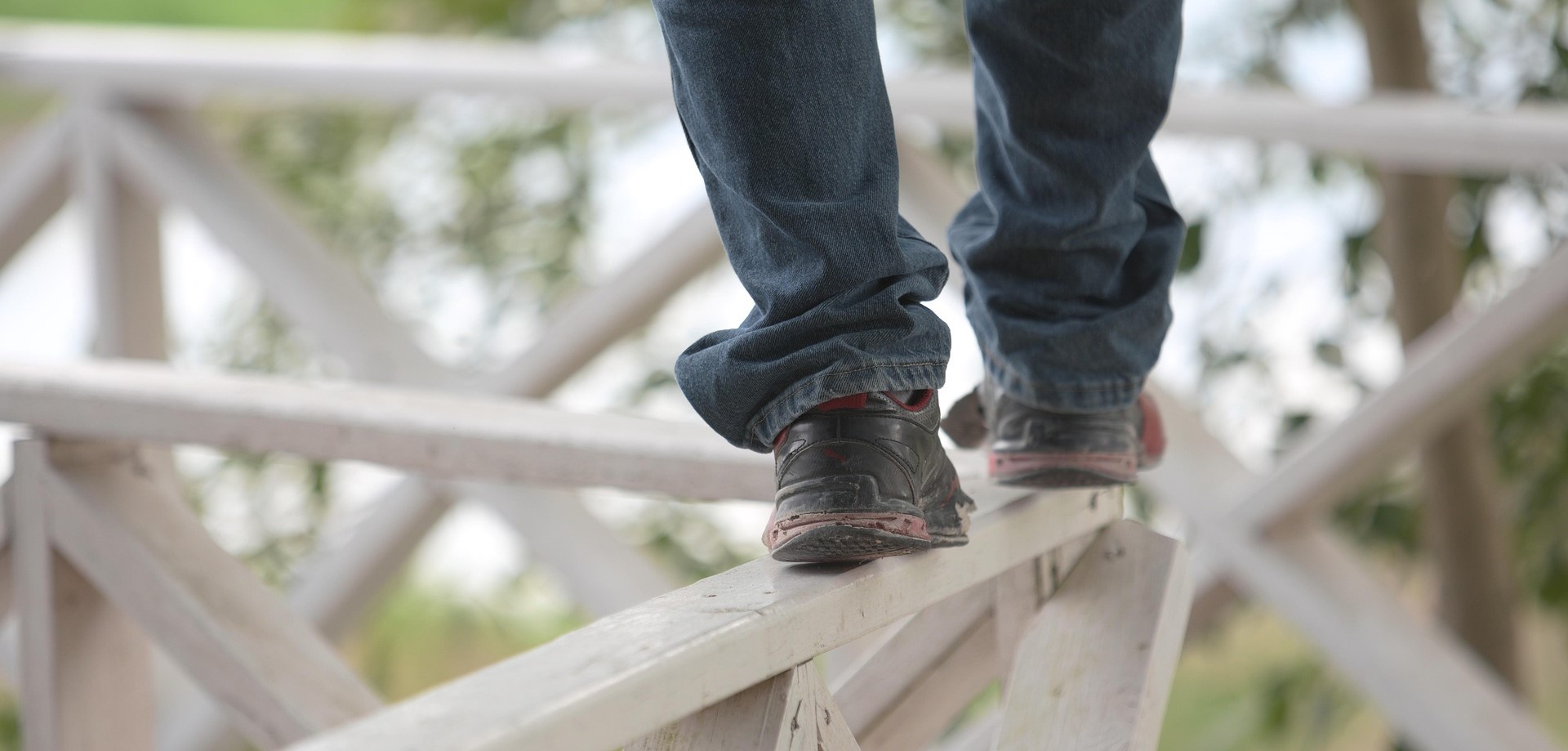
Stop waiting for the other shoe to drop

There’s an old story about the man in the boarding house. He drags himself upstairs late at night, kicks off one heavy shoe – bang! – then remembers the neighbour below. So, he gently lowers the other shoe. An hour later, there’s a knock, “Please, just drop the other shoe already so I can sleep.”
Sometimes I think that’s exactly how we’ve learned to live here. Not frozen, not gone – just half here, half bracing for the thud.
And the thing is, this tension isn’t new. I’ve read letters from the 1940s, as apartheid was just beginning, and already you see it: the question, the worry, the “Should we stay? Should we go?” The 1950s had their crisis. So did the 1960s, the 1970s, the 1980s, and obviously every decade since. One of my good friends here likes to joke that every 18 months, we find a new, perfect reason to panic. And he’s not wrong. I’m literally writing this just a few days after our water finally came back on, after five days of schlepping buckets up and down the driveway. So believe me, I get it. We don’t make up the challenges, they find us just fine.
But here’s the uncomfortable truth: living like this, forever on the fence, comes at a cost. Fence-sitting always does. It drains us quietly but deeply. It makes us hold our breath. It makes us tightfisted, not just with money, but with trust, generosity, and hope. It’s impossible to plan 20 years ahead for schools, shuls, or families when you’re half-packed already. “Just in case.”
And we don’t just do it to ourselves, we pass it down. Kids grow up listening to the tension at the dinner table: “Better have a plan B, you’ll never make it here.” We think it’s just talk, but talk shapes reality. That fear seeps into budgets, into dreams that never get off the ground, into the things we quietly starve because we don’t trust that they’ll last. “Why donate to shuls and schools if they’ll close down anyway?”
So here’s the mirror we need: the question isn’t, “Is the tension real?” Of course it is. This country’s messy. But the bigger question is, “Is that tension ruining us, or are we channelling it in a healthy, balanced way?”
Because tension itself isn’t bad, it’s in our DNA, and sometimes it’s what’s kept us alive. No-one is denying that. But too much of anything is unhealthy, especially when stress, anxiety, fence-sitting, and doomsday scenario hypothesising.
Three times a day, we stand in the Amida and ask, “Bring us home, Hashem.” We know we’re wanderers waiting for redemption. But while we wait? We build.
People forget: 1 000 years ago, there were no Jews in Eastern Europe. We moved in from France, Spain, and North Africa. We settled, we planted, we built schools, shuls, and homes. We knew we’d move again someday, but we didn’t just sit by the door with our bags packed.
Remember Fiddler on the Roof? They’re forced to leave Anatevka, and someone says, “Rabbi, we’ve been waiting for the messiah all our lives – wouldn’t now be a good time for Him to come?” And the rabbi shrugs, “Yes, but we’ll have to wait for Him someplace else.” That’s us in one line: always waiting, always wandering, but never wasting the wait.
And look at the opposite extreme. For so long, American Jews felt they’d finally arrived in the promised land. No tension, total comfort. And what happened? Too much ease bred forgetfulness. A soft drift that dulled the spark. Now, with antisemitism creeping back, that tension is waking something up again, and maybe that’s not the worst thing.
The test is to hold both truths: to remember that we’re never fully home but to settle enough to build something beautiful anyway. To keep the tension humble, not paralysing.
If you want proof it works, just look at Chabad locally. It didn’t run when things got complicated. It stayed because it took the Rebbe’s promise seriously: “South Africa will be good for Jews.” Not perfect, but good, if you lean in. If you believe you’re here for a reason. And when you do, you invest like you mean it. You plant seeds you may never see bloom, but someone will. Part of why its community and leadership continue to flourish is simple: it stays. There’s no change over of leadership every few years. It’s not running anywhere.
Consistency. Long-term vision, and staying power. That’s what makes real growth possible.
This is what we so often forget. South Africa will never be perfect – until Moshiach comes. Nowhere is. But we have so much that’s good: space, sunshine, warmth, the freedom to live fully Jewish lives in a way many other places can’t touch. And the people. The people of this country are second to none. Kind, moderate, graceful, and happy. You will never find another nation like it.
Sometimes I tease, “South Africans live in heaven, but think they’re in hell.” Of course, it’s an exaggeration, but there’s truth in it. We don’t always realise how blessed we are. And when we don’t, we risk slowly starving the very thing we cherish most. Maybe South Africa isn’t paradise – nowhere else is any closer. So what? It’s worth fighting for.
This community is a diamond. You can’t box it up and replant it in Sydney or Atlanta. Some have tried. You can take some of the people, but the soil, the spirit, the story doesn’t travel. It’s here. It’s fragile. It’s precious.
So here’s the real question: when you stand before G‑d one day, will you be able to say that you helped protect this magnificent community? Or did you chip it away, drip by drip, with the tension you passed down and the endless pessimistic “realism”?
I want to be able to say, “I did my part. I didn’t keep my foot on the brake forever. I put the car in park, took a breath, and watered the garden around me.”
Maybe that’s our next chapter. After a century of fence-sitting, let’s settle our souls. Keep the car serviced, sure, but take your foot off the brake. Enough with handing down fear disguised as wisdom.
If we’re going to pass anything on, let it be calm. Let it be courage. Let it be faith that our kids aren’t just passengers on a sinking ship, they’re builders of something good.
The shoe? Maybe it drops. Maybe it doesn’t. But let’s not spend our whole lives waiting for it. Drop it yourself. Stretch out. Rest a little. And tomorrow? Get up and build.
One final thought: trust your kids. You don’t have to move to Sydney today to guarantee them a future. They’ll figure out their own path, with G‑d’s help. A little less prophesying about imaginary disasters, and a lot more living, right here, right now, building something worth handing down. Don’t chase the future which you and I know nothing about.
We’re here for a reason. G‑d doesn’t make mistakes, and He placed you and I here. Let’s make it good.
You with me?
- Rabbi Levi Avtzon is the rabbi of Linksfield Shul in Johannesburg, and very proud to call South Africa home.



